
Waterfall Distribution Calculator for Multi-Tiered Real Estate Equity
Use this focused Waterfall Distribution Calculator, the industry standard for modeling complex joint venture and syndication structures. Reconciling how profit distributions shift between passive investors and active developers across multiple hurdles is a critical underwriting prerequisite.
This online tool is engineered to solve multi-tier distribution waterfalls, including return of capital, preferred returns, sponsor catch-ups, and subsequent residual splits. It isolates return shares at each hurdle level, delivering clear cash flow scenarios (Base, Bull, and Bear states) alongside an interactive sensitivity matrix mapping sponsor carry.
Waterfall Parameters
Accrued claims and allocation limits.
Have a suggestion or found a calculation discrepancy? Let us know!
How to use the waterfall distribution calculator
Inputs required for multi-tiered waterfall modeling
To run a precise waterfall distribution calculation, gather the following parameters from the equity term sheet:
- Total Distributable Cash: The net profit cash flow generated by operations or final sale.
- LP Unreturned Capital: Initial capital contributions made by limited partners that remain outstanding.
- LP Accrued Preferred Return: Roll-over preferred returns currently owed to limited partners.
- Sponsor Catch-Up Limit: The designated cash cap paid to sponsors to synchronize GP splits.
- Tier 1 Residual Capacity: The max cash flow split under Tier 1 terms before shifting to Tier 2.
- LP Tier 1 / Tier 2 Splits: Split percentages allocated to LPs in each respective tier.
Navigating the sponsor catch-up mechanics
The Sponsor Catch-Up is a typical incentive split tier. It allows the sponsor to receive 100% (or a disproportionate share) of distributions once the LP has received their preferred return.
This catch-up exists to bring the GP's total profit share in line with the overall promote targets before entering subsequent residual splits. This calculator isolates the exact catch-up distribution, helping passive LPs verify that GP promotes are not over-allocated during intermediate stages.
Waterfall distribution methodology and formulas
Waterfall priority logic
Cash flow splits flow through five distinct sequential gates:
Understanding the capital return and preferred return tiers
The first two gates protect the investor's core capital. In typical equity syndications, 100% of distributable cash goes to limited partners until their initial cash investment is fully returned and their preferred return (typically an 8% compounded rate) is satisfied. Only after these primary hurdles are met does the waterfall open to sponsor profits.
Decoding the sponsor promote and split splits
Once the preferred return is met, the GP promote tiers begin. The sponsor catch-up allocates 100% of the next cash flow block to the GP until the GP's total profit share matches the agreed promote percentage (e.g. an 80/20 LP/GP split of all profits to date). Subsequent cash flow is then divided under Tier 1 and Tier 2 split ratios. Tier 1 splits are governed by a capacity cap, while Tier 2 splits absorb all remaining cash proceeds.
Why waterfall modeling matters for GP and LP alignment
Waterfall modeling ensures that the GP is rewarded only for superior asset performance. If a property performs poorly, the GP receives only their basic management fee, while the LPs receive all available cash distributions. If the GP pushes net NOI high, they participate in the promote carry splits, aligning GP incentives with LP investment goals.
Waterfall distribution example calculation
Sample waterfall parameter sheet
Let's walk through an example of a multi-tiered real estate joint venture distribution:
- Total Distributable Cash = $1,500,000
- LP Unreturned Capital = $700,000
- LP Accrued Preference Return = $70,000
- Sponsor Catch-Up Limit = $30,000
- Tier 1 Capacity = $300,000 (Split 80% LP / 20% GP)
- Tier 2 Split = 70% LP / 30% GP
Step-by-step cash flow allocation
1. Return LP capital first: pay $700,000. Remaining cash = $800,000.
2. Satisfy LP preferred return: pay $70,000. Remaining cash = $730,000.
3. Sponsor catch-up: pay the sponsor $30,000. Remaining cash = $700,000.
4. Tier 1 Split: allocate $300,000 under Tier 1. LP receives 80% ($240,000), Sponsor receives 20% ($60,000). Remaining cash = $400,000.
5. Tier 2 Split: allocate the remaining $400,000 under Tier 2. LP receives 70% ($280,000), Sponsor receives 30% ($120,000).
Total allocations: LP receives $700,000 + $70,000 + $240,000 + $280,000 = $1,290,000. Sponsor receives $30,000 + $60,000 + $120,000 = $210,000.
Common Mistakes in waterfall modeling
Under-accounting for sponsor catch-up trigger thresholds
A frequent mistake is failing to verify the exact definition of when the sponsor catch-up begins. Term sheets often specify that the catch-up trigger requires returning both the preferred return and the investor's outstanding capital. Initializing splits early will over-distribute cash to the GP.
Failing to cap tier capacities on cumulative returns
When calculations span multiple years, failing to track cumulative capital account balances can lead to misallocated cash flow. If a hurdle cap is static, it ignores the unpaid accruals from prior periods, diluting LP priority claims.
- Confirm trigger sequences: Ensure return of capital precedes catch-up allocations.
- Dynamic hurdle caps: Adjust tier capacities to account for rolling capital balances.
- Audit compounding intervals: Check if preferred returns compound monthly, quarterly, or annually.
What your waterfall distribution results mean
Evaluating sponsor promote levels
A higher sponsor promote in Tier 2 (e.g. 30% or 40%) indicates a deal structure that heavily rewards GP performance. While this drives alignment, passive LPs must ensure that initial hurdles (preferred return and capital return) are sufficiently secure.
The role of tier caps in limiting GP profits
Tier capacities prevent the sponsor from receiving highly promotional splits too early. For example, capping Tier 1 ensures that the GP splits are restricted to a lower percentage (e.g., 20%) on initial profits, and only shift to higher promote percentages once substantial returns are achieved.
Capital account reconciliation
Waterfall structures rely on capital account tracking. If a GP makes subsequent capital calls, the capital accounts must be adjusted, shifting the unreturned capital hurdle. Use this tool to run sensitivity analyses on how different capitalization levels impact overall returns.
Real-world case study: Private Equity Real Estate Fund Benchmark (2025 Industry Standard)
Private Equity Real Estate Fund Benchmark metrics profile
This case study illustrates a common waterfall distribution structure for a private equity real estate fund. It demonstrates how profits are distributed between Limited Partners (LPs), who provide most of the capital, and the General Partner (GP), who manages the investment, after specific return hurdles are met. This benchmark scenario reflects typical terms found in industry agreements.
This waterfall distribution ensures that Limited Partners (LPs) first receive a full return of their invested capital, a standard practice in private equity. Following this, LPs are prioritized for a cumulative preferred return of 7% annually on their capital over the investment period, aligning with typical industry hurdles. Only after these LP hurdles are met does the General Partner (GP) receive their carried interest, which in this case is 20% of the remaining profits, incentivizing strong performance and successful project execution. This tiered structure effectively balances investor protection with performance incentives for the fund manager.
Related Calculators
Estimate real estate capitalization rate.
Open Tool →Occupancy Rate CalculatorCalculate occupancy and vacancy rate.
Open Tool →Cash-on-Cash ReturnMeasure levered cash return on equity.
Open Tool →NOI CalculatorCompute net operating income.
Open Tool →DSCR CalculatorSolve debt service coverage ratios.
Open Tool →Rental Property ROIEvaluate rental buy-and-hold returns.
Open Tool →Related Articles & Guides
 Real Estate
Cap Rate Calculator: Calculate Capitalization Rate Step by Step
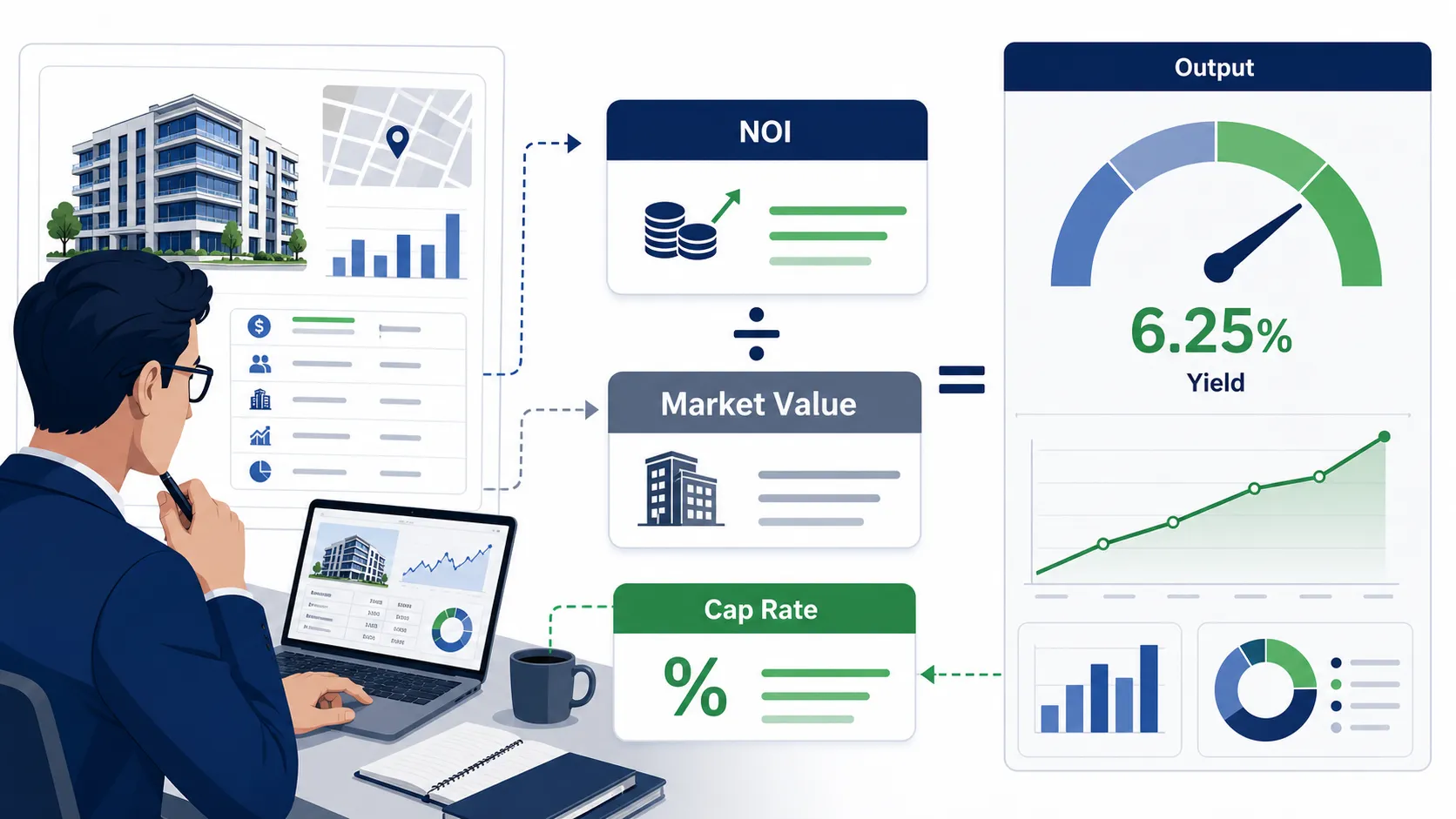
Stop guessing property values. The cap rate formula delivers a single-year yield metric that strips out debt, letting you compare diverse assets instantly. Misjudge this rate, and you risk locking capital into an underperforming investment.
 Corporate Finance
WACC by Industry: 2026 Benchmarks for Technology, Healthcare, and Real Estate
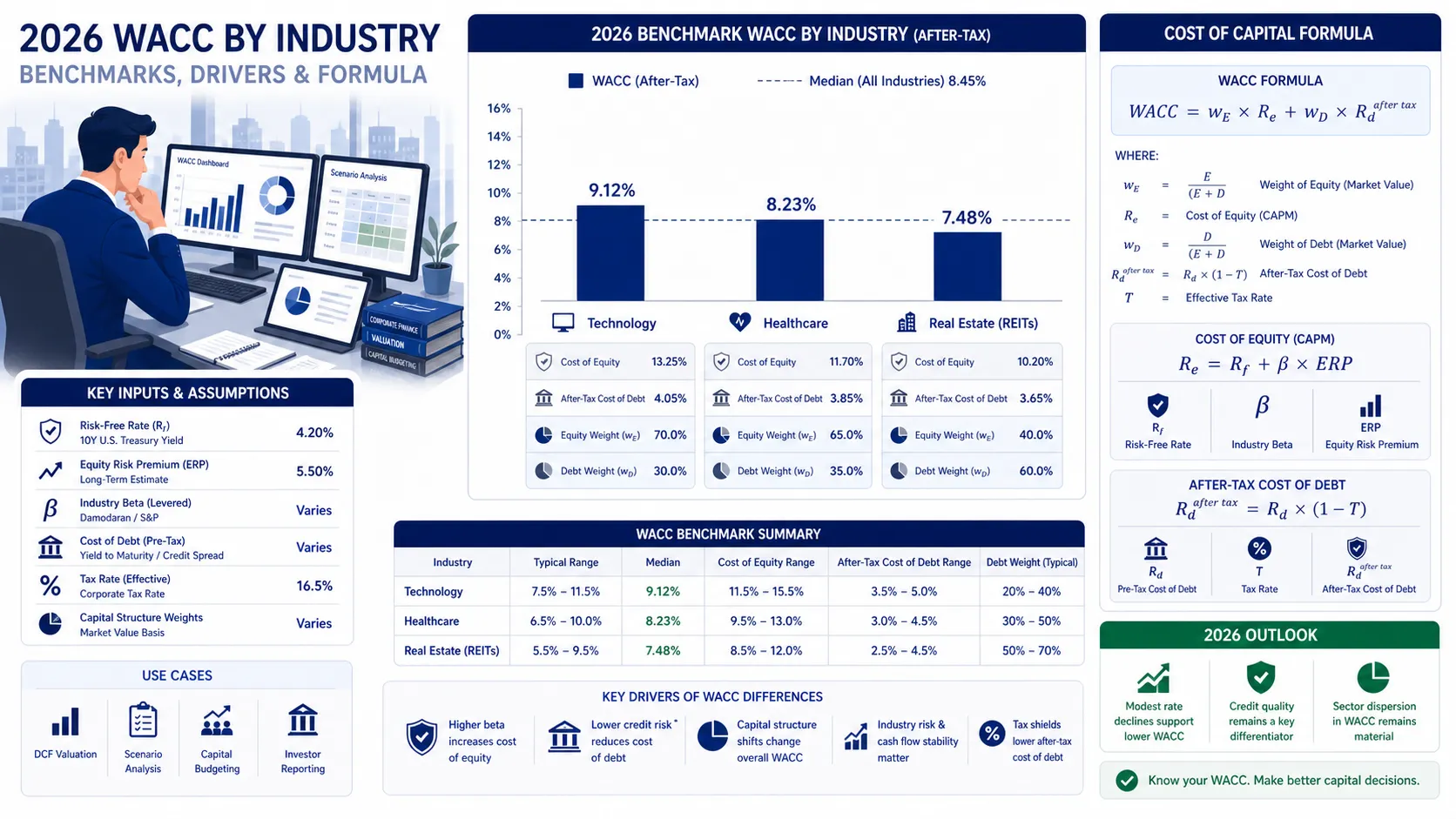
In 2026, industry WACC diverges sharply, from 5.5% for utilities to over 11.5% for software. CFOs must benchmark their discount rate against peers to ground valuations in market reality.
 Corporate Finance
What Is After-Tax Cost of Debt and How Does It Lower WACC?
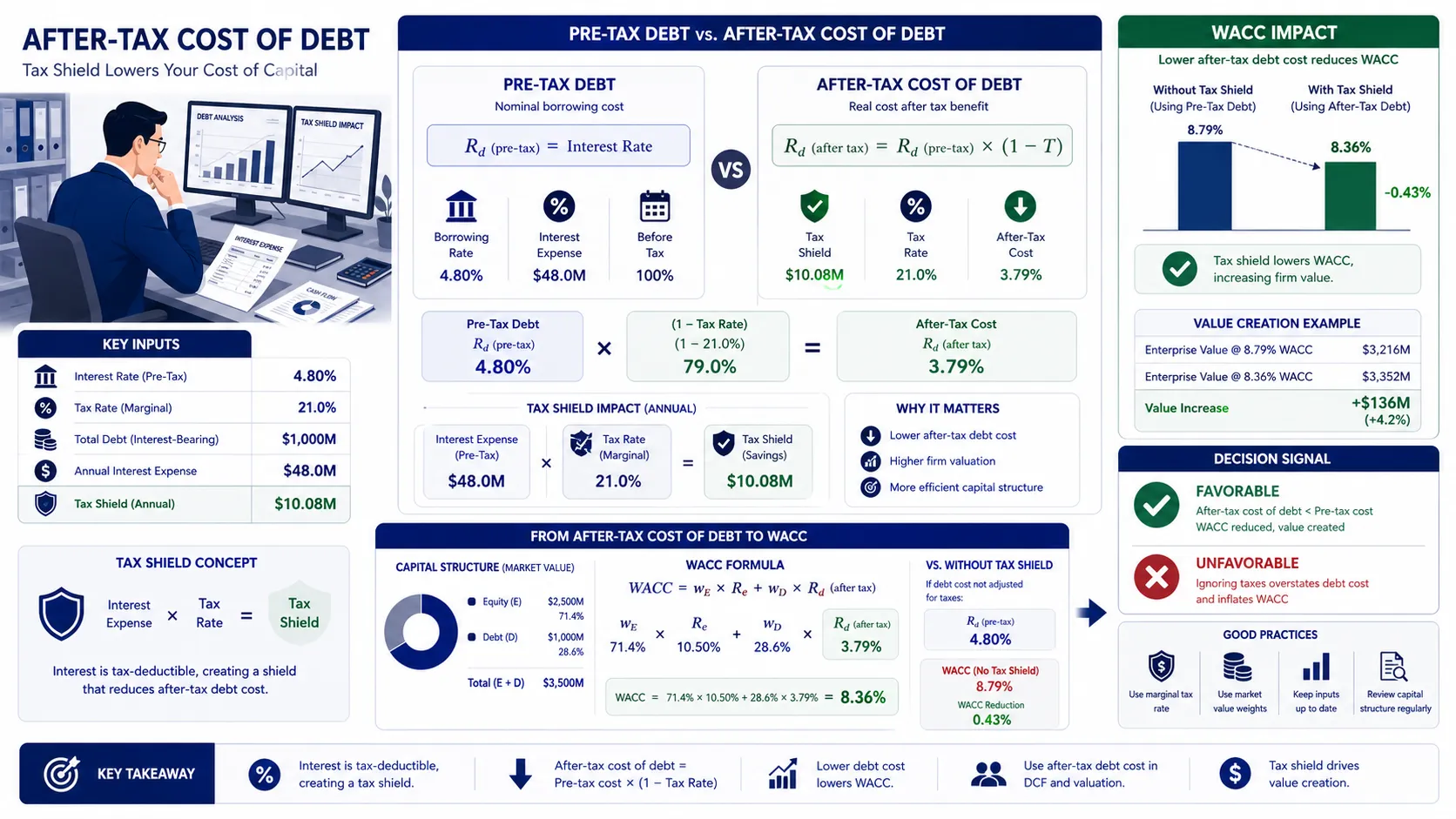
Interest payments are tax-deductible, making debt cheaper than equity and lowering your company's WACC. The after-tax cost of debt reveals this true, subsidized borrowing rate.
Frequently Asked Questions
What is a waterfall distribution?
What is a sponsor catch-up tier?
What is the difference between Tier 1 and Tier 2 splits?
The real estate calculations, yield projections, and cash flow reports generated by BizToolkitPro are for educational and informational purposes only. They do not constitute formal real estate brokerage, lending underwriting, tax counsel, or legal advice.
Investment returns, debt coverage ratios, and capitalization metrics (including Cap Rate, DSCR, Cash-on-Cash, and Waterfall distributions) are simulated based on user-provided inputs and assumptions. Local housing laws, property taxes, market vacancies, and interest rates fluctuate dynamically; therefore, BizToolkitPro makes no warranties regarding the accuracy or real-world applicability of these projections.
Always perform your own independent physical and financial due diligence on properties, and consult with a licensed Real Estate Broker, Mortgage Underwriter, Tax Advisor, or real estate attorney before signing purchase agreements or securing loans.