
Syndication Return Calculator for GP and LP Distribution Waterfalls
Use this focused Syndication Return Calculator, a premium real estate capital structuring utility. Analyzing how cash flows are split between passive Limited Partners (LPs) and active Sponsors/General Partners (GPs) is essential for evaluating deal feasibility and structuring sponsor incentives.
This online calculator is engineered to model typical real estate syndication waterfalls, featuring a preferred return hurdle and subsequent residual splits. It isolates your annual distributions, sponsor promotes, and equity multiples, compiling them into clear base, bull, and bear scenarios. Combined with an interactive sensitivity grid, this tool provides real estate syndicators, underwriters, and equity investors with institutional-grade analytical depth.
Syndication Inputs
Input equity, rates, and cash flow details.
Have a suggestion or found a calculation discrepancy? Let us know!
How to use the syndication return calculator
Inputs required for underwriting syndication splits
To accurately model the return waterfall between LPs and the Sponsor, prepare the following parameters:
- LP Capital Contribution: The total equity contributed by passive limited partners.
- Sponsor Capital Contribution: The equity contributed by active sponsors (often 5% to 10% of total equity).
- Annual Property Cash Flow: The projected annual cash flow before sponsor fees and investor distributions.
- LP Preferred Return Rate: The threshold return rate that must be paid to LPs before splits occur.
- Annual Sponsor Management Fee: Asset management fees paid directly to the GP before distributions.
- LP Residual Split Rate: The percentage share of cash flow LPs receive after the preferred return hurdle is met.
- Net Exit Sale Proceeds: Net cash remaining from the asset sale after debt payoff.
How to interpret the sponsor promote result
A major highlight of this calculator is solving for the Sponsor Promote (carried interest).
The Sponsor Promote represents the profits received by the sponsor that exceed their proportional capital contribution. This reward structure incentivizes the GP to source and manage the property efficiently. The calculator solves this by subtracting the sponsor's capital share from their total proceeds. This helps passive LPs audit the exact premium they are paying to the deal sponsor.
Syndication waterfall methodology and formulas
Waterfall distribution flow
Cash flow is distributed in a strict sequence (known as priority tiers):
This sequential logic ensures that passive investors receive their agreed-upon return threshold before the sponsor profits from the carry.
Understanding the preferred return hurdle
The Preferred Return Rate is a critical investor protection mechanism. It ensures that the passive LPs receive a designated return (e.g. 8% on invested capital) before the sponsor shares in any operational profit. If the property's net cash flow is $100,000, and the LP's preferred return obligation is $144,000, all $100,000 is paid to the LPs, and the Sponsor receives $0 (except for the fixed management fee). The remaining $44,000 rolls over to the next year.
Calculating residual splits and sponsor carry
Once the preferred return hurdle is satisfied, any remaining cash flow is considered "residual cash flow." This residual is divided based on the Residual Split Rate (e.g., 70% to LP and 30% to Sponsor). Because the sponsor contributed only 10% of the capital but receives 30% of the residual splits, the sponsor is earning a 20% "carry" or "promote." This carry reward aligns interests by encouraging GPs to push property NOI above hurdle targets.
Formulas for sponsor promote and LP multiple
The Sponsor Promote is solved as: Sponsor Promote = Sponsor Total Proceeds - (Syndicate Total Proceeds * Sponsor Equity / Total Equity).
The LP Equity Multiple is calculated as: LP Equity Multiple = LP Total Proceeds / LP Invested Capital. This represents the total return factor for passive investors, where a 1.68x multiple means they earned 68 cents on every dollar invested.
Syndication return example calculation
Sample deal waterfall parameters
Let's walk through a standard institutional real estate syndication deal with a preferred return hurdle:
- LP Invested Capital = $1,800,000 (90% of equity)
- Sponsor Capital = $200,000 (10% of equity)
- Annual Cash Flow = $240,000 per year
- LP Preferred Return = 8% ($144,000 per year)
- Sponsor Fee = $30,000 per year
- LP Residual Split = 70% (Sponsor receives 30%)
- Net Exit Proceeds = $3,00 net exit sale
- Hold Period = 5 Years
Step-by-step waterfall calculation
First, calculate Net Cash: $240,000 - $30,000 (Sponsor Fee) = $210,000.
Next, pay the LP preferred return: 8% of $1,800,000 = $144,000. Since $210,000 is available, the LP receives $144,000.
Split the remaining cash: Remaining = $210,000 - $144,000 = $66,000. LP receives 70% ($46,200), Sponsor receives 30% ($19,800).
Calculate LP annual cash: $144,000 + $46,200 = $190,200. Sponsor annual cash: $30,000 + $19,800 = $49,800.
At exit, LP receives 70% of $3,000,000 ($2,100,000) and Sponsor receives 30% ($900,000). Total LP proceeds: ($190,200 * 5) + $2,100,000 = $3,051,000, giving a 1.695x equity multiple.
Common Mistakes in syndication underwriting
Underestimating sponsor fee impacts
A frequent mistake is ignoring how upfront acquisition fees and annual asset management fees drain early operational cash flows. These fees reduce the cash available to satisfy the preferred return hurdle, resulting in unpaid accruals that delay LP distributions.
Mixing cumulative and non-cumulative preferred returns
Assuming preferred returns compound and accumulate automatically without reviewing the partnership agreement is a common underwriting risk. If the agreement specifies non-cumulative returns, unpaid preferred returns from low-performance years are lost permanently.
- Review PPM clauses: Audit the exact definition of preferred return and compounding rules.
- Model net cash flows: Deduct GP asset management fees before checking preferred return coverages.
- Confirm residual triggers: Verify if the GP promote increases after investor capital is returned.
What your syndication return results mean
Evaluating LP equity multiple quality
An LP equity multiple above 1.5x is highly competitive for a 5-year hold period. Passive investors receive stable yields through the preferred return and substantial upside at exit. If the multiple falls below 1.2x, the deal might not justify the liquidity lock-up compared to public market alternatives.
How preferred returns secure LP capital
The preferred return rate acts as a buffer. If the property's performance drops, the LP's priority cash flow is shielded first. The GP's cash flow split is highly sensitive to down-market performance. The sensitivity matrix shows how changes in interest rates impact your risk profile.
Promote splits and interest alignment
A higher sponsor residual split (e.g. 30% or 40%) incentivizes the GP to maximize property value. However, excessive sponsor fees or promotes can dilute LP returns. Use the calculator to compare promote structures across competing real estate deals.
Real-world case study: Gatsby Investment (Multi-Family Development #63A) (2024)
Gatsby Investment (Multi-Family Development #63A) metrics profile
Gatsby Investment's Multi-Family Development #63A, a real estate syndication project completed in 2024, serves as a strong case study for potential investor returns. Despite challenging market conditions, this project delivered an annualized return of 15.79% for its investors. This analysis utilizes hypothetical inputs, based on industry averages, to illustrate how such a robust return could be achieved in a typical multifamily syndication structure.
The demonstrated Internal Rate of Return (IRR) of 15.79% for Gatsby Investment's Multi-Family Development #63A signifies a highly attractive return for investors, surpassing typical benchmarks for many alternative investments. An Equity Multiple of 1.615x indicates that investors received $1.615 back for every dollar invested over the 5-year holding period, reflecting substantial capital appreciation and consistent cash flow. The average annual cash-on-cash return of 7.5% provided investors with steady income throughout the investment lifecycle, balancing liquidity with long-term capital growth. These metrics highlight the potential for real estate syndications to generate strong, passive returns for limited partners, particularly when managed effectively in dynamic market environments.
Related Calculators
Estimate real estate capitalization rate.
Open Tool →Occupancy Rate CalculatorCalculate occupancy and vacancy rate.
Open Tool →Cash-on-Cash ReturnMeasure levered cash return on equity.
Open Tool →NOI CalculatorCompute net operating income.
Open Tool →DSCR CalculatorSolve debt service coverage ratios.
Open Tool →Rental Property ROIEvaluate rental buy-and-hold returns.
Open Tool →Related Articles & Guides
 Real Estate
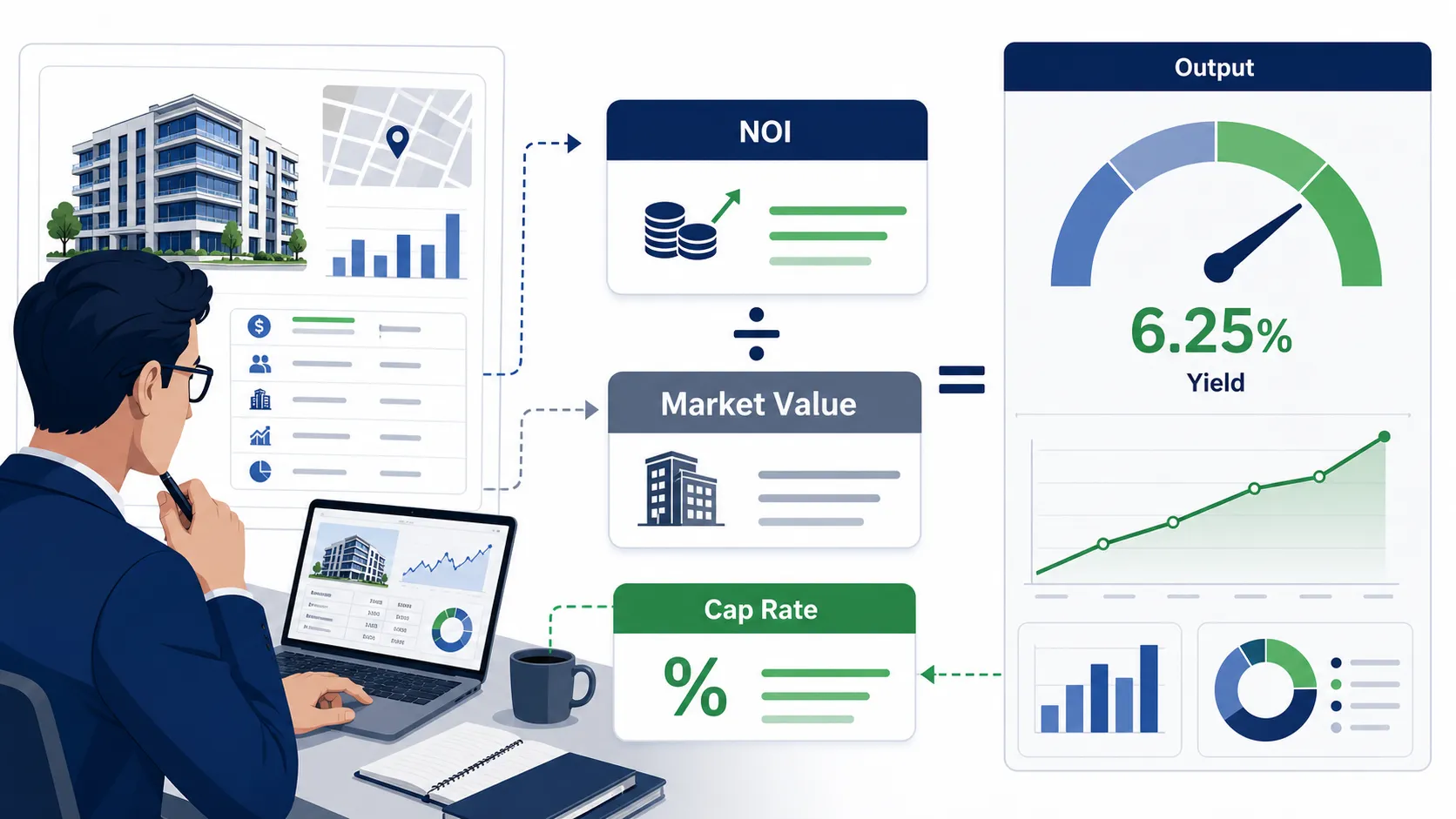
Cap Rate Calculator: Calculate Capitalization Rate Step by Step
Stop guessing property values. The cap rate formula delivers a single-year yield metric that strips out debt, letting you compare diverse assets instantly. Misjudge this rate, and you risk locking capital into an underperforming investment.
 Corporate Finance
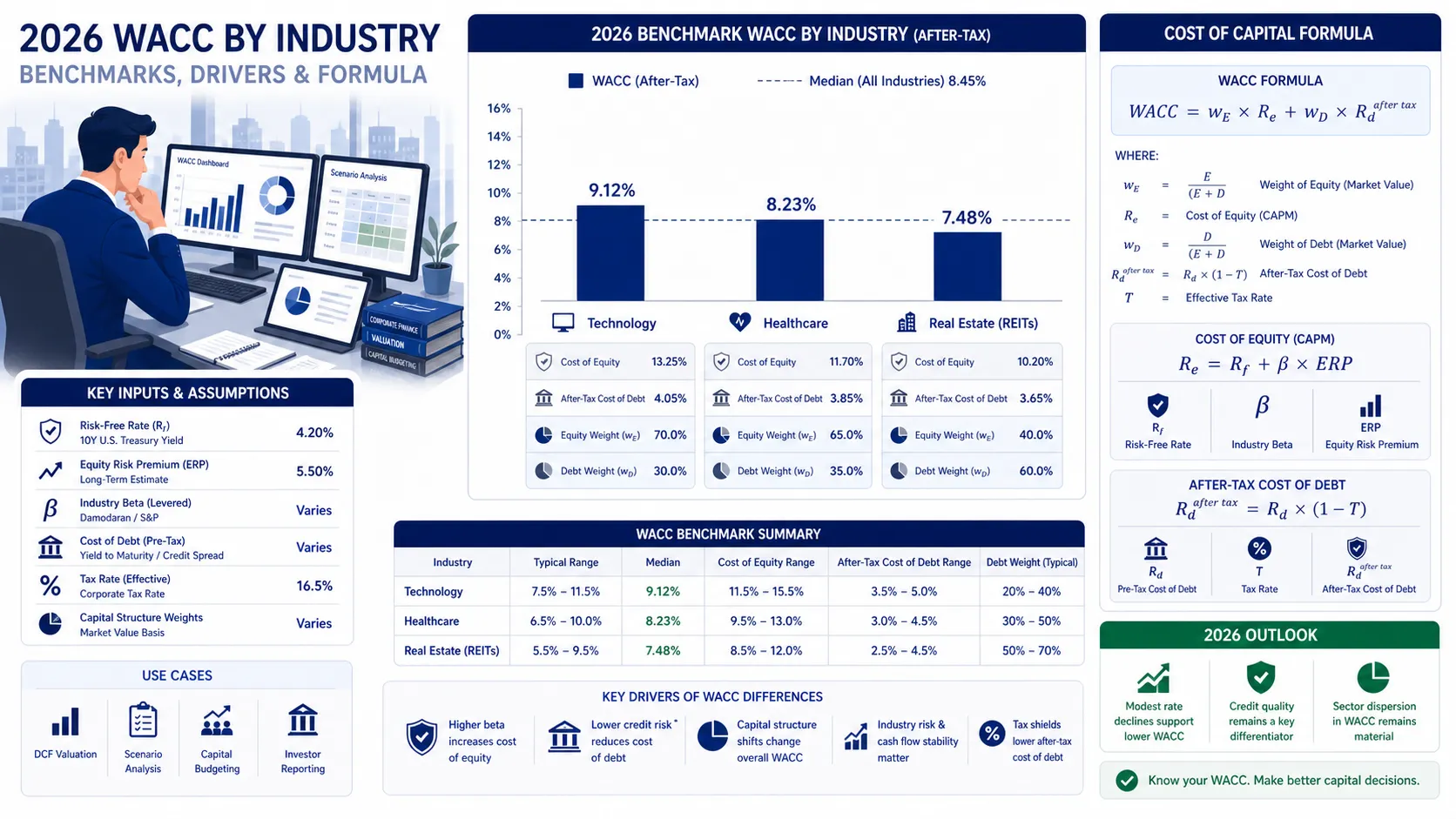
WACC by Industry: 2026 Benchmarks for Technology, Healthcare, and Real Estate
In 2026, industry WACC diverges sharply, from 5.5% for utilities to over 11.5% for software. CFOs must benchmark their discount rate against peers to ground valuations in market reality.
 Corporate Finance
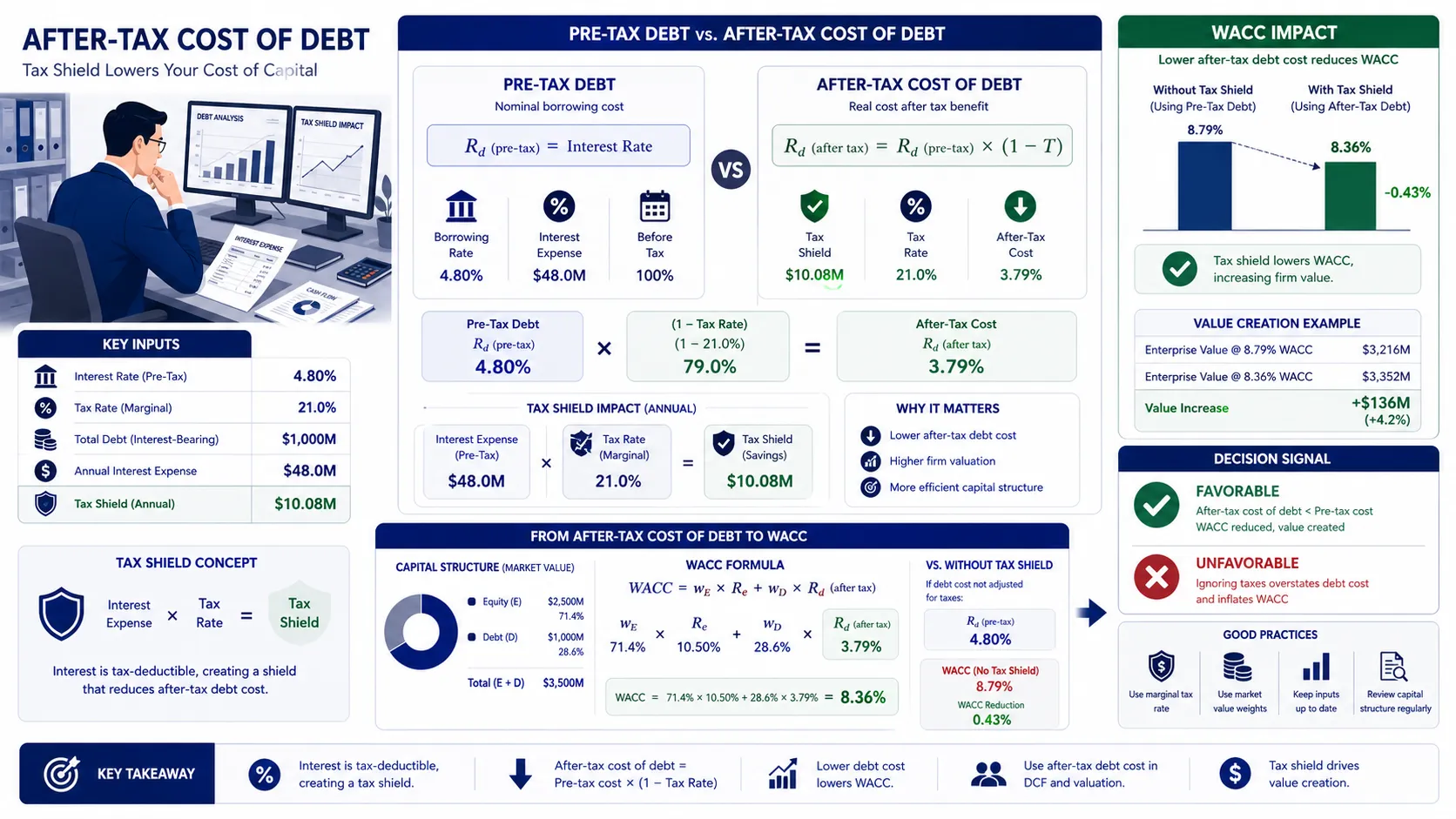
What Is After-Tax Cost of Debt and How Does It Lower WACC?
Interest payments are tax-deductible, making debt cheaper than equity and lowering your company's WACC. The after-tax cost of debt reveals this true, subsidized borrowing rate.
Frequently Asked Questions
What is a cumulative preferred return?
What is the difference between LP equity multiple and IRR?
How do sponsor fees impact waterfall splits?
The real estate calculations, yield projections, and cash flow reports generated by BizToolkitPro are for educational and informational purposes only. They do not constitute formal real estate brokerage, lending underwriting, tax counsel, or legal advice.
Investment returns, debt coverage ratios, and capitalization metrics (including Cap Rate, DSCR, Cash-on-Cash, and Waterfall distributions) are simulated based on user-provided inputs and assumptions. Local housing laws, property taxes, market vacancies, and interest rates fluctuate dynamically; therefore, BizToolkitPro makes no warranties regarding the accuracy or real-world applicability of these projections.
Always perform your own independent physical and financial due diligence on properties, and consult with a licensed Real Estate Broker, Mortgage Underwriter, Tax Advisor, or real estate attorney before signing purchase agreements or securing loans.