
Rental Yield Calculator
Optimize your real estate deals using our professional Rental Yield calculator. In property investment, calculating both gross and net returns is essential to ensure operational profitability.
This page computes your annual rental revenues and operational returns side-by-side, providing buy-to-let investors with dual percentage gauges and a 5x5 purchase price vs rent sensitivity matrix grid.
Have a suggestion or found a calculation discrepancy? Let us know!
How to use this rental yield calculator
Inputs you need to gather
To evaluate a property deal, collect the following metrics regarding acquisition price and monthly cash management:
- Property Purchase Price: The baseline purchase price of the property (before closing costs or renovations).
- Monthly Rental Income: The gross monthly rent you expect to collect from all tenants.
- Annual Operating Expenses: The total annual cost to run the property, including maintenance, property taxes, insurance, property management fees, and HOA dues.
Reading the yield metrics
The calculator displays two circular gauges representing Gross Yield and Net Yield.
Gross Yield provides a quick snapshot of the property's income potential relative to its price, while Net Yield subtracts operational expenses to show the true operational return. The sensitivity grid shows how the Net Yield fluctuates based on shifts in the purchase price and monthly rent, helping you stress-test different deal terms.
Rental Yield Formula and Methodology
The Yield Formulas
Rental yields represent the return on investment generated by a property's cash flows:
Difference between gross and net yields
Gross Rental Yield is a simple return ratio that does not account for operating costs. While useful for comparing properties in the same area, it can be misleading if a property has high maintenance costs or property taxes.
Net Rental Yield is a more accurate measure of performance as it subtracts operating costs. A property with a lower purchase price might show a high gross yield, but if it requires expensive maintenance, its net yield could be lower than a slightly more expensive, low-maintenance property.
Rental yield step-by-step example calculation
Example inputs
Let's evaluate a residential property with the following parameters:
- Property Purchase Price = $350,000
- Monthly Rent = $2,500
- Annual Operating Expenses = $6,000
Step-by-step execution
Step 1: Calculate annual gross rent: $2,500 * 12 = $30,000.
Step 2: Calculate Gross Yield: ($30,000 / $350,000) * 100 = 8.57%.
Step 3: Calculate Net Yield: (($30,000 - $6,000) / $350,000) * 100 = ($24,000 / $350,050) * 100 = 6.86%.
Step 4: Calculate monthly net cash flow (before mortgage payments): $2,500 - ($6,000 / 12) = $2,500 - $500 = $2,000.
What is a good rental yield?
Average yields by location
Rental yields vary widely by market. In high-demand metropolitan areas (like New York or London), property values are high, which often results in lower rental yields (typically 3% to 5%). In regional towns or developing markets, property prices are lower, which can yield higher returns (typically 6% to 10%).
Asset class differences
Commercial properties (offices, warehouses, retail spaces) generally offer higher rental yields (typically 7% to 12%) compared to residential properties (typically 4% to 8%). However, commercial properties often carry higher vacancy risks and longer lease transition times.
Target yield benchmarks
For buy-to-let residential properties, many investors target a gross yield of at least 7%-8% and a net yield of 5%-6% to ensure that rent covers mortgage costs, property management fees, and repair funds while leaving a positive cash flow cushion.
Common rental property valuation mistakes
Underestimating maintenance costs
A common mistake is assuming that a property will have zero maintenance costs. Old properties can require expensive repairs (roof leaks, plumbing issues) that can eat into your rental income. Always allocate a portion of rent (typically 10%-15%) to a repair fund when calculating net yields.
- Include vacancy provisions: Always factor in a vacancy rate (typically 5%-8%) to account for periods when the property is unoccupied.
- Track property taxes: Local property taxes can vary by location and can impact your net rental returns.
- Monitor insurance rates: Ensure that comprehensive landlord insurance is included in the annual expenses calculation.
Real-world case study: American Tower Corporation (AMT, FY 2023)
American Tower Corporation metrics profile
American Tower Corporation, a leading global REIT, primarily owns and operates wireless communications infrastructure. This case study analyzes their aggregated financial performance for fiscal year 2023, demonstrating the rental yield generated from their extensive portfolio of towers and related real estate assets.
American Tower's robust gross rental yield of approximately 16.0% and net rental yield of 13.8% in FY 2023 highlight the strong income-generating capabilities of its real estate portfolio. These figures underscore the effectiveness of their strategy in leasing tower space to multiple tenants, thereby maximizing revenue per site while managing operating costs efficiently. For investors, these solid rental yields indicate a stable and attractive return on their significant infrastructure investments, reflecting the essential nature of their assets in the growing digital economy. The difference between gross and net yield points to their operational efficiency in managing significant site operating expenses.
Related Calculators
Estimate real estate capitalization rate.
Open Tool →Occupancy Rate CalculatorCalculate occupancy and vacancy rate.
Open Tool →Cash-on-Cash ReturnMeasure levered cash return on equity.
Open Tool →NOI CalculatorCompute net operating income.
Open Tool →DSCR CalculatorSolve debt service coverage ratios.
Open Tool →Rental Property ROIEvaluate rental buy-and-hold returns.
Open Tool →Related Articles & Guides
 Real Estate
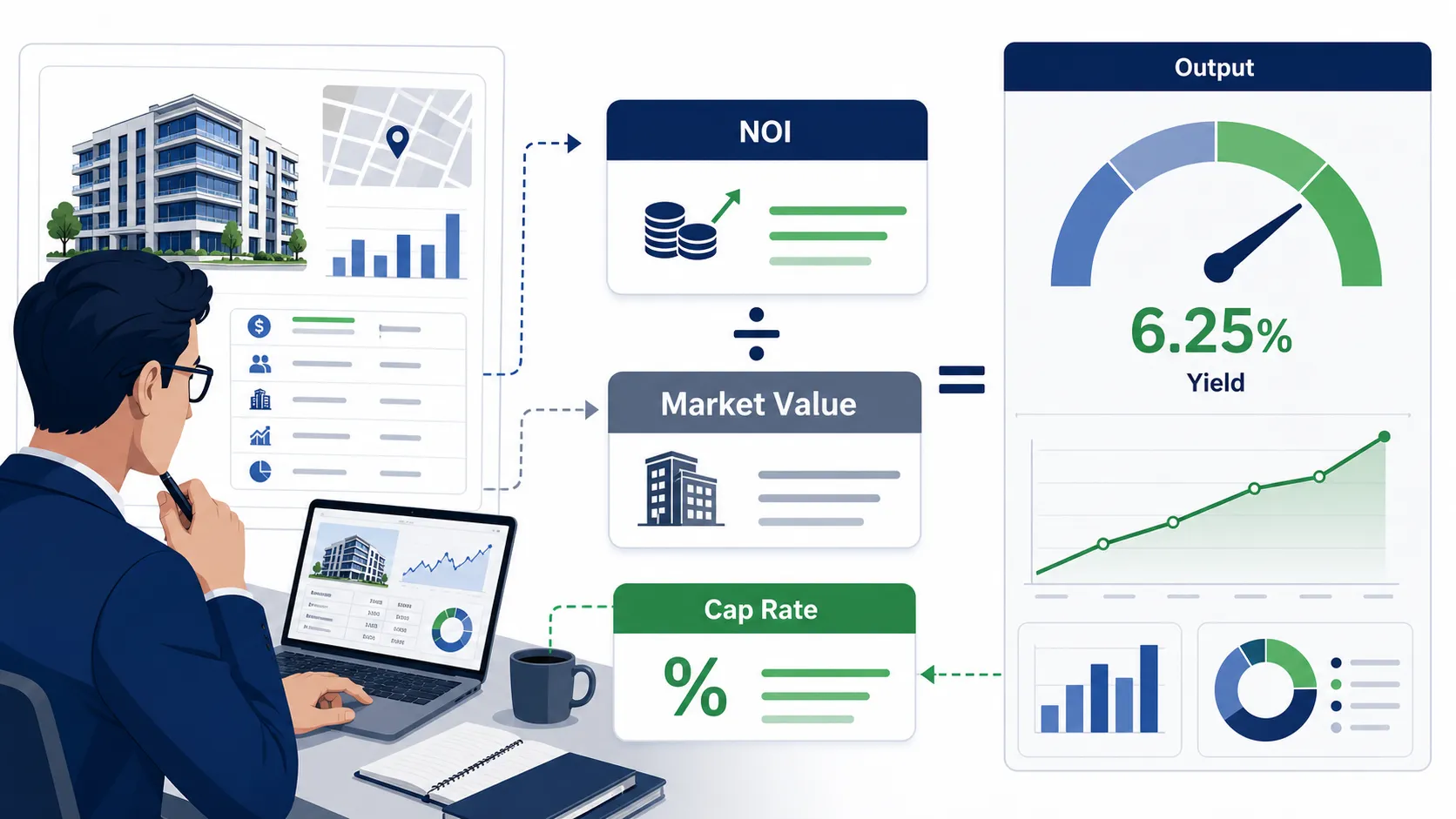
Cap Rate Calculator: Calculate Capitalization Rate Step by Step
Stop guessing property values. The cap rate formula delivers a single-year yield metric that strips out debt, letting you compare diverse assets instantly. Misjudge this rate, and you risk locking capital into an underperforming investment.
 Corporate Finance
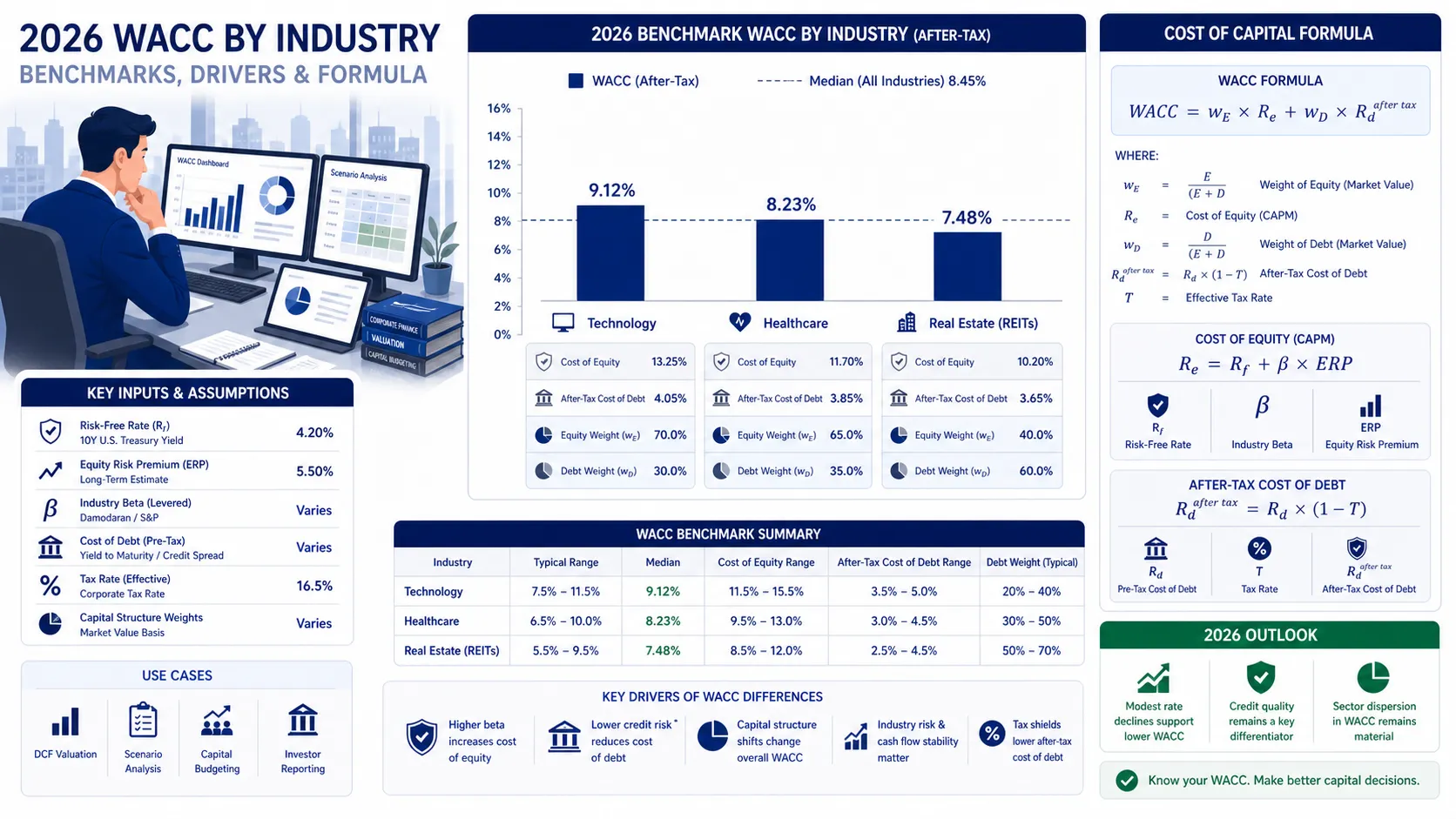
WACC by Industry: 2026 Benchmarks for Technology, Healthcare, and Real Estate
In 2026, industry WACC diverges sharply, from 5.5% for utilities to over 11.5% for software. CFOs must benchmark their discount rate against peers to ground valuations in market reality.
 Corporate Finance
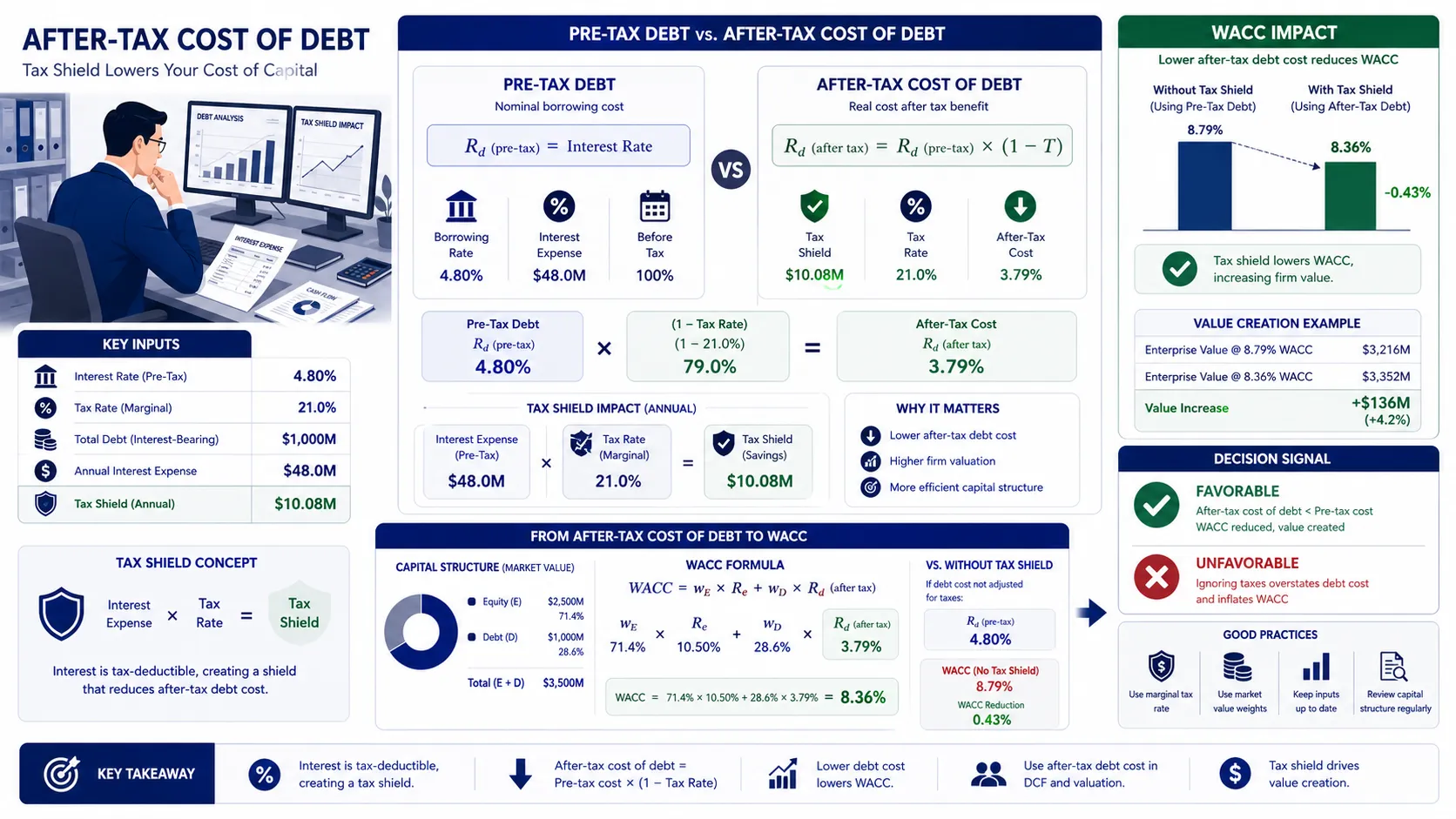
What Is After-Tax Cost of Debt and How Does It Lower WACC?
Interest payments are tax-deductible, making debt cheaper than equity and lowering your company's WACC. The after-tax cost of debt reveals this true, subsidized borrowing rate.
Frequently Asked Questions
What is the difference between Rental Yield and Cap Rate?
Does Rental Yield include mortgage interest payments?
How does vacancy affect rental yield calculations?
Why is net rental yield more important than gross yield?
The real estate calculations, yield projections, and cash flow reports generated by BizToolkitPro are for educational and informational purposes only. They do not constitute formal real estate brokerage, lending underwriting, tax counsel, or legal advice.
Investment returns, debt coverage ratios, and capitalization metrics (including Cap Rate, DSCR, Cash-on-Cash, and Waterfall distributions) are simulated based on user-provided inputs and assumptions. Local housing laws, property taxes, market vacancies, and interest rates fluctuate dynamically; therefore, BizToolkitPro makes no warranties regarding the accuracy or real-world applicability of these projections.
Always perform your own independent physical and financial due diligence on properties, and consult with a licensed Real Estate Broker, Mortgage Underwriter, Tax Advisor, or real estate attorney before signing purchase agreements or securing loans.