
Real Estate Portfolio Calculator for Multi-Asset Performance and Risk
Use this focused Real Estate Portfolio Calculator, a premium utility engineered for real estate fund managers, syndicators, and private equity investors. Evaluating individual assets is crucial, but analyzing the aggregated performance of a multi-asset portfolio is vital for covenant compliance and diversification audits.
This online calculator combines property values, debt obligations, Net Operating Income (NOI), and equity investments to solve for weighted leverage (LTV), debt service coverage (DSCR), weighted cap rate, cash yield, and largest asset concentration risk. Complete with scenario comparison blocks (Base, Bull, and Bear cases) and an interactive DSCR sensitivity matrix, it provides institutional-grade depth for analyzing real estate holdings.
Portfolio Data
Aggregated values of your property holdings.
Have a suggestion or found a calculation discrepancy? Let us know!
How to use the real estate portfolio calculator
Inputs required for multi-property portfolio underwriting
To run a complete portfolio risk analysis, collect the following aggregated metrics from your property schedule:
- Total Property Market Value: The sum of the current appraised market values of all properties.
- Total Debt Outstanding: The sum of all outstanding mortgage balances.
- Annual Portfolio NOI: The combined Net Operating Income of all assets.
- Annual Debt Service: Combined annual principal and interest mortgage payments.
- Annual Net Cash Flow: Total NOI minus total debt service.
- Value of Largest Asset: Market value of the single largest holding.
- Total Equity Invested: Cumulative cash equity capital used to acquire the portfolio.
How to interpret portfolio risk warnings
The calculator evaluates risk thresholds and triggers alerts for key banking and investment guidelines:
If your LTV exceeds 80%, a high leverage warning is triggered. A DSCR below 1.20x triggers a low debt-coverage warning. Additionally, if the Largest Asset Concentration exceeds 40%, a concentration risk alert is generated. This ensures you can audit vulnerability to a single asset's tenant default or vacancy shock.
Portfolio metrics methodology and formulas
Key Portfolio Formulas
Aggregated portfolio indicators are computed as follows:
Weighted cap rate vs. simple average cap rate
In a multi-property portfolio, calculating the simple average of individual cap rates yields an inaccurate metric. High-value properties dictate overall yield risk. The Weighted Cap Rate solves this by using the total NOI divided by the total portfolio value. This properly weights each property's contribution based on its relative asset value.
Understanding portfolio-level debt service coverage
Lenders assess portfolio-level DSCR during refinancing or credit line expansion. A portfolio DSCR is calculated by dividing total NOI by the total annual principal and interest debt service payments. A blended DSCR of 1.6x indicates healthy coverage. If individual properties suffer from vacancy, the cash flow from other properties supports the portfolio debt, illustrating the risk mitigation benefits of diversification.
Concentration risk and asset allocation limits
Concentration risk represents the exposure of a portfolio to a single asset. It is calculated by dividing the value of the largest property by the total portfolio market value. If a single property represents over 40% of the portfolio value, a decline in that property's localized submarket or the bankruptcy of a major anchor tenant can severely damage portfolio-wide yield stability.
Portfolio example calculation
Sample multi-asset property schedule
Let's evaluate a portfolio consisting of three commercial assets with the following aggregated performance:
- Total Property Value = $5,000,000
- Total Debt Outstanding = $3,000,000
- Annual Portfolio NOI = $400,000 per year
- Annual Debt Service = $250,000 per year
- Annual Net Cash Flow = $120,000 per year
- Value of Largest Property = $1,200,000
- Total Equity Invested = $1,800,000
Step-by-step risk metric audit
1. Net Portfolio Equity: $5,000,000 - $3,000,000 = $2,000,000.
2. Portfolio Leverage (LTV): ($3,000,000 / $5,000,000) * 100 = 60.00%.
3. Weighted Cap Rate: ($400,000 / $5,000,000) * 100 = 8.00%.
4. Cash-on-Cash Yield: ($120,000 / $1,800,000) * 100 = 6.67%.
5. Portfolio Debt Service Coverage (DSCR): $400,000 / $250,000 = 1.60x.
6. Largest Asset Concentration: ($1,200,000 / $5,000,000) * 100 = 24.00%. This portfolio reflects stable risk profiles.
Common Mistakes in portfolio underwriting
Using simple averages for portfolio cap rates
A frequent mistake is averaging individual cap rates to determine portfolio-wide yield. High-value properties dictate overall yield risk. Weighted cap rates must be computed using aggregate portfolio Net Operating Income (NOI) divided by total market value.
Under-estimating localized concentration risks
Fund managers often ignore concentration risks if the largest property is stable. However, if a single property represents over 40% of the portfolio value, tenant defaults or localized submarket shocks can severely damage portfolio-wide debt service coverages.
- Weight by valuation: Always weight yield indicators (cap rates, LTVs) by property value.
- Monitor covenant buffers: Ensure blended DSCR maintains a 0.20x buffer over loan covenants.
- Audit concentration limits: Review the asset mix to keep single-asset exposure under 30%-40%.
What your portfolio return results mean
Understanding leverage (LTV) limits
A portfolio LTV of 60% is conservative, allowing room to secure additional credit lines or withstand market downturns. LTVs exceeding 75% are typical for highly leveraged funds, which boost cash yield but increase default risk if cap rates expand.
Blended DSCR and lender limits
Lenders typically require a minimum DSCR of 1.25x for portfolio refinancing. If your blended DSCR falls below this threshold, lenders may restrict distributions, force lockboxes, or require cash sweep provisions, limiting fund liquidity.
The risk of single-asset concentration
A concentration rate above 40% means the portfolio lacks diversification. Even if the other assets perform exceptionally well, a major tenant default or lease expiration at the primary property can drag down portfolio-wide cash yields.
Real-world case study: American Tower Corporation (AMT, FY 2025)
American Tower Corporation metrics profile
American Tower, a leading global Real Estate Investment Trust (REIT), owns and operates a vast portfolio of communications real estate, including cell towers and data centers. This analysis leverages their FY 2025 financial data to illustrate key real estate portfolio metrics, showcasing the operational performance of their specialized infrastructure assets.
American Tower's robust property revenue of $10,305 million and a strong property gross margin of 74.7% in FY 2025 highlight the operational efficiency of its specialized communications infrastructure. The estimated Net Operating Income (NOI) of approximately $7,698 million demonstrates substantial cash flow generation from its core real estate holdings. Furthermore, the derived capitalization rate of about 6.12%, based on its enterprise value, provides investors with a key performance indicator of the yield generated by the company's significant, essential digital infrastructure portfolio, underscoring its attractiveness as a stable, income-generating asset.
Related Calculators
Estimate real estate capitalization rate.
Open Tool →Occupancy Rate CalculatorCalculate occupancy and vacancy rate.
Open Tool →Cash-on-Cash ReturnMeasure levered cash return on equity.
Open Tool →NOI CalculatorCompute net operating income.
Open Tool →DSCR CalculatorSolve debt service coverage ratios.
Open Tool →Rental Property ROIEvaluate rental buy-and-hold returns.
Open Tool →Related Articles & Guides
 Real Estate
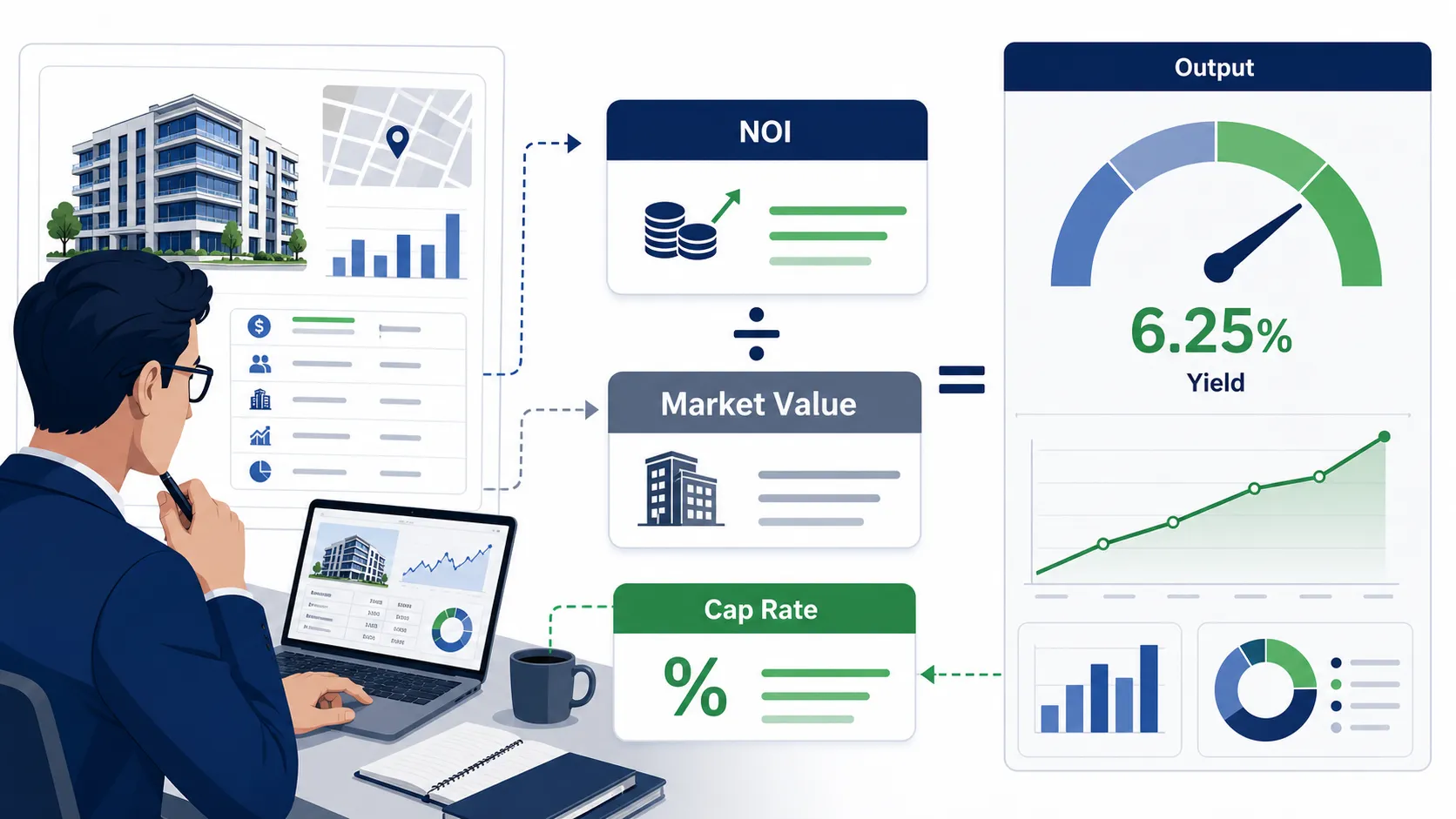
Cap Rate Calculator: Calculate Capitalization Rate Step by Step
Stop guessing property values. The cap rate formula delivers a single-year yield metric that strips out debt, letting you compare diverse assets instantly. Misjudge this rate, and you risk locking capital into an underperforming investment.
 Corporate Finance
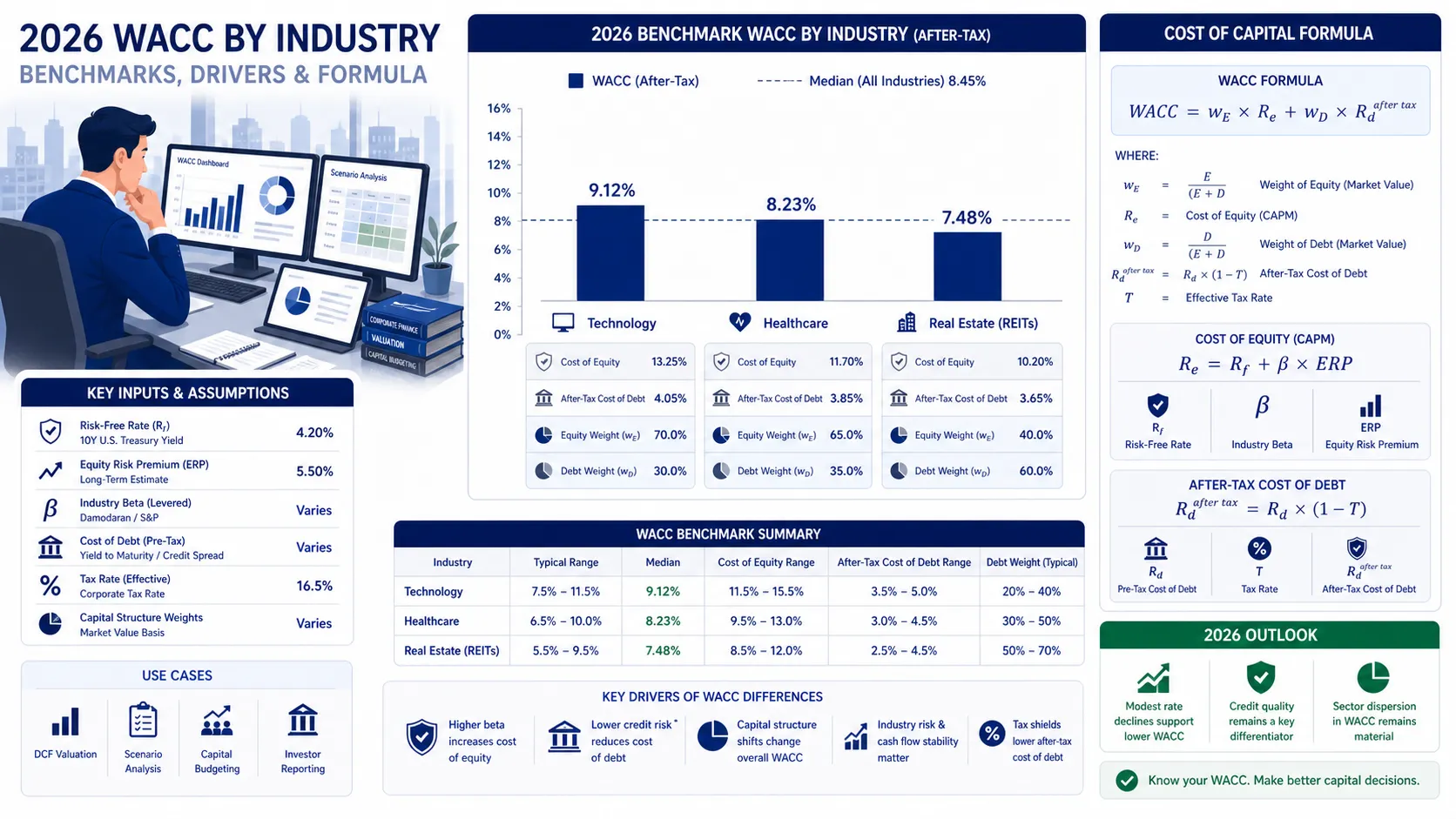
WACC by Industry: 2026 Benchmarks for Technology, Healthcare, and Real Estate
In 2026, industry WACC diverges sharply, from 5.5% for utilities to over 11.5% for software. CFOs must benchmark their discount rate against peers to ground valuations in market reality.
 Corporate Finance
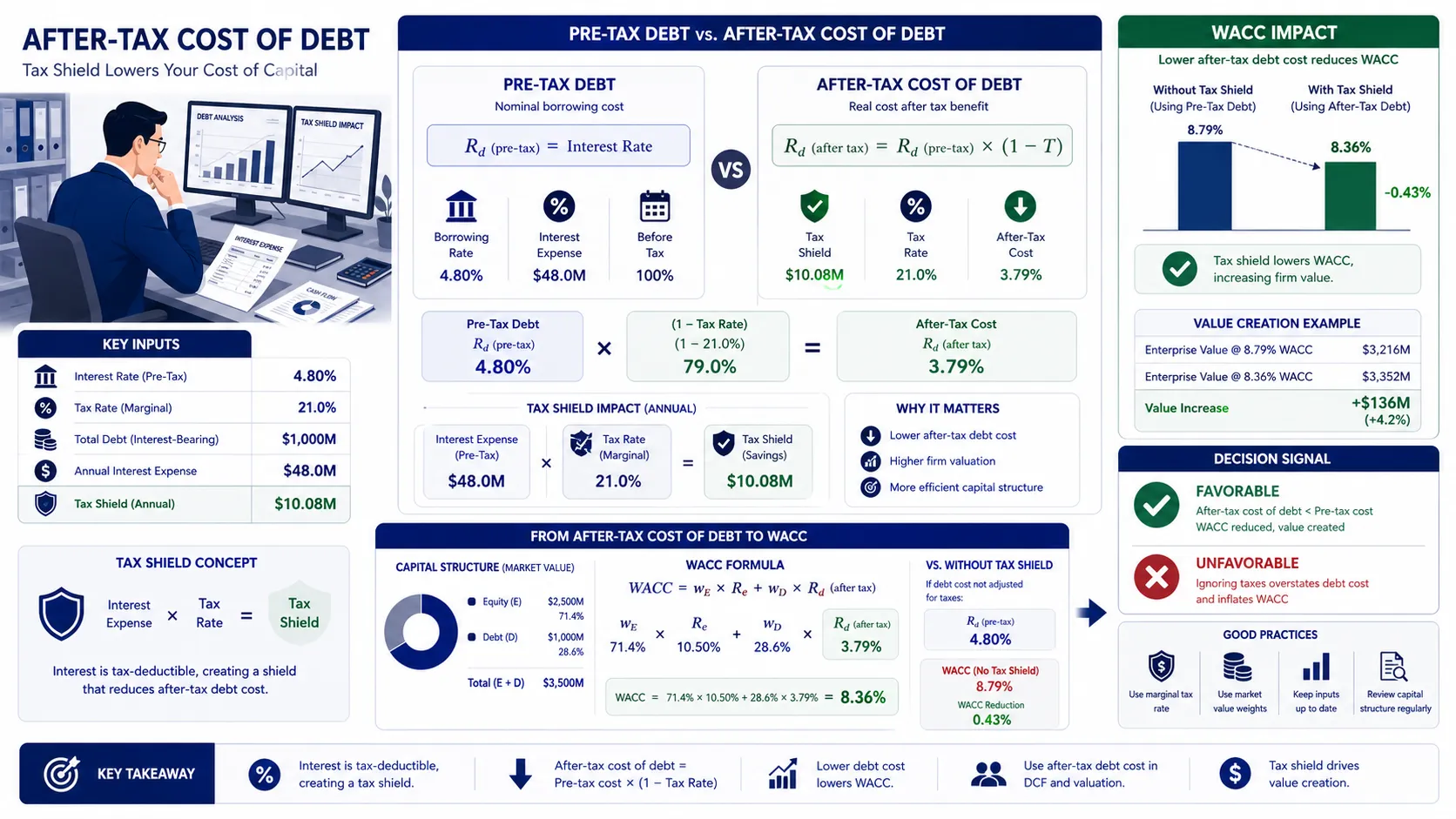
What Is After-Tax Cost of Debt and How Does It Lower WACC?
Interest payments are tax-deductible, making debt cheaper than equity and lowering your company's WACC. The after-tax cost of debt reveals this true, subsidized borrowing rate.
Frequently Asked Questions
What is a good LTV for a real estate portfolio?
How does concentration risk affect portfolio stability?
What is the difference between cap rate and cash-on-cash yield?
The real estate calculations, yield projections, and cash flow reports generated by BizToolkitPro are for educational and informational purposes only. They do not constitute formal real estate brokerage, lending underwriting, tax counsel, or legal advice.
Investment returns, debt coverage ratios, and capitalization metrics (including Cap Rate, DSCR, Cash-on-Cash, and Waterfall distributions) are simulated based on user-provided inputs and assumptions. Local housing laws, property taxes, market vacancies, and interest rates fluctuate dynamically; therefore, BizToolkitPro makes no warranties regarding the accuracy or real-world applicability of these projections.
Always perform your own independent physical and financial due diligence on properties, and consult with a licensed Real Estate Broker, Mortgage Underwriter, Tax Advisor, or real estate attorney before signing purchase agreements or securing loans.