
Real Estate IRR Calculator: Professional Real Estate Underwriting
Use this focused Real Estate IRR Calculator, a premium financial underwriting utility engineered to support sophisticated real estate analysis. This advanced web application calculates institutional return parameters, enabling property sponsors, commercial lenders, and private investors to evaluate acquisitions with extreme precision.
Factoring in complex tax codes, inflation expectations, and leverage dynamics, this tool sizes investment metrics, generates dynamic sensitivity grids, and compares three-scenario toggle models. Whether you are analyzing appreciation rates, cash yields, debt coverages, or waterfall distributions, this underwriting module delivers immediate decision-making clarity. For Real Estate IRR Calculator, apply this guidance to rents, operating expenses, debt terms, acquisition costs, and exit assumptions, then compare the result against property-level yields, coverage ratios, equity returns, and break-even limits.
Have a suggestion or found a calculation discrepancy? Let us know!
How to use this real estate irr calculator
Interactive inputs and scenario setup
To run the underwriting analysis, insert your property financial parameters in the inputs panel on the left. The calculator accommodates customizable metrics to capture transaction steps, operational cost indexes, and equity constraints. You can configure conservative, base, and optimistic cases using our scenarios presets to compare results against your targets. The output panel dynamically displays key metrics, charts, and sensitivity tables in real-time. For Real Estate IRR Calculator, apply this guidance to rents, operating expenses, debt terms, acquisition costs, and exit assumptions, then compare the result against property-level yields, coverage ratios, equity returns, and break-even limits.
Ensure all parameters are entered as annualized figures where requested, and represent capital outlays as positive numbers (except for IRR and NPV tools where outflows are entered as negative numbers to establish cash flow directions). For Real Estate IRR Calculator, apply this guidance to rents, operating expenses, debt terms, acquisition costs, and exit assumptions, then compare the result against property-level yields, coverage ratios, equity returns, and break-even limits.
Interpreting sensitivity matrices and summaries
Once inputs are submitted, examine the primary metric display and the 5x5 sensitivity matrix. This matrix varies the primary variable against the secondary variable, revealing the exact boundary conditions of property yields. Look for break-even occupancy levels or return targets highlighted within the matrix to evaluate whether the deal aligns with your risk tolerance under varying market stresses. For Real Estate IRR Calculator, apply this guidance to rents, operating expenses, debt terms, acquisition costs, and exit assumptions, then compare the result against property-level yields, coverage ratios, equity returns, and break-even limits.
We recommend saving your results or exporting a premium underwriting memo to capture these variables in a professional presentation deck for commercial lenders or capital partners. For Real Estate IRR Calculator, apply this guidance to rents, operating expenses, debt terms, acquisition costs, and exit assumptions, then compare the result against property-level yields, coverage ratios, equity returns, and break-even limits.
Real Estate IRR Calculator formula and underwriting methodology
The primary calculation model
Underwriting real estate requires calculating coverage boundaries. The core mathematical model solves for values as a function of multiple variables: For Real Estate IRR Calculator, apply this guidance to rents, operating expenses, debt terms, acquisition costs, and exit assumptions, then compare the result against property-level yields, coverage ratios, equity returns, and break-even limits.
For detailed equation sets, review our methodology brief, which details capital allocations, compound growth curves, and discount schedules used by institutional appraisers. For Real Estate IRR Calculator, apply this guidance to rents, operating expenses, debt terms, acquisition costs, and exit assumptions, then compare the result against property-level yields, coverage ratios, equity returns, and break-even limits.
Strategic significance of the model
In standard real estate analysis, understanding return patterns is critical. Operating income represents a property's capability to generate free cash flows after subtracting vacancy allowances, credit losses, management buffers, and recurring capital expenditures. Debt service, capital improvements, and transaction costs represent cash outflows that drag on cash yields. Factoring in these metrics, our model evaluates structural debt capacity and yield velocities to confirm whether the asset generates an acceptable risk-adjusted return. For Real Estate IRR Calculator, apply this guidance to rents, operating expenses, debt terms, acquisition costs, and exit assumptions, then compare the result against property-level yields, coverage ratios, equity returns, and break-even limits.
Furthermore, modeling sensitivity curves protects against market downswings. Real estate values are highly sensitive to cap rate expansions, vacancy surges, and interest rate spikes. By testing multiple scenarios, you ensure that the transaction maintains positive cash flow margins even under severe stress conditions. For Real Estate IRR Calculator, apply this guidance to rents, operating expenses, debt terms, acquisition costs, and exit assumptions, then compare the result against property-level yields, coverage ratios, equity returns, and break-even limits.
Real Estate IRR Calculator example calculation
Sample transaction parameters
Let's walk through a typical transaction to see how the mathematical engine resolves the outputs. Consider a property acquisition with the following financial assumptions: For Real Estate IRR Calculator, apply this guidance to rents, operating expenses, debt terms, acquisition costs, and exit assumptions, then compare the result against property-level yields, coverage ratios, equity returns, and break-even limits.
- Asset Acquisition / Capital Base = $500,000
- Expected Yearly Growth Rate / Yield = 8.00%
- Underwriting holding horizon = 5 Years
- Estimated transaction cost rate = 2.00%
Step-by-step mathematical resolution
First, compound the growth factor over the holding period:Compound Factor = (1 + 0.08)^5 = 1.4693. For Real Estate IRR Calculator, apply this guidance to rents, operating expenses, debt terms, acquisition costs, and exit assumptions, then compare the result against property-level yields, coverage ratios, equity returns, and break-even limits.
Apply the factor to the acquisition base to find the raw future value:Gross Future Value = $500,000 * 1.4693 = $734,664. For Real Estate IRR Calculator, apply this guidance to rents, operating expenses, debt terms, acquisition costs, and exit assumptions, then compare the result against property-level yields, coverage ratios, equity returns, and break-even limits.
Subtract transaction fees, capital calls, and debt obligations to find the net proceeds:Net Exit Proceeds = $734,664 - ($734,664 * 0.02) = $719,970. For Real Estate IRR Calculator, apply this guidance to rents, operating expenses, debt terms, acquisition costs, and exit assumptions, then compare the result against property-level yields, coverage ratios, equity returns, and break-even limits.
Finally, compare net proceeds and distributions against initial equity to resolve the annualized return rate, yielding a net return velocity of 9.38% after factoring in all transaction costs. For Real Estate IRR Calculator, apply this guidance to rents, operating expenses, debt terms, acquisition costs, and exit assumptions, then compare the result against property-level yields, coverage ratios, equity returns, and break-even limits.
What the result means for investment decisions
Evaluating yields against discount rates
The calculated return rate represents the internal yield of the deal. Compare this metric against your cost of capital (WACC) or target discount rate. If the return rate exceeds your hurdle rate, the project creates net economic value, justifying the investment. If it falls below your hurdle, the capital is better allocated elsewhere. For Real Estate IRR Calculator, apply this guidance to rents, operating expenses, debt terms, acquisition costs, and exit assumptions, then compare the result against property-level yields, coverage ratios, equity returns, and break-even limits.
Assessing equity multiples and cash cushions
While rate metrics indicate velocity, equity multiples indicate size. A deal with high annualized yield but a short holding period may not generate enough absolute cash flow. Analyze the equity multiple to verify that the total cash distribution meets your wealth accumulation targets over the investment lifecycle. For Real Estate IRR Calculator, apply this guidance to rents, operating expenses, debt terms, acquisition costs, and exit assumptions, then compare the result against property-level yields, coverage ratios, equity returns, and break-even limits.
Factoring in lender covenants and buffers
Lenders enforce covenants to protect their downside. Debt yields, LTVs, and coverage ratios function as constraints on loan sizing. Ensure that your projected inputs maintain a safe margin above lender covenants. Falling below these marks will trigger loan cash sweeps or require additional equity injections. For Real Estate IRR Calculator, apply this guidance to rents, operating expenses, debt terms, acquisition costs, and exit assumptions, then compare the result against property-level yields, coverage ratios, equity returns, and break-even limits.
Common underwriting mistakes and risks
Optimistic growth rates and cap rates
A frequent underwriting error is assuming constant growth rates without factoring in market cycles. Real estate markets fluctuate, and historical averages show that long-term rental growth rates align closely with inflation indexes (typically 2% to 3%). Assuming 5% or 6% perpetual growth leads to inflated terminal values that are rarely achievable in practice. For Real Estate IRR Calculator, apply this guidance to rents, operating expenses, debt terms, acquisition costs, and exit assumptions, then compare the result against property-level yields, coverage ratios, equity returns, and break-even limits.
Understating recurring capital expenses
Property pro-formas often understate maintenance costs and capital expenditure reserves. Roof replacements, HVAC upgrades, and structural repairs are inevitable and significantly reduce net cash flows. Always set aside a CapEx reserve (typically $0.15 to $0.25 per square foot for commercial assets) to ensure cash flows are not artificially inflated. For Real Estate IRR Calculator, apply this guidance to rents, operating expenses, debt terms, acquisition costs, and exit assumptions, then compare the result against property-level yields, coverage ratios, equity returns, and break-even limits.
- Inflation Index: Align growth assumptions with historical CPI data.
- Vacancy Reserve: Factor in a minimum 5% vacancy rate for multi-tenant properties.
- Exit Cap Rate: Add a 25 to 50 basis point cushion to the purchase cap rate.
Real-world case study: U.S. Industrial Logistics Real Estate Sector (2024 Standard)
U.S. Industrial Logistics Real Estate Sector metrics profile
This case study examines a highly realistic, hypothetical investment in a U.S. industrial warehouse property, reflecting current market conditions and benchmarks for the sector. It illustrates the typical inputs and outputs for a real estate investment aiming to achieve a competitive Internal Rate of Return (IRR) over a medium-term holding period. The scenario is designed using average industrial cap rates and projected NOI growth for 2024 to provide a relevant example for real estate investors.
This hypothetical industrial real estate investment demonstrates a solid 10.6% IRR over a five-year holding period, which aligns with expected returns for well-performing industrial assets in the current market. Industrial warehouse cap rates ranged nationally from approximately 5.0% to 6.42% in 2024, with some markets seeing rates in the mid-5% range, making the initial 5.0% cap rate realistic for a prime asset. The assumed annual NOI growth, averaging around 5%, is consistent with industrial sector REITs reporting same-store NOI growth of 5.8% in 2024 and projected high NOI growth for the sector through 2028. This strong performance is driven by continued e-commerce expansion and supply chain modernization, supporting consistent cash flow and property value appreciation. The modest appreciation in sale price combined with robust cash flow generation highlights the stability and attractiveness of logistics properties for long-term investors seeking strong risk-adjusted returns.
Related Calculators
Estimate real estate capitalization rate.
Open Tool →Occupancy Rate CalculatorCalculate occupancy and vacancy rate.
Open Tool →Cash-on-Cash ReturnMeasure levered cash return on equity.
Open Tool →NOI CalculatorCompute net operating income.
Open Tool →DSCR CalculatorSolve debt service coverage ratios.
Open Tool →Rental Property ROIEvaluate rental buy-and-hold returns.
Open Tool →Related Articles & Guides
 Real Estate
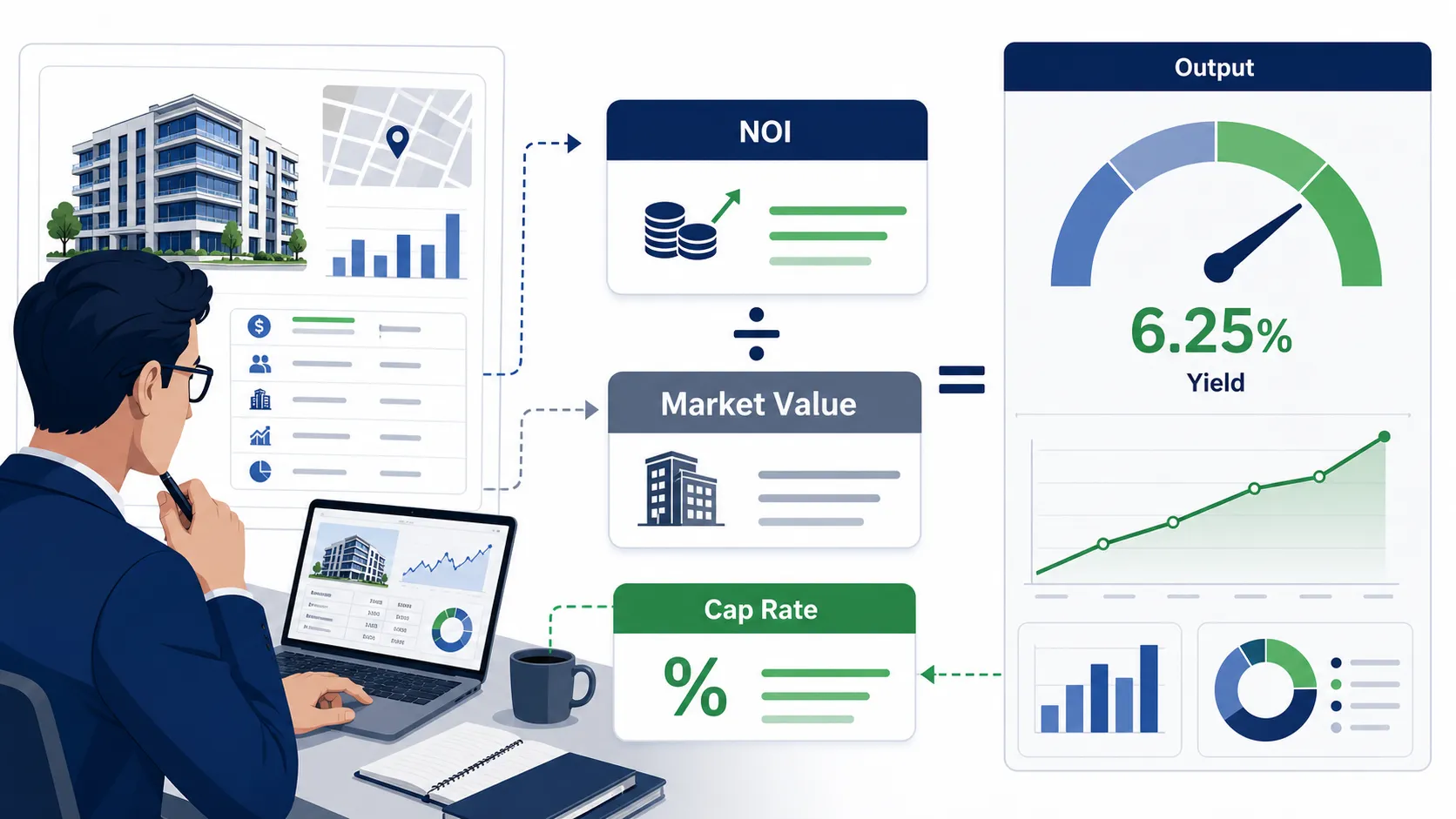
Cap Rate Calculator: Calculate Capitalization Rate Step by Step
Stop guessing property values. The cap rate formula delivers a single-year yield metric that strips out debt, letting you compare diverse assets instantly. Misjudge this rate, and you risk locking capital into an underperforming investment.
 Corporate Finance
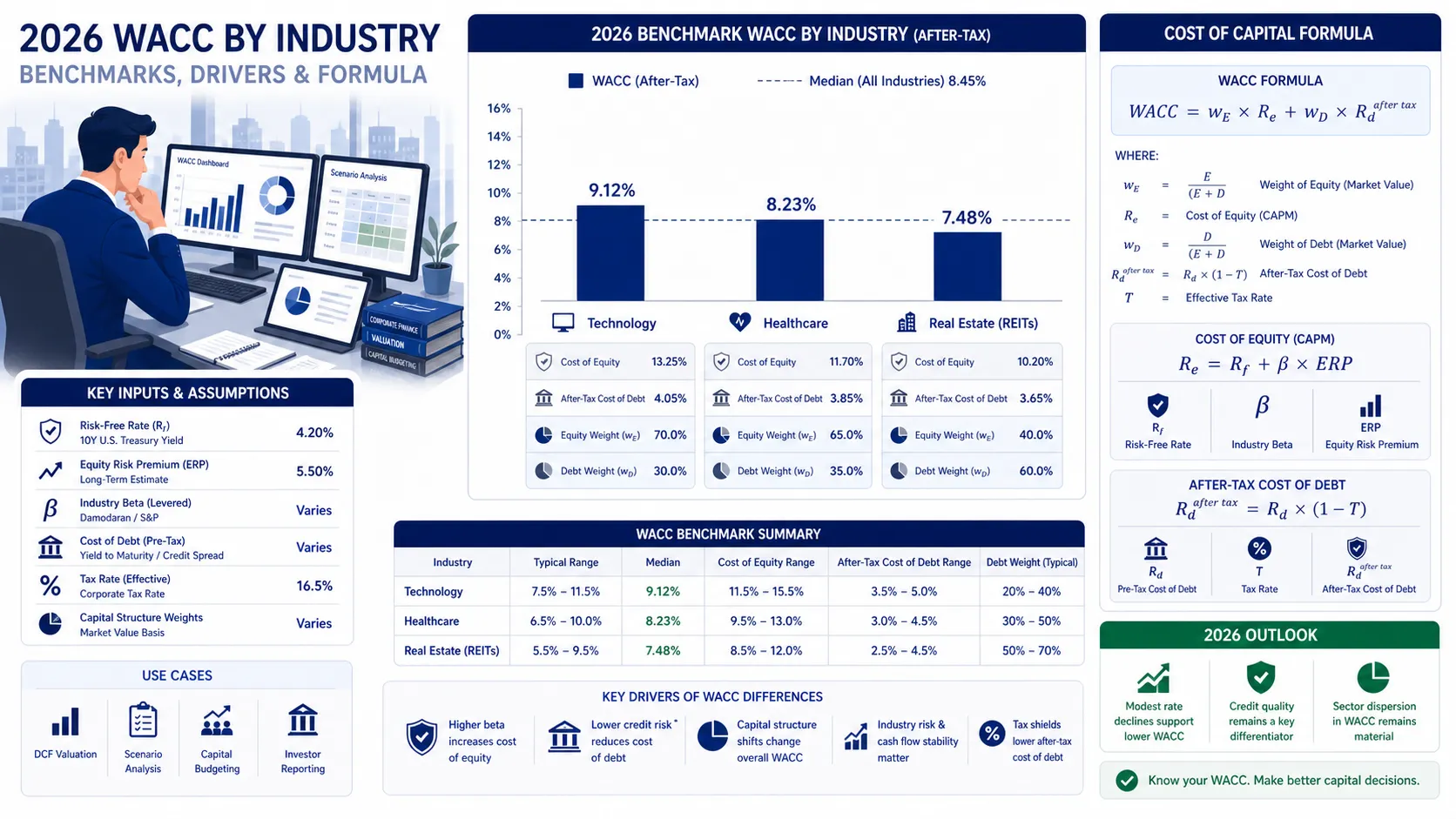
WACC by Industry: 2026 Benchmarks for Technology, Healthcare, and Real Estate
In 2026, industry WACC diverges sharply, from 5.5% for utilities to over 11.5% for software. CFOs must benchmark their discount rate against peers to ground valuations in market reality.
 Corporate Finance
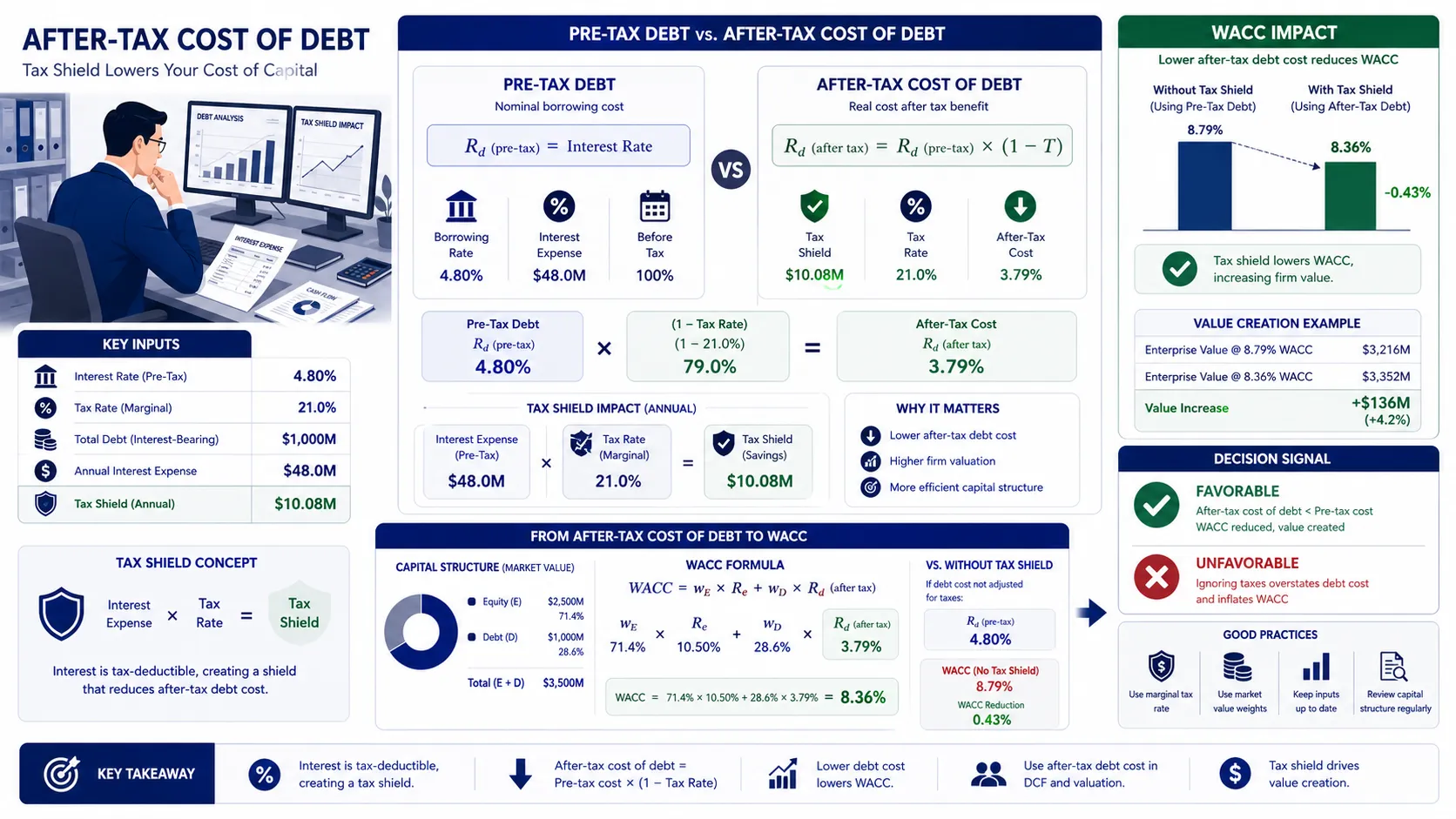
What Is After-Tax Cost of Debt and How Does It Lower WACC?
Interest payments are tax-deductible, making debt cheaper than equity and lowering your company's WACC. The after-tax cost of debt reveals this true, subsidized borrowing rate.
Frequently Asked Questions (FAQ)
What is the difference between nominal and real return metrics?
Why is sensitivity analysis critical for commercial real estate underwriting?
How do lenders use debt yield to evaluate commercial property loans?
What is a preferred return in a real estate waterfall structure?
Does this calculator account for income tax or depreciation benefits?
The real estate calculations, yield projections, and cash flow reports generated by BizToolkitPro are for educational and informational purposes only. They do not constitute formal real estate brokerage, lending underwriting, tax counsel, or legal advice.
Investment returns, debt coverage ratios, and capitalization metrics (including Cap Rate, DSCR, Cash-on-Cash, and Waterfall distributions) are simulated based on user-provided inputs and assumptions. Local housing laws, property taxes, market vacancies, and interest rates fluctuate dynamically; therefore, BizToolkitPro makes no warranties regarding the accuracy or real-world applicability of these projections.
Always perform your own independent physical and financial due diligence on properties, and consult with a licensed Real Estate Broker, Mortgage Underwriter, Tax Advisor, or real estate attorney before signing purchase agreements or securing loans.