
Preferred Return Calculator for Simple & Compounding Hurdle Rates
Use this focused Preferred Return Calculator, a premium real estate capital structuring and investor accounting utility. Accurately modeling preferred return hurdles, unpaid rollover balances, and compounding frequencies is critical for Limited Partners (LPs) auditing sponsor distributions.
This online tool is engineered to calculate both simple and compounding preferred returns, accounting for distributions paid to date and compounding schedules (monthly, quarterly, semi-annual, and annual). It solves for your accrued return, remaining unpaid balance, and total preference claim, providing dynamic base, bull, and bear scenarios. Backed by a sophisticated sensitivity grid mapping rates against hold times, this utility delivers the analytical precision demanded by institutional analysts.
Accrual Parameters
Define capital contribution and accrual settings.
Have a suggestion or found a calculation discrepancy? Let us know!
How to use the preferred return calculator
Inputs required for compounding preferred returns
To run an accurate preferred return analysis, you need to collect four key parameters from the partnership operating agreement:
- LP Invested Capital: The initial cash equity contributed by the limited partner.
- Preferred Return Rate: The agreed annual percentage hurdle (typically 6% to 10%).
- Accrual Period (Years): The number of years the investment has accrued.
- Preferred Return Paid to Date: The cumulative distributions paid to the partner to satisfy the preference claim.
Selecting compounding frequency and calculation mode
The choice of compounding frequency has a significant compounding impact over multi-year hold periods.
In Compounded Mode, unpaid returns are added to the principal balance at the end of each compounding period (monthly, quarterly, etc.), increasing the interest base for subsequent periods. In Simple Interest Mode, the preferred return is calculated strictly on the initial capital balance without compounding. The calculator allows you to toggle both modes side-by-side to understand the financial implications.
Preferred return formulas and calculation methodology
Accrual Formulas
The calculator computes preferred returns based on the chosen interest mode:
Where n is the compounding frequency per year, and t is the total accrual duration in years.
Understanding the simple interest preferred return
In a simple interest preferred return structure, the return is calculated as a fixed percentage of the initial unreturned capital contribution. If an investor contributes $500,000 at an 8% simple preferred return rate, they accrue $40,000 of preference return annually. Even if the property generates $0 cash flow in Year 1 and the $40,000 remains unpaid, the Year 2 return is still calculated on the base of $500,000, yielding another $40,000.
Compounded preferred return mechanics
Under a compounded preferred return structure, any unpaid preferred return at the end of the compounding period is added to the unreturned capital balance. In the example above, if the Year 1 preferred return of $40,000 remains unpaid, it compounds annually. The Year 2 return is calculated on the new base of $540,000, yielding $43,200 of accrued return in Year 2. Over a multi-year development hold, compounding significantly increases the investor's total preference claim.
The total preference claim and unpaid balance
The Unpaid Preferred Balance represents the cumulative accrued return minus distributions paid to date. The Total Preference Claim is the sum of the initial invested capital and the unpaid preferred balance. In the event of an asset sale or liquidation, this total claim must be fully satisfied before any junior equity tiers or sponsor promotes receive distributions.
Preferred return example calculation
Compounding vs. simple interest comparison
Let's walk through an example comparing simple interest vs. compounded preferred returns:
- Invested Capital = $500,000
- Preferred Return Rate = 8%
- Accrual Period = 2 Years
- Preferred Return Paid to Date = $30,000
- Compounding Frequency = Annual Compounding
Step-by-step math comparison
Simple Interest Method:
Total Accrued = $500,000 * 8% * 2 = $80,000.
Unpaid Balance = $80,000 - $30,000 = $50,000.
Total Preference Claim = $500,000 + $50,000 = $550,000.
Compounding Method:
Total Accrued = $500,000 * (1.08^2 - 1) = $500,000 * 16.64% = $83,200.
Unpaid Balance = $83,200 - $30,000 = $53,200.
Total Preference Claim = $500,000 + $53,200 = $553,200.
Compounding increases the unpaid balance by $3,200 over just 2 years.
Common Mistakes in preferred return calculation
Assuming compounding is the default method
A frequent mistake is applying a compounded preferred return rate when the partnership agreement defines a simple interest hurdle. In real estate, many agreements specify simple interest hurdles, meaning unpaid balances do not compound. Calculating compound interest overstates your claims.
Failing to align compounding intervals
Underwriting teams often compound balances annually when the term sheet specifies monthly compounding. More frequent compounding accelerates the growth of unpaid balances, and using the wrong interval dilutes the investor's cumulative claims.
- Review PPM clauses: Audit the exact definition of preferred return and compounding rules.
- Match compounding frequency: Ensure calculation intervals (monthly/annual) align with term sheets.
- Confirm capital adjustments: Account for any partial capital redemptions that decrease the base.
What your preferred return results mean
Evaluating effective preferred rate
Under compounding methods, the effective preferred rate is higher than the nominal rate. For instance, an 8% compounded rate over 3 years yields an effective annual rate of over 8.6%. Passive investors should track this metric to understand their true compound yield.
The severity of compounding frequency
Selecting monthly compounding vs. annual compounding increases the interest accrual rate. While monthly compounding is standard for bank mortgages, annual or quarterly compounding is typical for equity partner preferred returns. Ensure you audit the frequency defined in the partnership agreements.
Total preference claim security
A higher unpaid preferred balance increases the investor's liquidation priority claim. However, it also increases leverage risk for the overall project. The sensitivity matrix shows how the unpaid balance changes based on different holding periods.
Real-world case study: Commercial Real Estate Development Joint Venture (2024 Industry Standard)
Commercial Real Estate Development Joint Venture metrics profile
This case study illustrates a common real estate investment structure involving preferred returns in a hypothetical commercial development joint venture. Preferred returns are a fundamental concept in real estate and private equity, ensuring that a class of investors receives a specified return on their capital before the general partner or sponsor participates in profits. This setup aims to protect limited partners and align incentives within the investment partnership.
In this hypothetical real estate development, the preferred equity investor contributed $8,000,000 towards the total project equity of $10,000,000. With an 8% annual cumulative preferred return over a three-year hold period, the preferred investor is entitled to an annual return of $640,000, totaling $1,920,000 over the project's life. This amount is paid out before any profits are distributed to the common equity holders. After the preferred return is satisfied from the total project profit of $2,500,000, the remaining $580,000 is available for the common equity investors. This structure provides a prioritized and more predictable return for preferred investors while offering potential upside to common equity after meeting the preferred hurdle.
Related Calculators
Estimate real estate capitalization rate.
Open Tool →Occupancy Rate CalculatorCalculate occupancy and vacancy rate.
Open Tool →Cash-on-Cash ReturnMeasure levered cash return on equity.
Open Tool →NOI CalculatorCompute net operating income.
Open Tool →DSCR CalculatorSolve debt service coverage ratios.
Open Tool →Rental Property ROIEvaluate rental buy-and-hold returns.
Open Tool →Related Articles & Guides
 Real Estate
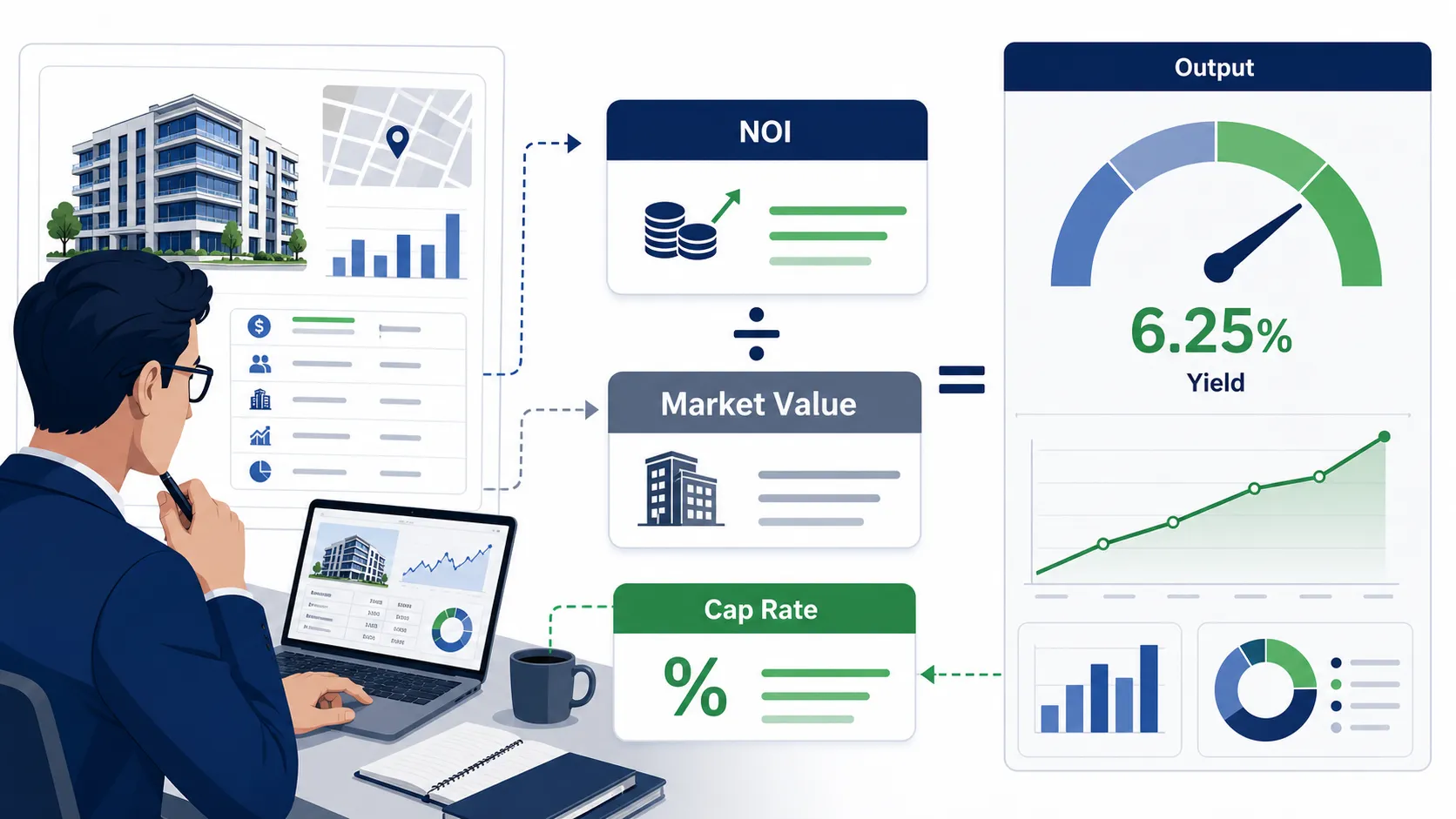
Cap Rate Calculator: Calculate Capitalization Rate Step by Step
Stop guessing property values. The cap rate formula delivers a single-year yield metric that strips out debt, letting you compare diverse assets instantly. Misjudge this rate, and you risk locking capital into an underperforming investment.
 Corporate Finance
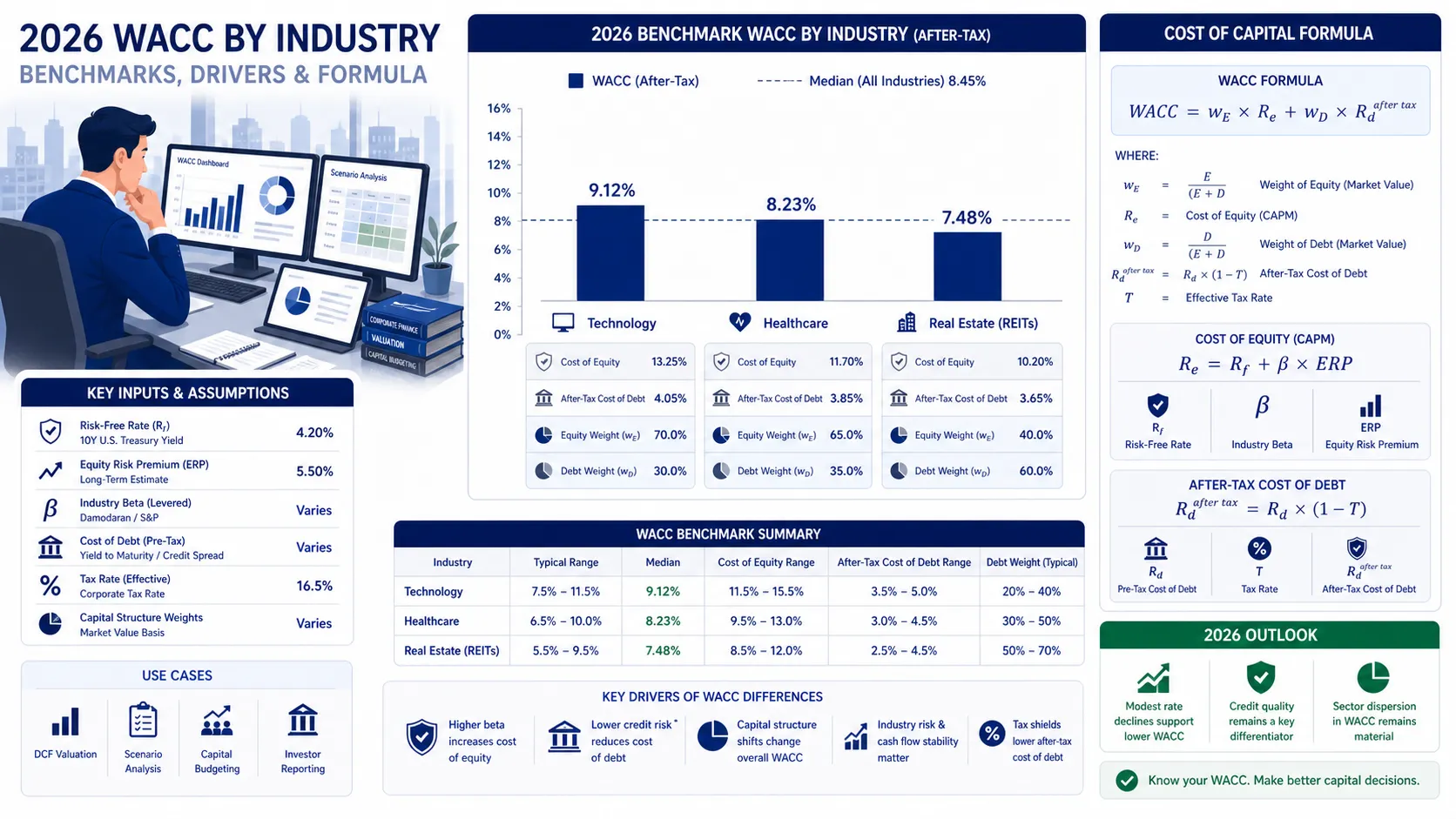
WACC by Industry: 2026 Benchmarks for Technology, Healthcare, and Real Estate
In 2026, industry WACC diverges sharply, from 5.5% for utilities to over 11.5% for software. CFOs must benchmark their discount rate against peers to ground valuations in market reality.
 Corporate Finance
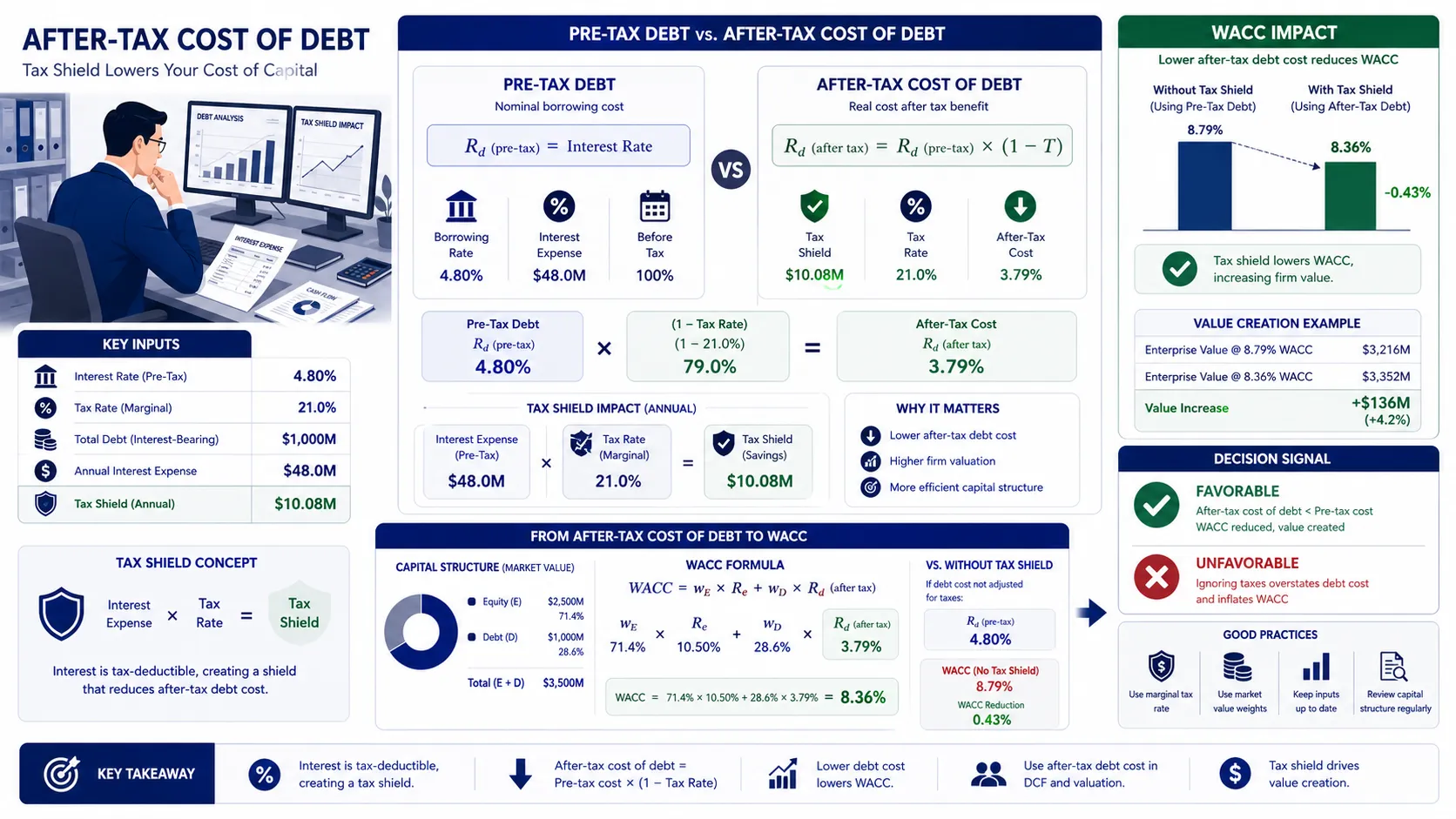
What Is After-Tax Cost of Debt and How Does It Lower WACC?
Interest payments are tax-deductible, making debt cheaper than equity and lowering your company's WACC. The after-tax cost of debt reveals this true, subsidized borrowing rate.
Frequently Asked Questions
What is a preferred return?
Why does compounding frequency matter for preferred returns?
What is the difference between preferred return and preferred stock?
The real estate calculations, yield projections, and cash flow reports generated by BizToolkitPro are for educational and informational purposes only. They do not constitute formal real estate brokerage, lending underwriting, tax counsel, or legal advice.
Investment returns, debt coverage ratios, and capitalization metrics (including Cap Rate, DSCR, Cash-on-Cash, and Waterfall distributions) are simulated based on user-provided inputs and assumptions. Local housing laws, property taxes, market vacancies, and interest rates fluctuate dynamically; therefore, BizToolkitPro makes no warranties regarding the accuracy or real-world applicability of these projections.
Always perform your own independent physical and financial due diligence on properties, and consult with a licensed Real Estate Broker, Mortgage Underwriter, Tax Advisor, or real estate attorney before signing purchase agreements or securing loans.