
Partnership Return Calculator for Real Estate Deal Structuring
Use this focused Partnership Return Calculator, a premium real estate syndication and joint venture analysis utility. Estimating the distributions and returns for specific equity partners is a vital step in underwriting property deals and aligning investment incentives.
This tool computes the financial splits between operating partners and equity investors, generating a capital ownership percentage, annual distribution flows, exit share, and critical return metrics like ROI and Equity Multiple. With dynamic scenario profiling (Base, Bull, and Bear cases) and an interactive sensitivity grid, you can immediately evaluate how changes in distribution structures and exit values affect investor profits.
Deal Parameters
Enter equity allocation and return parameters.
Have a suggestion or found a calculation discrepancy? Let us know!
How to use the partnership return calculator
Essential investment parameters explained
To run a precise partnership return model, you will need to gather several key metrics from your partnership agreement (usually found in the Operating Agreement or Private Placement Memorandum):
- Your Capital Contribution: The specific amount of cash equity you are putting into the partnership deal.
- Total Deal Capitalization: The total equity raised from all partners (LPs and GPs) combined.
- Annual Distributable Cash Flow: The projected annual net cash flow of the property or business after debt service and expenses.
- Your Cash Distribution Split: The percentage of annual cash distributions allocated to you.
- Estimated Exit Net Proceeds: The total cash profit distributed to equity partners upon sale.
- Target Holding Period: The expected number of years the partnership will hold the asset before selling.
Understanding the ownership vs. distribution splitting dynamic
In modern real estate transactions, equity ownership does not always match distribution splits. A General Partner (GP) might contribute only 5% of the capital but receive a 20% split of the cash flow as a promotion fee.
This utility allows you to decouple your cash split from your capital contribution percentage. If your cash split is higher than your capital contribution percentage, the tool will flag this with a sensitivity advisory. This helps you audit the promote structure to ensure it matches the syndicate terms.
Partnership return formulas and calculation methodology
Core partnership formulas
The calculator computes your metrics based on capital weights, cash splits, and the holding horizon:
These formulas isolate the return to a single partner, allowing both passive Limited Partners and active General Partners to verify their specific return metrics.
Calculating capital ownership percentage
Capital ownership represents your pro-rata share of the initial transaction equity. This is the denominator for calculating your Equity Multiple and ROI. For example, if you contribute $300,000 to a $1,000,000 syndicate capitalization, you have a 30% capital ownership stake. In plain vanilla joint ventures, this 30% stake also governs all distributions. However, in more complex arrangements, preferred returns and waterfalls may introduce tier-based splits.
Determining annual partner distributions and exit shares
Your annual cash distribution is your split percentage multiplied by the annual net distributable cash of the syndicate property. Similarly, the exit proceeds share is computed by multiplying the total exit net proceeds by your cash split percentage. In some partnership structures, GPs are rewarded with a disproportionate share of exit proceeds (called a promote or carry) once the LPs receive their capital back. Ensure your inputs reflect the blended average split rate across the entire target holding horizon.
Evaluating investor return metrics: ROI vs. equity multiple
Return on Investment (ROI) and Equity Multiple are the twin metrics used to gauge passive deal profitability:
- Partner ROI: Calculated as
((Total Proceeds - Contribution) / Contribution) * 100. This represents the total compounded rate of return on your initial capital across the entire holding term. - Equity Multiple: Calculated as
Total Proceeds / Contribution. A multiple of 2.0x means you doubled your cash investment over the hold period. Unlike IRR, the equity multiple does not factor in the time value of money, but it is highly useful for comparing absolute dollar returns.
Partnership return example calculation
Sample real estate syndication parameters
Let's run a calculation based on a common real estate syndicate structure where a passive LP contributes the majority of capital but agrees to a promote fee for the GP:
- Partner Capital Contribution = $300,000
- Total Capitalization = $1,000,000 (30% capital contribution)
- Annual Distributable Cash = $100,000 per year
- Partner Cash Split = 30% ($30,000 per year)
- Exit Net Proceeds = $1,500,000
- Holding Horizon = 5 Years
Step-by-step distribution walkthrough
1. First, calculate the ownership share: $300,000 / $1,000,000 = 30.00%.
2. Compute the cumulative annual cash distributions over 5 years: $30,000 * 5 = $150,000.
3. Determine the exit share proceeds: 30% * $1,500,000 = $450,000.
4. Aggregate total partner cash returns: $150,000 + $450,000 = $600,000.
5. Solve for the return metrics: Partner ROI is (($600,000 - $300,000) / $300,000) * 100 = 100.00%, and the Equity Multiple is $600,000 / $300,000 = 2.00x. This indicates a highly successful deal.
What your partnership return results mean
Assessing high vs. low equity multiple returns
A higher equity multiple (above 1.8x) is typical for opportunistic or value-add real estate projects that involve significant development or lease-up risk. A lower equity multiple (1.2x to 1.5x) is common for stable, cash-flowing core assets in primary metropolitan markets. While core deals yield lower multiples, they carry far less default risk.
The role of exit proceeds in overall profitability
In real estate deals, exit proceeds usually account for 60% to 80% of total investor returns. Operational cash flow provides stability, but the sale price (driven by cap rate compression, rent growth, or property improvements) creates the bulk of the equity multiple. The sensitivity matrix shows how vulnerable your ROI is to changes in the final exit price.
Hurdle rates and general partner splits
If a GP structure includes hurdles (e.g., a 10% IRR hurdle before the GP promote kicks in), the average cash split percentage will shift during the investment period. LPs should use this tool to calculate their blended distribution split across the entire deal life cycle to confirm their final net returns.
Partnership return use cases and structural variations
General partner (GP) vs. limited partner (LP) structures
In a standard syndication, the Limited Partners provide the capital, while the General Partner sources and manages the deal. GP splits are often incentivized through promotes (e.g., a 20% GP split despite a 1% GP capital contribution). This calculator handles both roles: LPs can input their capital and net cash splits, and GPs can model their return on sweat equity by setting their contribution low and cash split high.
Joint ventures vs. syndications
Joint ventures (JVs) typically involve fewer partners, with each contributing capital and sharing control. JV splits are usually pro-rata (matching capital contributions). Syndications involve passive investors (LPs) who yield control to a sponsor (GP). Syndication splits require sophisticated waterfall modeling to calculate the correct blended splits.
Preferred returns vs. straight splits
A preferred return is an priority claim on cash flow (e.g., LPs receive an 8% return before the GP receives any distribution). Once the pref is paid, distributions follow a straight split. If a preferred return is unpaid in a given year, it typically rolls over and compounds.
- Overlooking promote splits: Assuming your cash split will match your ownership percentage throughout the deal.
- Pre-debt cash flows: Using Net Operating Income instead of net cash flow after debt service for distributable cash.
- Gross vs. Net proceeds: Using the gross exit sale price instead of exit proceeds net of debt payoff and transactions costs.
Real-world case study: HubSpot (SaaS Partner Benchmark) (HUBS, FY 2023 (Benchmark Estimates))
HubSpot (SaaS Partner Benchmark) metrics profile
This case study examines the potential returns from a robust partner ecosystem, using HubSpot's reported FY 2023 total revenue as a base. While HubSpot's exact partner program financials are not publicly itemized, this analysis applies industry benchmarks to illustrate the financial impact of a successful SaaS partnership strategy.
HubSpot, a leader in the SaaS CRM space, relies significantly on its partner ecosystem for growth, with Solution Partners and referred customers representing approximately 46% of their revenue for FY 2023. Our benchmark analysis, based on HubSpot's FY 2023 total revenue of $2.166 billion, applies conservative industry estimates for partner contribution and program investment to demonstrate potential returns. The estimated 733.3% Partnership ROI indicates that for every dollar invested in the partner program, over seven dollars are generated in revenue. This highlights the strategic importance of channel partnerships for scaling revenue efficiently and expanding market reach within the competitive SaaS landscape, showcasing that strong partner programs can be significant growth engines for SaaS companies.
Related Calculators
Estimate real estate capitalization rate.
Open Tool →Occupancy Rate CalculatorCalculate occupancy and vacancy rate.
Open Tool →Cash-on-Cash ReturnMeasure levered cash return on equity.
Open Tool →NOI CalculatorCompute net operating income.
Open Tool →DSCR CalculatorSolve debt service coverage ratios.
Open Tool →Rental Property ROIEvaluate rental buy-and-hold returns.
Open Tool →Related Articles & Guides
 Real Estate
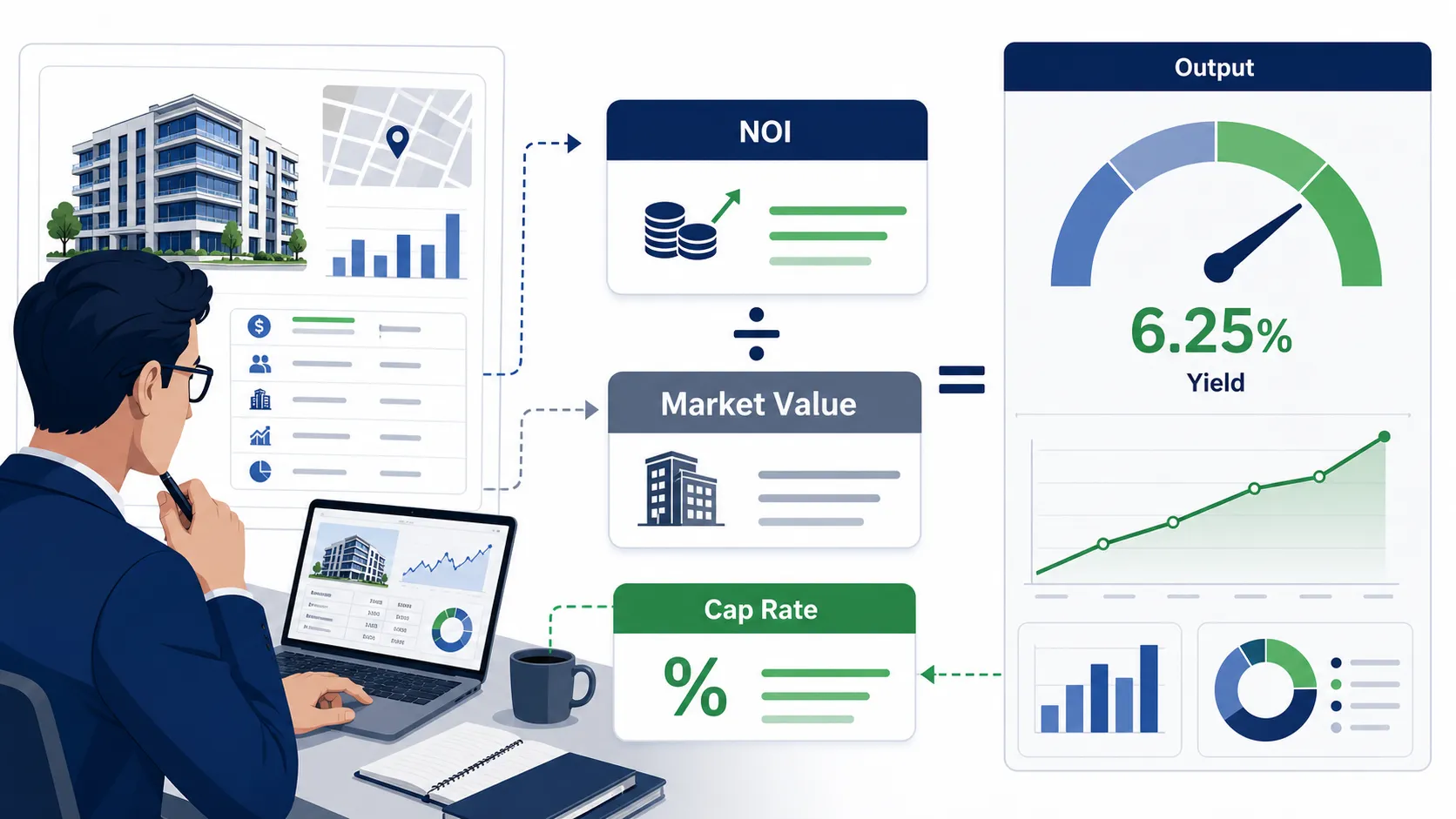
Cap Rate Calculator: Calculate Capitalization Rate Step by Step
Stop guessing property values. The cap rate formula delivers a single-year yield metric that strips out debt, letting you compare diverse assets instantly. Misjudge this rate, and you risk locking capital into an underperforming investment.
 Corporate Finance
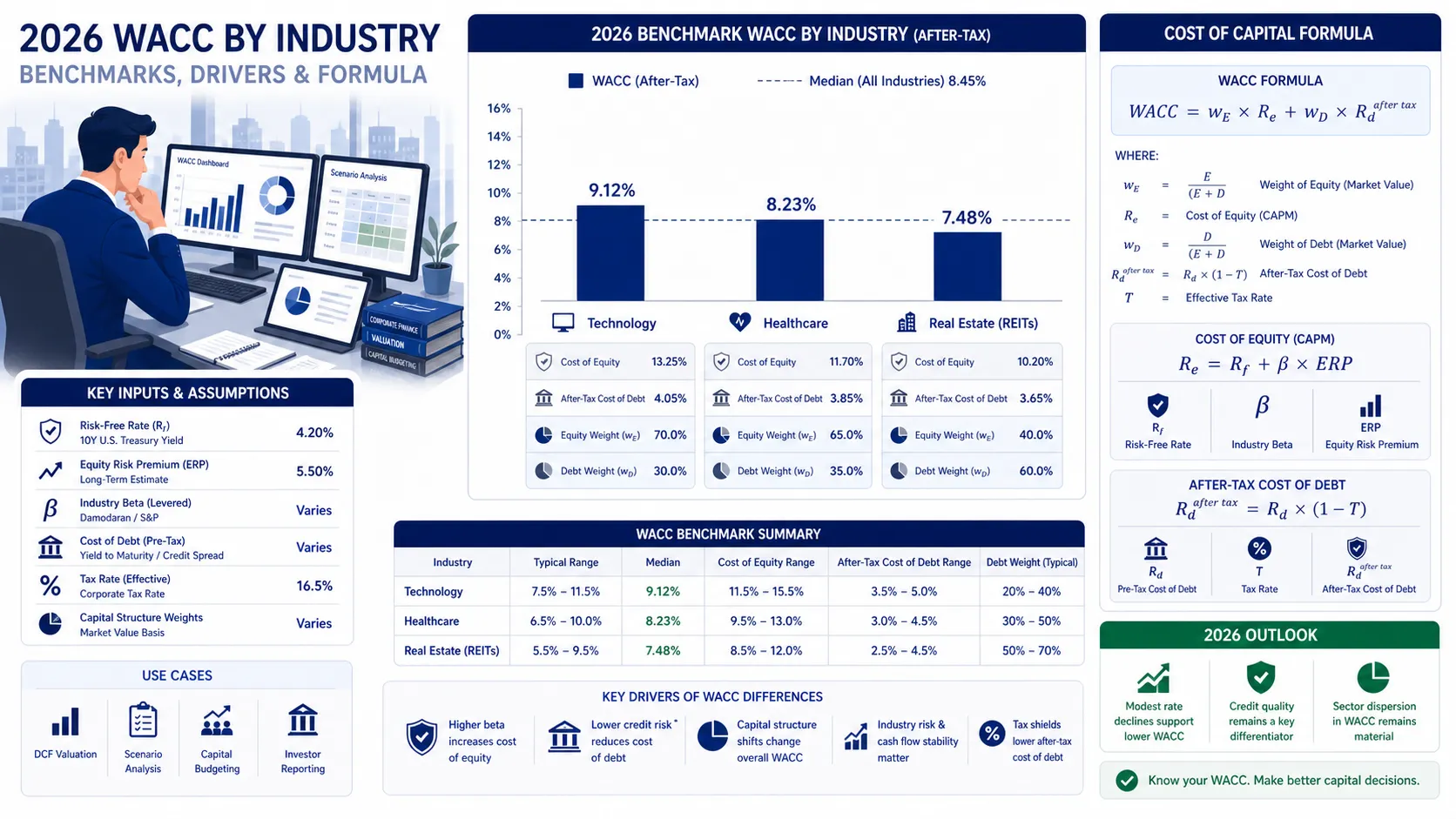
WACC by Industry: 2026 Benchmarks for Technology, Healthcare, and Real Estate
In 2026, industry WACC diverges sharply, from 5.5% for utilities to over 11.5% for software. CFOs must benchmark their discount rate against peers to ground valuations in market reality.
 Corporate Finance
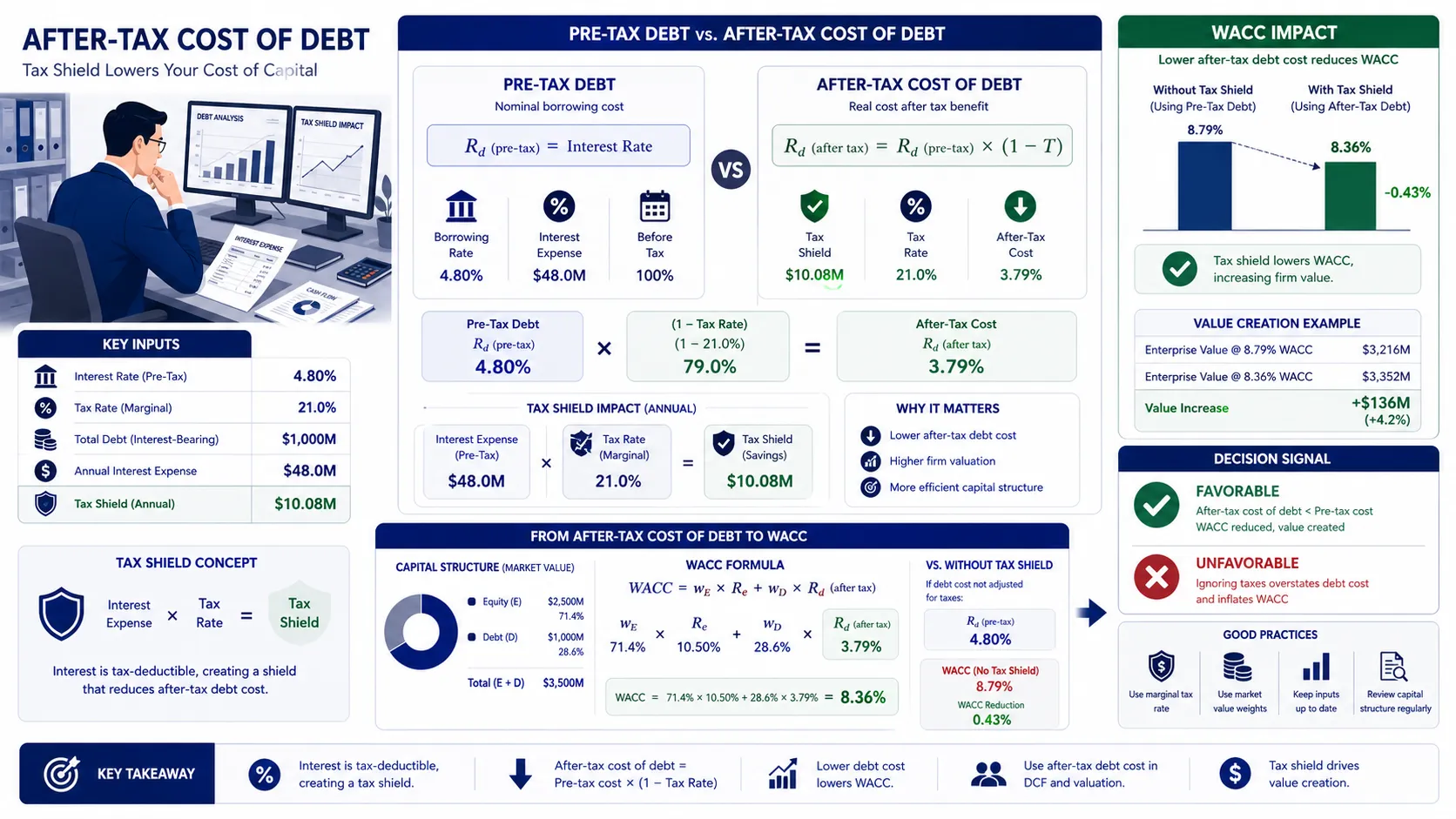
What Is After-Tax Cost of Debt and How Does It Lower WACC?
Interest payments are tax-deductible, making debt cheaper than equity and lowering your company's WACC. The after-tax cost of debt reveals this true, subsidized borrowing rate.
Frequently Asked Questions
What is a GP promote or carry?
Why decoupling cash split from capital share matters?
What is a good Equity Multiple for real estate deals?
Does this calculator account for refinancing?
The real estate calculations, yield projections, and cash flow reports generated by BizToolkitPro are for educational and informational purposes only. They do not constitute formal real estate brokerage, lending underwriting, tax counsel, or legal advice.
Investment returns, debt coverage ratios, and capitalization metrics (including Cap Rate, DSCR, Cash-on-Cash, and Waterfall distributions) are simulated based on user-provided inputs and assumptions. Local housing laws, property taxes, market vacancies, and interest rates fluctuate dynamically; therefore, BizToolkitPro makes no warranties regarding the accuracy or real-world applicability of these projections.
Always perform your own independent physical and financial due diligence on properties, and consult with a licensed Real Estate Broker, Mortgage Underwriter, Tax Advisor, or real estate attorney before signing purchase agreements or securing loans.