
Gross Rent Multiplier (GRM) Calculator: Property Yield Audit
Determine property pricing ratios using our professional Gross Rent Multiplier (GRM) calculator. The GRM is a fast, standardized metric used in real estate valuation to screen income-producing assets.
By comparing the total purchase price of a property against its gross potential annual rents, GRM acts as a clean value filter before conducting detailed cash flow underwriting. Use our interactive builder to calculate GRM, solve for property values, or establish rental targets.
Have a suggestion or found a calculation discrepancy? Let us know!
Understanding Gross Rent Multiplier (GRM): Definition & Scope
The Gross Rent Multiplier (GRM) is a screening tool used by real estate acquisition managers, brokers, and passive investors to compare multiple investment opportunities quickly. Unlike capitalization (Cap) rates or cash-on-cash calculations, which require detailed operating expense reports and utility data, the GRM only requires two pieces of information: the property's sale price and its gross potential rent.
Why investors use GRM as a primary screening metric
When screening dozens of properties in a local market, collecting detailed expense records for each listing is inefficient. The GRM allows investors to filter out overpriced assets immediately. A lower GRM represents a better deal because it implies the property pays for itself faster using its gross rental income. Once a property passes this initial filter, investors can request full expense statements to calculate NOI and Cap Rates.
How to Calculate Gross Rent Multiplier (Step-by-Step)
The Pricing Formulas
We apply standard multi-directional pricing formulas to solve for GRM components:
Executing the calculations
Depending on the mode selected, the calculation runs as follows:
- Calculate GRM: Divide the total purchase price or property valuation by the gross potential annual rent. The result is expressed as a multiplier (e.g. 8.5x).
- Solve Target Value: If you know the average GRM in a specific neighborhood is 8.0x, multiply the property's annual rent by 8.0 to find the maximum price you should offer.
- Solve Required Rent: If you are purchasing a property for $500,000 and require a GRM of 8.0x to meet your underwriting goals, divide $500,000 by 8.0 to solve for the required annual gross rent ($62,500).
Example Gross Rent Multiplier Calculation
Real-World Property Metrics
Consider a multi-family property listing with these details:
- Asking Price: $1,200,000
- Gross Monthly Rent (10 Units at $1,250 each): $12,500
First, calculate the Gross Potential Annual Rent:Gross Annual Rent = $12,500 * 12 = $150,000.
Calculations
Second, calculate the GRM:GRM = $1,200,000 / $150,000 = 8.00.
A GRM of 8.0 means it would take 8 years of gross rental revenue to pay off the property purchase price, assuming 100% occupancy and zero operating expenses.
If a similar property nearby is listed for $1,200,000 but only generates $120,000 in annual rent, its GRM would be:GRM = $1,200,000 / $120,000 = 10.00. Comparing these two listings, the first property (GRM of 8.0) is a more efficient investment because it generates more rental revenue per dollar spent on the purchase price.
Interpreting GRM Benchmarks & Value Factors
What is a Good Gross Rent Multiplier?
GRM standards vary by asset class, neighborhood type, and geographic market:
- GRM of 4 to 7 (Excellent): Typically found in rural areas or Class C properties. These properties offer high cash flow potential, but carry higher risk of tenant turnover, vacancy losses, and maintenance issues.
- GRM of 8 to 12 (Moderate): Standard for multi-family assets in growing suburban markets.
- GRM of 13 to 20+ (High): Common in prime Class A coastal cities (e.g. San Francisco or New York). Rent margins are low, but investors buy these properties expecting long-term capital appreciation rather than immediate cash flow.
Property Class Differences
- Class A (12x - 18x GRM): Prime locations, low vacancy rates, high appreciation potential, low immediate cash flows.
- Class B (8x - 11x GRM): Growing middle-class suburbs, balanced cash flows and appreciation.
- Class C (4x - 7x GRM): Older properties, high repair reserves, high vacancy risk, strong raw yield.
Common Mistakes & Limitations of the Gross Rent Multiplier
Common Mistakes in GRM Application
- Confusing Monthly and Annual Rent: Failing to multiply the monthly rental income by 12 to find the gross annual rent. The GRM formula strictly requires annual rent.
- Confusing GRM with Capitalization Rate: Believing a GRM of 8 means an 8% yield. They are mathematical inverses and represent different parts of the cash flow statement.
- Treating All Properties Equally: Comparing GRMs across different asset classes or neighborhoods. A Class A property with a GRM of 15 is not necessarily a worse investment than a Class C property with a GRM of 6.
Key Structural Limitations
The biggest structural drawback of GRM is that it ignores operating expenses. Two properties with identical GRMs of 8.0x can have completely different cash flow yields if one property has tenant-paid utilities and the other requires the landlord to pay all heating and water costs. Always follow up a GRM screening with a detailed NOI analysis.
Additionally, GRM is calculated based on 100% potential occupancy. If a property is located in a high-vacancy market, its actual collected rent will be significantly lower than the gross rent, rendering the baseline GRM calculation misleading.
Real-world case study: Public Storage (PSA, FY 2023)
Public Storage metrics profile
Public Storage, a leading self-storage REIT, is analyzed for its gross rent multiplier (GRM) using its total enterprise value as a proxy for property value and its annual rental income. This approach provides a portfolio-wide GRM, reflecting the valuation efficiency of its extensive real estate holdings. The data covers the fiscal year 2023.
Public Storage's GRM of 14.57x for FY 2023 indicates that the company's entire property portfolio is valued at approximately 14.57 times its annual gross rental income. This metric is crucial for real estate investors to quickly assess the profitability potential and valuation of income-generating properties. A lower GRM generally suggests a more attractive valuation or higher income generation relative to price, though comparisons should always be made within the same asset class and market. For Public Storage, this GRM reflects the market's assessment of its stable rental income stream from a diversified portfolio of self-storage facilities and can be used by investors to gauge potential returns on investment. This portfolio-level GRM helps in understanding the overall market valuation against its core revenue generation.
Related Calculators
Estimate real estate capitalization rate.
Open Tool →Occupancy Rate CalculatorCalculate occupancy and vacancy rate.
Open Tool →Cash-on-Cash ReturnMeasure levered cash return on equity.
Open Tool →NOI CalculatorCompute net operating income.
Open Tool →DSCR CalculatorSolve debt service coverage ratios.
Open Tool →Rental Property ROIEvaluate rental buy-and-hold returns.
Open Tool →Related Articles & Guides
 Real Estate
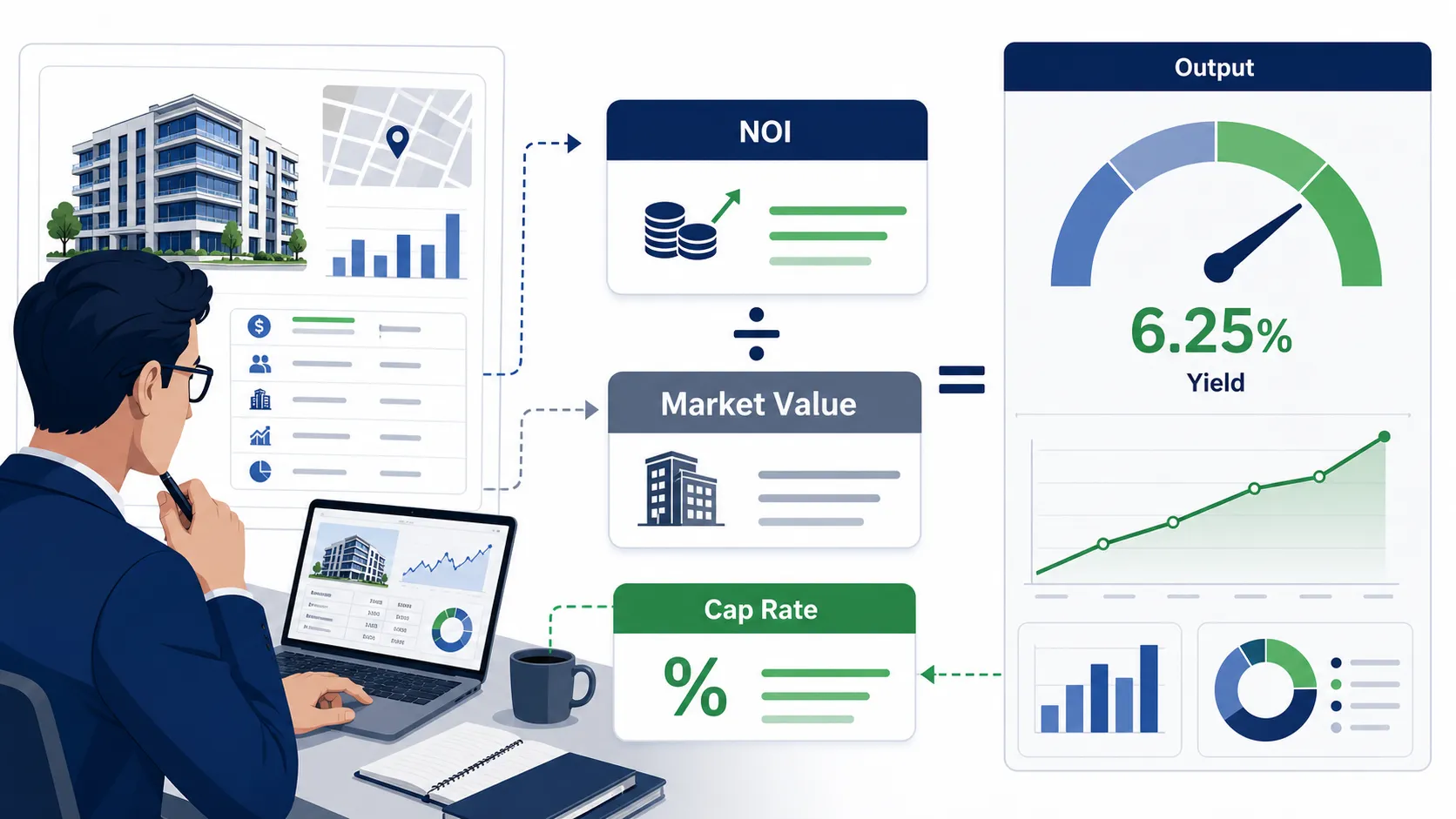
Cap Rate Calculator: Calculate Capitalization Rate Step by Step
Stop guessing property values. The cap rate formula delivers a single-year yield metric that strips out debt, letting you compare diverse assets instantly. Misjudge this rate, and you risk locking capital into an underperforming investment.
 Corporate Finance
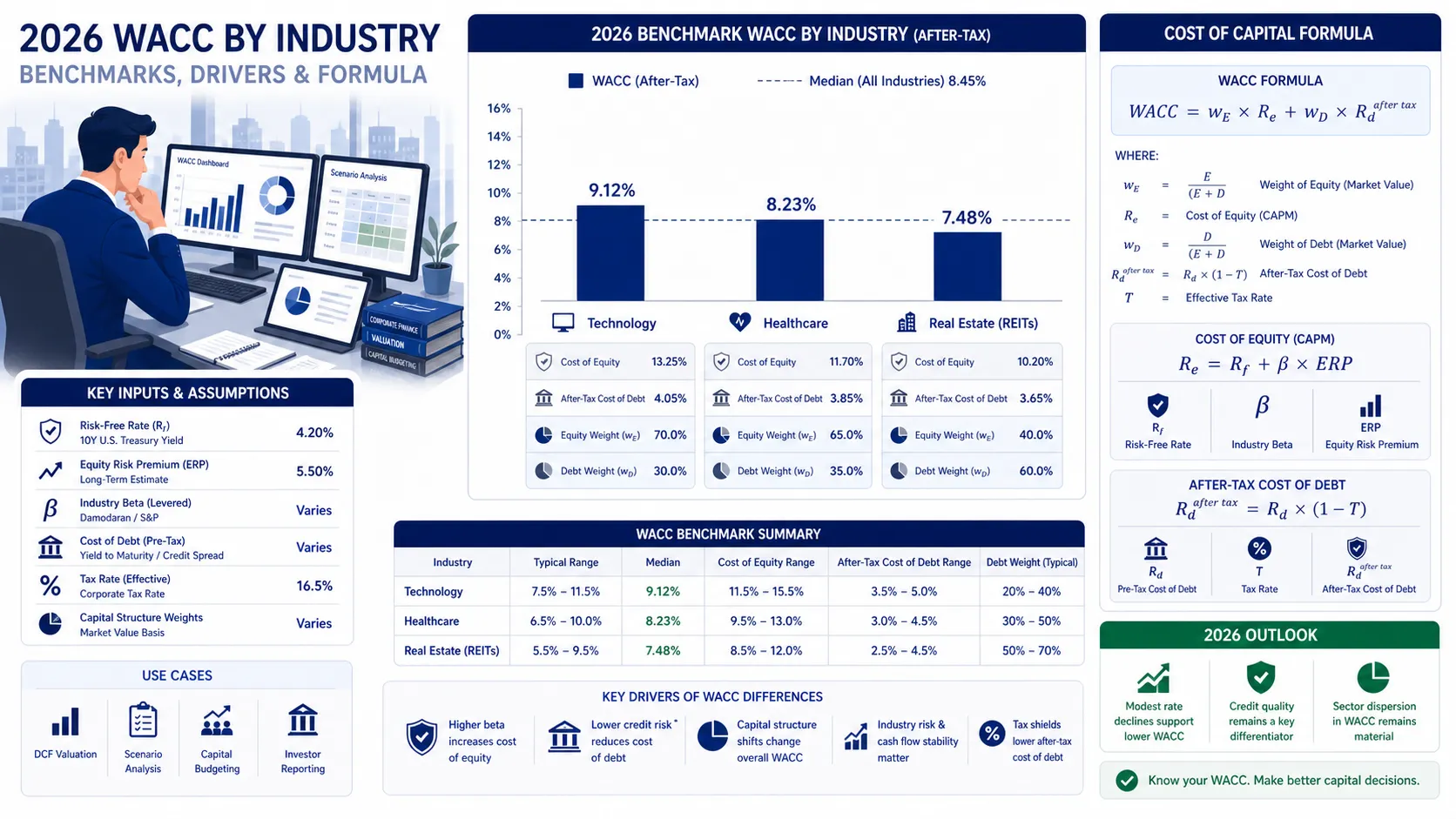
WACC by Industry: 2026 Benchmarks for Technology, Healthcare, and Real Estate
In 2026, industry WACC diverges sharply, from 5.5% for utilities to over 11.5% for software. CFOs must benchmark their discount rate against peers to ground valuations in market reality.
 Corporate Finance
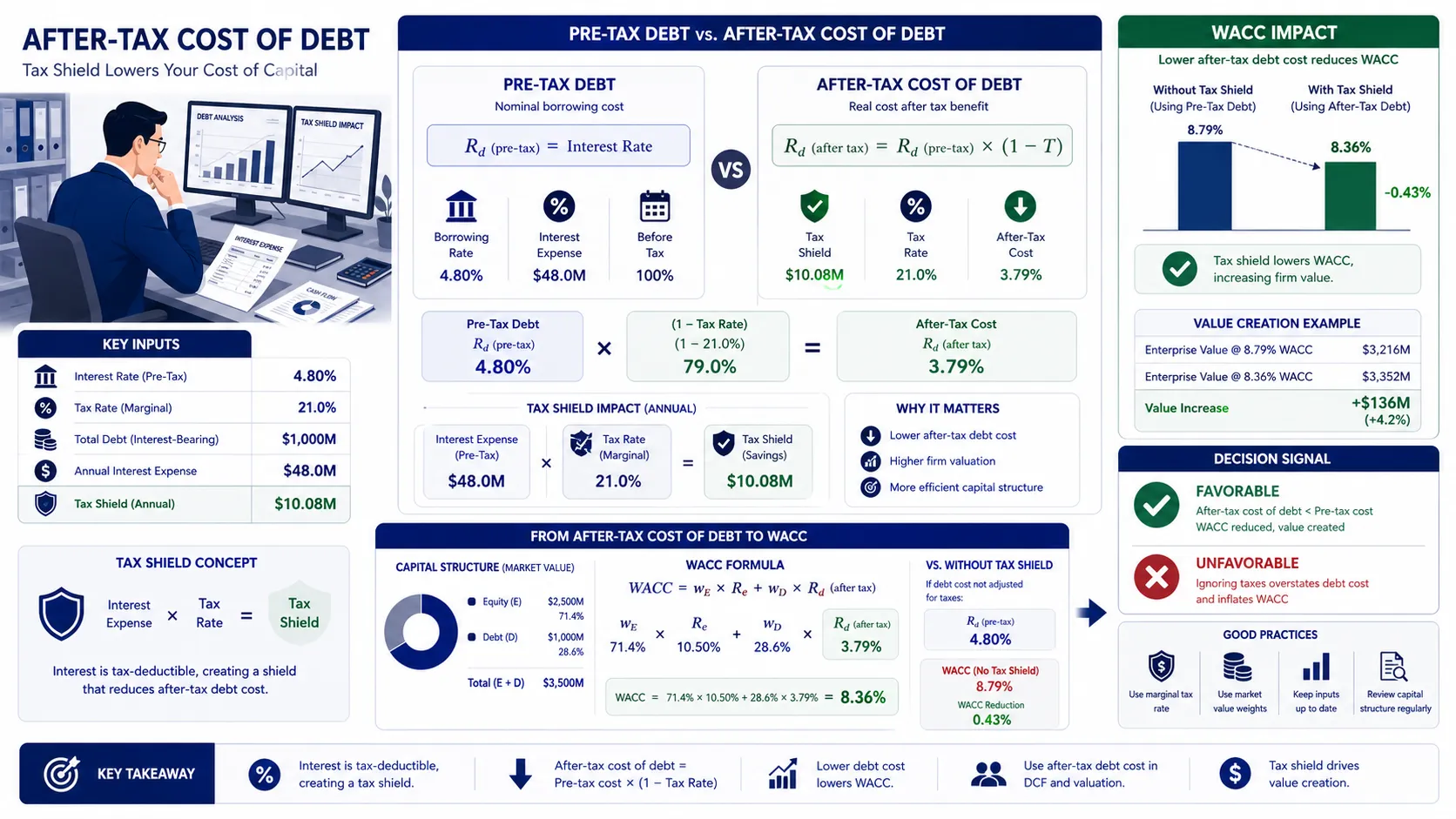
What Is After-Tax Cost of Debt and How Does It Lower WACC?
Interest payments are tax-deductible, making debt cheaper than equity and lowering your company's WACC. The after-tax cost of debt reveals this true, subsidized borrowing rate.
Methodology, Frequently Asked Questions (FAQ) & Disclaimers
FAQ: Frequently Asked Questions
Q: What is the difference between GRM and Cap Rate?
A: GRM only compares property price to gross rental revenues, ignoring expenses. The Capitalization Rate compares property price to Net Operating Income (NOI), which accounts for vacancy rates and all operating expenses, providing a more accurate valuation.
Q: Why do Class A properties have higher GRMs?
A: Class A properties are located in premium areas with high tenant demand, low vacancy risk, and strong appreciation potential. Because buyers are willing to accept lower immediate cash returns in exchange for lower risk and asset quality, purchase prices are high relative to rents, raising the GRM.
Disclaimer: Informational Guidance Only
The financial calculations and ratios generated by this Gross Rent Multiplier Calculator are intended solely for educational and high-level screening purposes.
Calculations are based on general pricing models and do not constitute formal real estate appraisals, underwriting approvals, or certified financial advice. Real estate values and rental yields fluctuate based on localized market conditions, property conditions, and broader economic factors. Consult qualified appraisers and certified financial advisors prior to executing property transactions.
The real estate calculations, yield projections, and cash flow reports generated by BizToolkitPro are for educational and informational purposes only. They do not constitute formal real estate brokerage, lending underwriting, tax counsel, or legal advice.
Investment returns, debt coverage ratios, and capitalization metrics (including Cap Rate, DSCR, Cash-on-Cash, and Waterfall distributions) are simulated based on user-provided inputs and assumptions. Local housing laws, property taxes, market vacancies, and interest rates fluctuate dynamically; therefore, BizToolkitPro makes no warranties regarding the accuracy or real-world applicability of these projections.
Always perform your own independent physical and financial due diligence on properties, and consult with a licensed Real Estate Broker, Mortgage Underwriter, Tax Advisor, or real estate attorney before signing purchase agreements or securing loans.