
Mortgage Refinance Calculator with Break-Even Analysis
A refinance replaces an existing loan with a new loan. The new payment may be lower because of a lower interest rate, a smaller principal balance, a longer term, or a combination of these factors.
This calculator keeps those drivers separate. It compares monthly payments, upfront and financed closing costs, estimated break-even timing, cumulative interest, remaining balances, payoff dates, and cash-out or cash-in amounts under the assumptions entered. The result is an illustration, not a loan offer or a recommendation to refinance.
Have a suggestion or found a calculation discrepancy? Let us know!
How to use this refinance calculator
Enter the current loan
Begin by documenting the parameters of your current loan. You will need your current outstanding balance, the existing interest rate, and the remaining term in months. This acts as your financial baseline, allowing you to accurately calculate what you would pay if you left your existing loan in place.
Enter the proposed refinance loan
Next, supply details of the proposed loan package, including the interest rate, loan term, and whether you are receiving any cash out or bringing extra capital to the table. These new configurations will build the proposed amortization schedule and determine the new payment requirements.
Add closing costs and a comparison horizon
Incorporate detailed lender fees, title service charges, and state recording costs. You can decide to pay fees in cash or finance them directly into the new principal balance. Finally, set a holding period horizon to calculate the cumulative savings before you plan to sell or pay off the home.
Your refinance comparison summary
Current and new monthly payments
The system calculates your exact monthly Principal and Interest (P&I) payment for both structures. Note that this comparison represents only the P&I portion. Escrow payments like property taxes, homeowner's insurance, and HOA dues are generally unaffected by refinance transactions and are kept separate.
Monthly payment change
The difference in monthly P&I shows your immediate cash flow relief or monthly burden change. A positive payment change represents a monthly reduction in outlay, while a negative value signifies that monthly obligations will increase (often seen when shortening a loan term).
Upfront cash and financed costs
The system details how closing costs are distributed. Upfront costs must be paid in cash at the closing table, which impacts your immediate liquidity. Financed costs are wrapped into the new mortgage, increasing your loan balance and accruing interest over time.
Refinance break-even analysis
Simple cash break-even
Simple cash break-even divides upfront refinance costs by monthly payment savings. That shortcut is useful only when savings are positive and costs are paid in cash. It does not capture financed costs, balance differences, changes in term, or the time value of money.
Cumulative-cost crossover
To address the limitations of the simple break-even model, this calculator builds a cumulative crossover analysis. By combining monthly payments made, financed debt drag, and outstanding principal balances at each monthly interval, it uncovers the true date when refinancing becomes more profitable than holding your original mortgage.
When no break-even exists
Under certain inputs, a break-even point may not exist. This occurs if your proposed rate is higher than your current rate, or if closing costs are so high that they cannot be recovered within the amortization period. In these cases, the calculator will warn you that no crossover is possible rather than fabricating an artificial timeline.
Compare refinance scenarios
Lower-rate scenario
This scenario simulates a favorable rate cut, typically 0.5% lower than your base proposed rate. It helps you visualize how extra market improvements would enhance your cash flow, speed up your break-even period, and save you more money over your planned holding period.
Base refinance offer
The baseline model represents your current active proposed offer. This is calculated using the specific interest rate, term, and transaction fees you entered. It acts as the anchor point for your financial decision-making process.
Higher-cost stress scenario
A conservative stress test is created by increasing the interest rate by 0.5% and bumping transaction fees by 10%. This allows you to evaluate the margin of safety for your refinance project, ensuring it remains economically viable even if market pricing deteriorates before you lock your rate.
Refinance variability analysis
Interest-rate variance
Small shifts in interest rates heavily impact your long-term finance costs. The sensitivity matrix maps how changing rates affect your break-even timeframe, keeping other costs constant. This is crucial for evaluating whether paying points to secure a lower rate makes financial sense.
Closing-cost adjustments
Refinance transaction fees can vary significantly. By analyzing closing cost sensitivity, you can see how changes in upfront costs affect your cash reserves and break-even timelines. It shows the trade-offs of financing fees versus paying them in cash.
Holding-period adjustments
Your planned holding period is the most important factor in a refinance decision. Refinance economics depend on how long the borrower expects to keep the new loan. Selling, paying off, or refinancing again before the modeled break-even can prevent projected savings from being realized.
Compare balances and interest
Common-horizon interest comparison
Total interest over each loan's full remaining life can be misleading when the current loan and refinance loan end on different dates. A new thirty-year loan may reduce the payment while extending debt far beyond the current payoff date. The common-horizon view compares both schedules on the same selected date.
Remaining balance difference
At your selected horizon date, the calculator evaluates how much principal remains on each loan. Shortening your term usually results in a lower future balance, while financing fees or extending the loan term will often leave you with a higher outstanding balance at the horizon point.
Payoff-date difference
By comparing the end dates of both schedules, you can see if the refinance will extend your debt-free timeline. Shifting from a remaining 20-year mortgage to a new 30-year term adds 10 extra years of interest payments, which should be weighed against the immediate monthly payment relief.
Cash-out and cash-in refinance
Gross and net cash-out
Cash-out refinance increases the new principal above the amount required to repay the existing mortgage and financed costs. Gross cash-out is the additional debt before deductions. Net cash received reflects the selected costs and cash adjustments.
Cash-in principal reduction
A cash-in refinance involves making a lump-sum payment to reduce your loan principal at the closing table. This is often used to lower your new loan balance, help you avoid PMI, or secure a more favorable interest rate tier.
Post-refinance LTV
The Loan-to-Value (LTV) ratio measures your loan balance against your property value. Borrowing extra cash via a cash-out refinance increases your LTV, which can impact your rates and require private mortgage insurance if the new LTV exceeds 80%.
Refinance formula and methodology
P&I payment formula
The monthly payment is calculated using the standard amortization formula:
Break-even formulas
The simple break-even period is computed by dividing the net upfront economic closing costs (out-of-pocket fees) by your monthly payment savings: Simple Break-Even (Months) = Net Closing Costs / Monthly Savings. Note that if closing costs are financed or offset by credits, this simple model must be adjusted to account for increased principal drag.
Common-horizon cash-flow method
To run an apples-to-apples comparison, the engine simulates both amortization tracks month-by-month. For any given horizon, it aggregates the total payments made plus the remaining principal balance. This creates a net cost difference that captures both monthly cash flow changes and equity differences.
Refinance calculation example
Example current loan
Let's consider a homeowner with an existing loan balance of $350,000 at a 7.0% interest rate, with 300 months remaining on a 30-year term. Their baseline monthly P&I payment is $2,473.73.
Example proposed loan and costs
They evaluate a refinance to a new 30-year term (360 months) at a 6.0% interest rate. The transaction requires $7,000 in closing costs, which they decide to pay in cash. The new monthly P&I payment is calculated at $2,098.43.
Example break-even and horizon outcome
This transaction reduces their monthly payment by $375.30. The simple break-even period is 18.65 months. Over a 5-year (60-month) horizon, they will save enough in monthly payments to offset the upfront fees and realize a net benefit, despite stretching their loan term.
Continue your financing analysis
Review the new amortization schedule
Explore how your monthly payments are split between interest and principal over the life of the new loan. This helps you track how quickly you will rebuild equity compared to your original mortgage timeline.
Calculate post-refinance LTV
Transfer your new loan principal and property values into our Loan-to-Value (LTV) tool. Keeping your LTV below 80% is critical to avoiding private mortgage insurance (PMI) and securing the best interest rates.
Build detailed closing costs
Create an itemized breakdown of your transaction expenses. Estimating title fees, lender origination charges, prepayments, and escrow requirements ensures you won't face any surprises at the closing table.
Refinance calculator use cases
Rate-and-term refinance
This is the most common refinance type, where you change your interest rate, loan term, or both without borrowing extra cash. It is typically used to lower monthly payments when market rates fall, or to shorten a term to pay off debt faster.
Cash-out refinance
This involves replacing your mortgage with a larger loan and taking the difference in cash. It is commonly used to fund home renovations, consolidate high-interest debt, or access equity for other major investments.
Rental-property refinance
Real estate investors use refinancing to optimize their cash flow and returns. By securing lower rates or interest-only structures, they can improve their Net Operating Income (NOI) and Debt Service Coverage Ratio (DSCR) to unlock capital for new acquisitions.
Common refinance comparison mistakes
Comparing only monthly payments
Focusing only on monthly payment reduction can be misleading. A lower payment might simply be the result of extending your loan term (e.g., from 15 years remaining to a new 30-year term), which can increase the total interest paid over the life of the loan.
Ignoring the reset loan term
Refinancing resets your mortgage timeline. Extending your term means paying interest for longer. This calculator's common-horizon tool helps you see the true cost differences at a fixed date to ensure the transaction makes financial sense.
Double counting financed closing costs
If closing costs are financed into the loan principal, they should not also be subtracted from your out-of-pocket cash requirements. The system separates paid-in-cash, financed, and mixed fee structures to prevent duplicate accounting errors.
Data sources and offer quality
User-entered loan terms
The accuracy of the calculations depends on the quality of your inputs. Document your current loan balance, interest rate, and term using recent statement summaries from your loan servicer.
Lender estimate and disclosure data
When evaluating proposed offers, refer to the official Loan Estimate sheet provided by your lender. This sheet outlines transaction costs, rate locks, and escrow terms, helping you avoid unexpected changes at closing.
Reference rates versus actual offers
Interest rates fluctuate based on market conditions and your personal credit history. The rates shown in general indexes serve as benchmarks, but your actual terms will depend on your loan application and underwriting approval.
Real-world case study: American Tower Corporation (AMT, FY 2025 (as of Sep 30, 2025))
American Tower Corporation metrics profile
American Tower Corporation (AMT), a leading global REIT, regularly manages a substantial debt portfolio to finance its extensive digital communications infrastructure. This case study analyzes a hypothetical refinancing scenario for a portion of their existing senior unsecured notes, illustrating how a refinance calculator could identify potential interest savings. The analysis uses real debt figures from their Q3 2025 financial disclosures.
For American Tower Corporation, a hypothetical refinancing of $592.4 million in senior notes from 5.400% to 4.800% could yield significant annual interest savings of approximately $3.55 million. This reduction in interest expense directly improves the company's net income and free cash flow, positively impacting profitability and increasing capital available for strategic investments or shareholder returns. Effective debt management, including opportunistic refinancing, is a crucial component of AMT's financial strategy, enhancing operational efficiency and investor confidence by optimizing its cost of capital and strengthening its balance sheet.
Related Calculators
Estimate real estate capitalization rate.
Open Tool →Occupancy Rate CalculatorCalculate occupancy and vacancy rate.
Open Tool →Cash-on-Cash ReturnMeasure levered cash return on equity.
Open Tool →NOI CalculatorCompute net operating income.
Open Tool →DSCR CalculatorSolve debt service coverage ratios.
Open Tool →Rental Property ROIEvaluate rental buy-and-hold returns.
Open Tool →Related Articles & Guides
 Real Estate
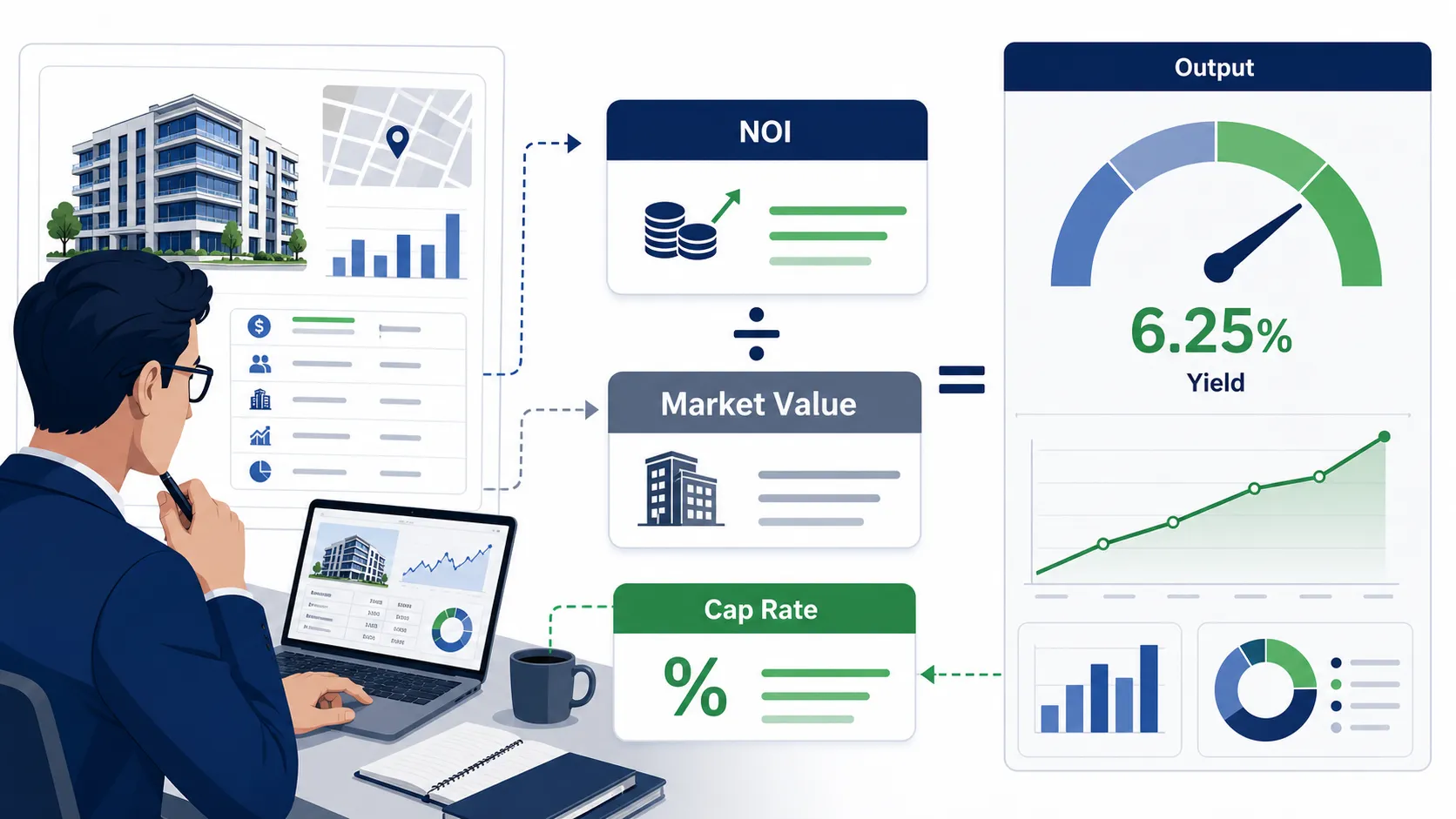
Cap Rate Calculator: Calculate Capitalization Rate Step by Step
Stop guessing property values. The cap rate formula delivers a single-year yield metric that strips out debt, letting you compare diverse assets instantly. Misjudge this rate, and you risk locking capital into an underperforming investment.
 Corporate Finance
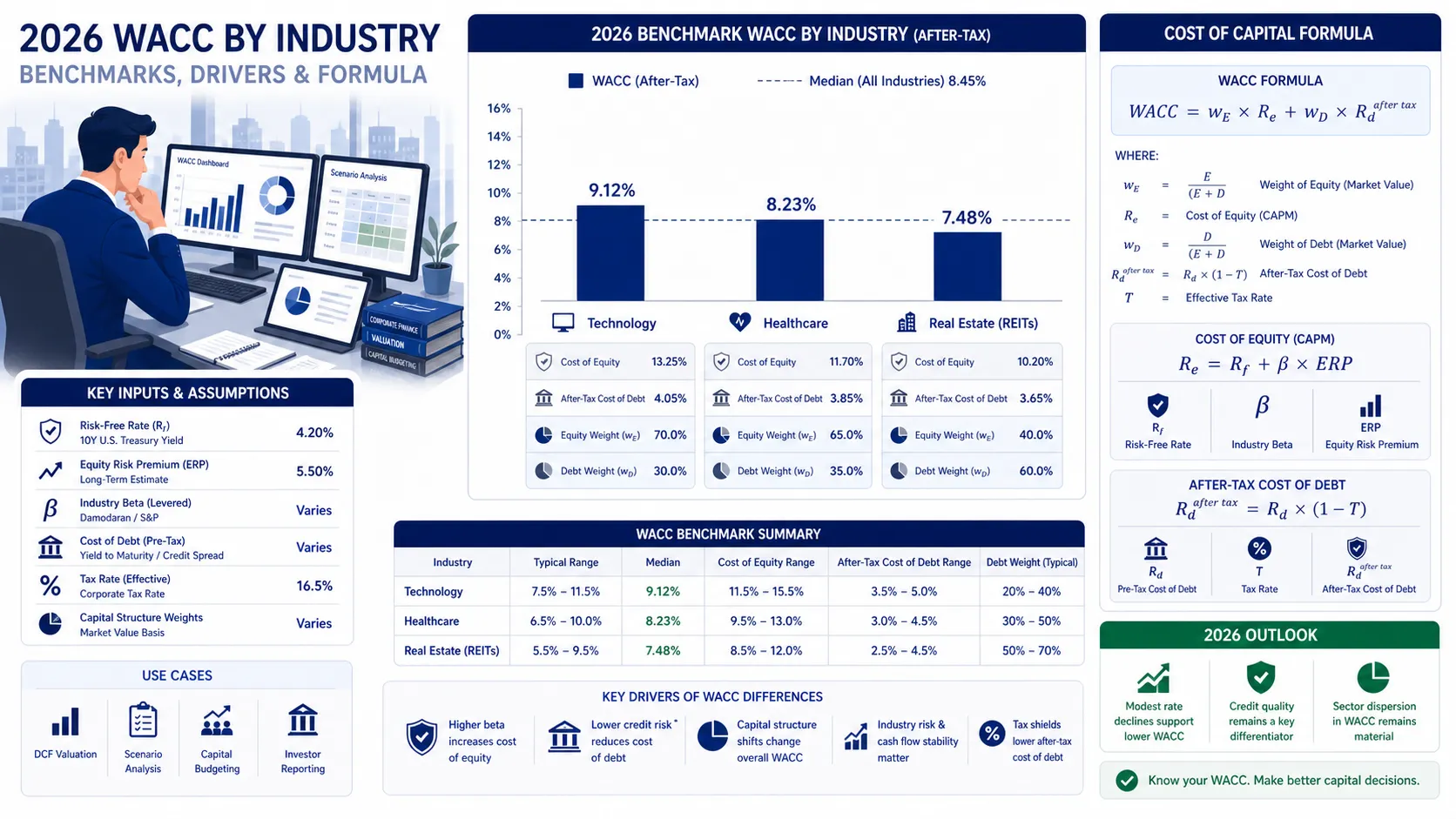
WACC by Industry: 2026 Benchmarks for Technology, Healthcare, and Real Estate
In 2026, industry WACC diverges sharply, from 5.5% for utilities to over 11.5% for software. CFOs must benchmark their discount rate against peers to ground valuations in market reality.
 Corporate Finance
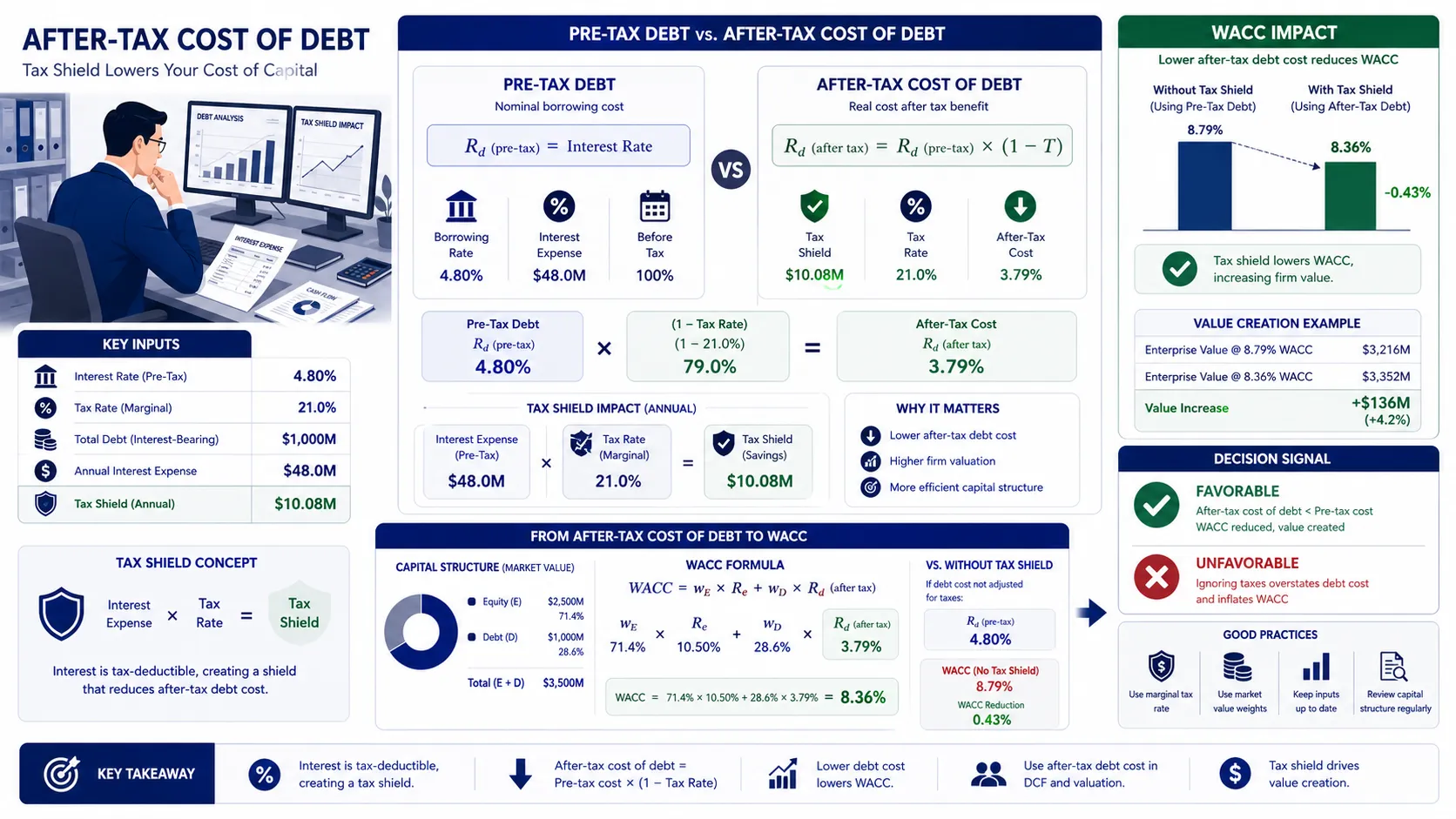
What Is After-Tax Cost of Debt and How Does It Lower WACC?
Interest payments are tax-deductible, making debt cheaper than equity and lowering your company's WACC. The after-tax cost of debt reveals this true, subsidized borrowing rate.
Frequently asked questions
How is refinance break-even calculated?
Does a lower payment mean I save money?
Should closing costs be paid or financed?
How does cash-out affect LTV?
Does this calculator tell me whether to refinance?
The real estate calculations, yield projections, and cash flow reports generated by BizToolkitPro are for educational and informational purposes only. They do not constitute formal real estate brokerage, lending underwriting, tax counsel, or legal advice.
Investment returns, debt coverage ratios, and capitalization metrics (including Cap Rate, DSCR, Cash-on-Cash, and Waterfall distributions) are simulated based on user-provided inputs and assumptions. Local housing laws, property taxes, market vacancies, and interest rates fluctuate dynamically; therefore, BizToolkitPro makes no warranties regarding the accuracy or real-world applicability of these projections.
Always perform your own independent physical and financial due diligence on properties, and consult with a licensed Real Estate Broker, Mortgage Underwriter, Tax Advisor, or real estate attorney before signing purchase agreements or securing loans.