
Loan-to-Value (LTV) Calculator: Mortgage Equity Limits
Audit your real estate leverage risks using our professional Loan-to-Value (LTV) calculator. The LTV ratio is the primary tool used by banks and mortgage underwriters to evaluate lending risk.
By comparing the size of your primary mortgage against the appraised market value of the property, LTV determines your qualification status, loan terms, and whether you must pay monthly private mortgage insurance (PMI). Use our builder to calculate your LTV and Combined LTV (CLTV), solve target down payments, and map equity cash values.
Have a suggestion or found a calculation discrepancy? Let us know!
Understanding Loan-to-Value (LTV): Definition & Lender Limits
Loan-to-Value (LTV) is an assessment of lending risk that financial institutions examine before approving a mortgage. Lenders calculate LTV to ensure they do not lend more capital than the underlying property is worth. In the event of a borrower defaulting, the lender must foreclose on the property and sell it to recover the outstanding loan balance. A lower LTV provides the bank with a larger cushion against market price drops.
The difference between LTV and Combined LTV (CLTV)
While the basic LTV ratio only looks at your first (primary) mortgage, many properties carry multiple debts. Homeowners often take out second mortgages, home equity loans, or home equity lines of credit (HELOCs) that are secured by the same property. The Combined Loan-to-Value (CLTV) ratio accounts for all secured loans outstanding on the property, providing lenders with a complete view of the total leverage risk on the asset.
How to Calculate Loan-to-Value (Step-by-Step)
The Leverage Formulas
We apply standard industry underwriting formulas to isolate LTV and CLTV limits:
Defining the leverage parameters
To run these equations, you must define these variables:
- Primary Loan Amount: The principal balance of the first mortgage.
- Appraised Value: The estimated market value of the property as determined by a certified appraiser. This is not the tax assessment value or the seller's asking price.
- Subordinate Lien Amount: The balances of any junior mortgages, HELOCs, or home equity loans.
- Target LTV Solver: The maximum leverage ratio you want to achieve (e.g. 80% to avoid PMI, or 75% to qualify for cash-out refinancing).
Example Loan-to-Value Calculation
Real-World Property Case
Consider a property owner with the following loan and appraisal details:
- Appraised Property Value: $400,000
- First Mortgage Loan Balance: $320,000
- Home Equity Line of Credit (HELOC) Balance: $20,000
Ratios & Solvers
First, calculate the basic LTV:LTV = ($320,000 / $400,000) * 100 = 80.00%. Because the LTV is exactly 80.0%, the borrower is exempt from paying Private Mortgage Insurance (PMI) on conventional loans.
Second, calculate the Combined LTV (CLTV):CLTV = (($320,000 + $20,000) / $400,000) * 100 = 85.00%.
Finally, calculate the equity cash value:Equity Amount = $400,000 - $320,000 - $20,000 = $60,000. The property owner holds $60,000 in equity, which represents 15% of the property value.
Interpreting LTV Underwriting Benchmarks
LTV Risk Ranges
Lenders group LTV ratios into three risk categories:
- LTV <= 80%: Low Risk. Borrowers qualify for the lowest mortgage rates and are exempt from paying Private Mortgage Insurance (PMI). Refinancing is relatively straightforward.
- LTV 80.1% to 95%: Moderate Risk. PMI is required on conventional loans. Interest rates may be slightly higher.
- LTV > 95%: High Risk. Conventional lending options are limited. Borrowers typically use government-backed options (such as FHA or VA loans) which carry higher fees.
Refinancing Thresholds
| LTV Target | Purpose | Qualification Limit |
|---|---|---|
| 80% | Avoid PMI | Standard conventional conventional requirement |
| 75% - 80% | Cash-Out Refi | Max limit to extract equity |
| 97% | First-time Buyer | Maximum conventional limit |
Common Mistakes in Assessing Loan-to-Value
Using Purchase Price Instead of Appraised Value
LTV is calculated using the appraised market value, not the purchase price. If you buy a home for $400,000 but the appraiser values it at $380,000, the bank will base the loan limit on $380,000. This is known as an appraisal gap, requiring the buyer to pay more cash upfront.
Ignoring Subordinate Debts in Refinancing
When applying for a new first mortgage, homeowners often forget that any outstanding HELOCs must be factored in. HELOC lenders must agree to subordinate their lien to the new first mortgage, and the combined debt (CLTV) must meet the lender's underwriting guidelines.
Real-world case study: American Tower Corporation (AMT, FY 2023)
American Tower Corporation metrics profile
American Tower Corporation (AMT) is a prominent global Real Estate Investment Trust (REIT) focused on communications infrastructure, including cell towers and data centers. This case study utilizes American Tower's verified financial data from its Fiscal Year 2023 annual report to calculate its Loan-to-Value (LTV) ratio. This analysis provides insight into the company's capital structure and its reliance on debt financing for its extensive asset portfolio.
American Tower's Loan-to-Value (LTV) ratio of approximately 68.73% in Fiscal Year 2023 signifies a considerable degree of financial leverage. While a higher LTV can potentially enhance returns on equity for a REIT, it also elevates financial risk, especially if interest rates increase or asset valuations decline. For investors, this ratio suggests that a substantial portion of American Tower's vast communications real estate assets is financed through debt, necessitating careful scrutiny of its debt service coverage, cash flow generation, and overall balance sheet resilience. This metric is crucial for assessing the company's borrowing capacity and its ability to navigate various market conditions.
Related Calculators
Estimate real estate capitalization rate.
Open Tool →Occupancy Rate CalculatorCalculate occupancy and vacancy rate.
Open Tool →Cash-on-Cash ReturnMeasure levered cash return on equity.
Open Tool →NOI CalculatorCompute net operating income.
Open Tool →DSCR CalculatorSolve debt service coverage ratios.
Open Tool →Rental Property ROIEvaluate rental buy-and-hold returns.
Open Tool →Related Articles & Guides
 Real Estate
Cap Rate Calculator: Calculate Capitalization Rate Step by Step
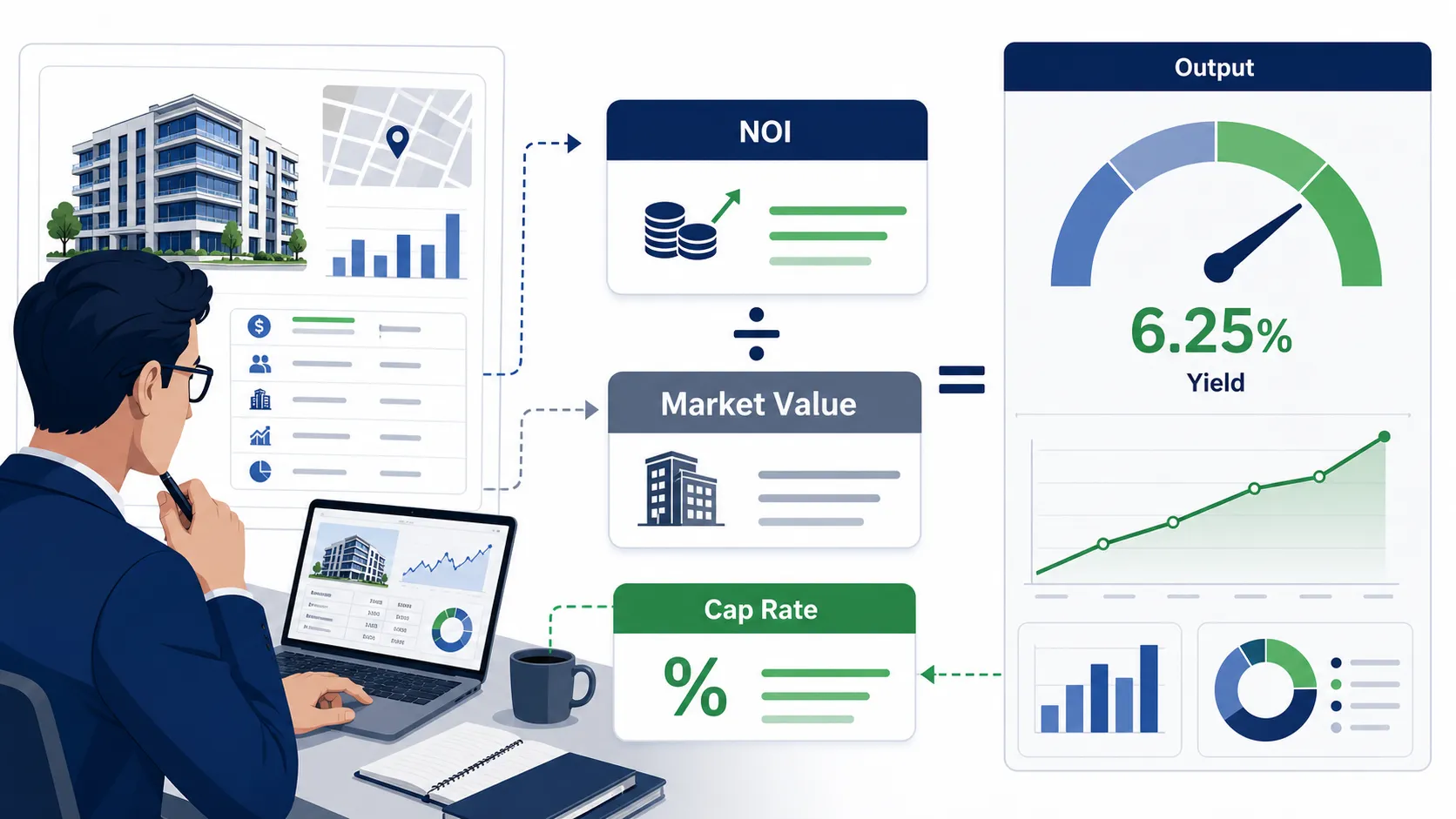
Stop guessing property values. The cap rate formula delivers a single-year yield metric that strips out debt, letting you compare diverse assets instantly. Misjudge this rate, and you risk locking capital into an underperforming investment.
 Corporate Finance
WACC by Industry: 2026 Benchmarks for Technology, Healthcare, and Real Estate
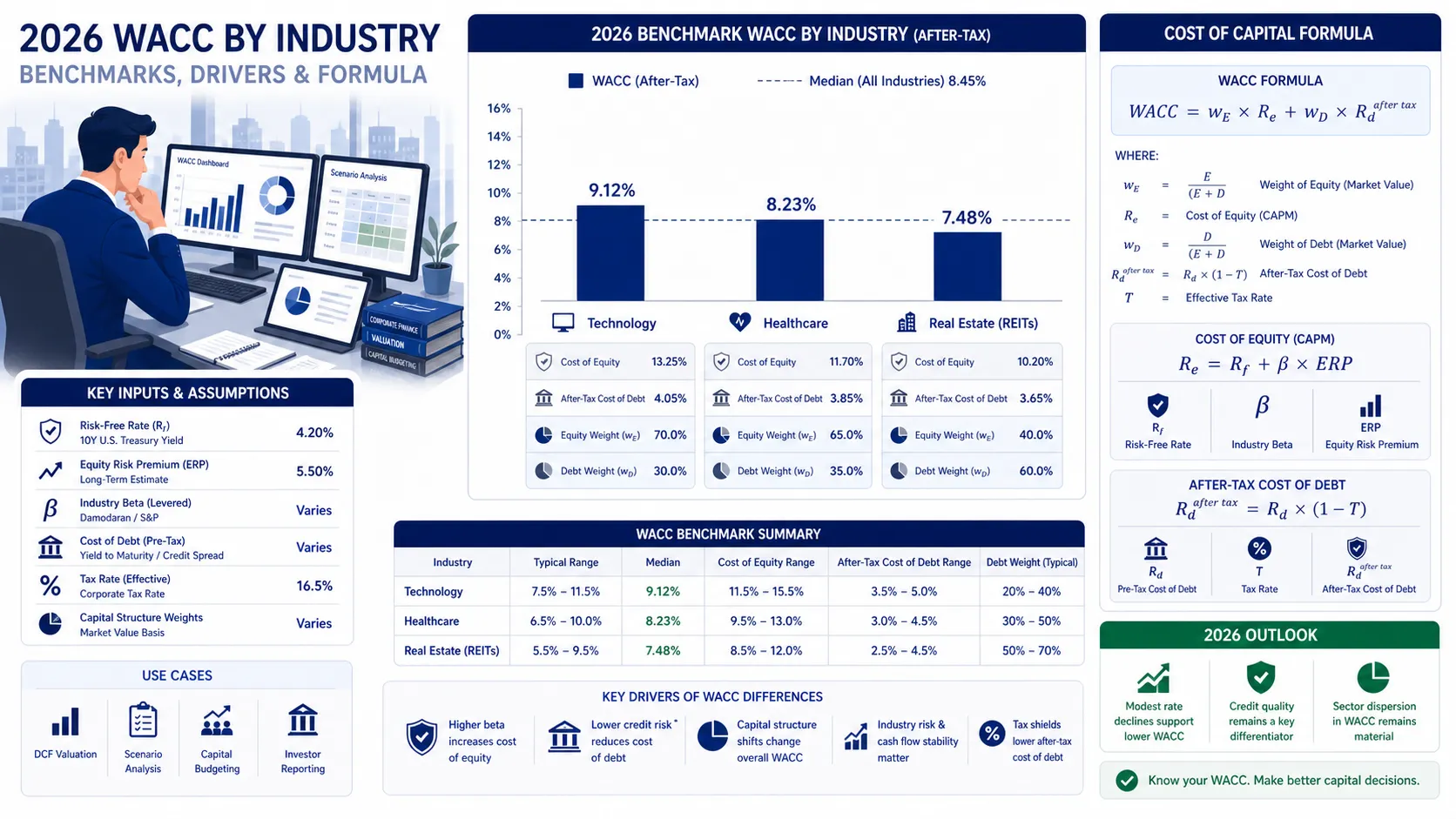
In 2026, industry WACC diverges sharply, from 5.5% for utilities to over 11.5% for software. CFOs must benchmark their discount rate against peers to ground valuations in market reality.
 Corporate Finance
What Is After-Tax Cost of Debt and How Does It Lower WACC?
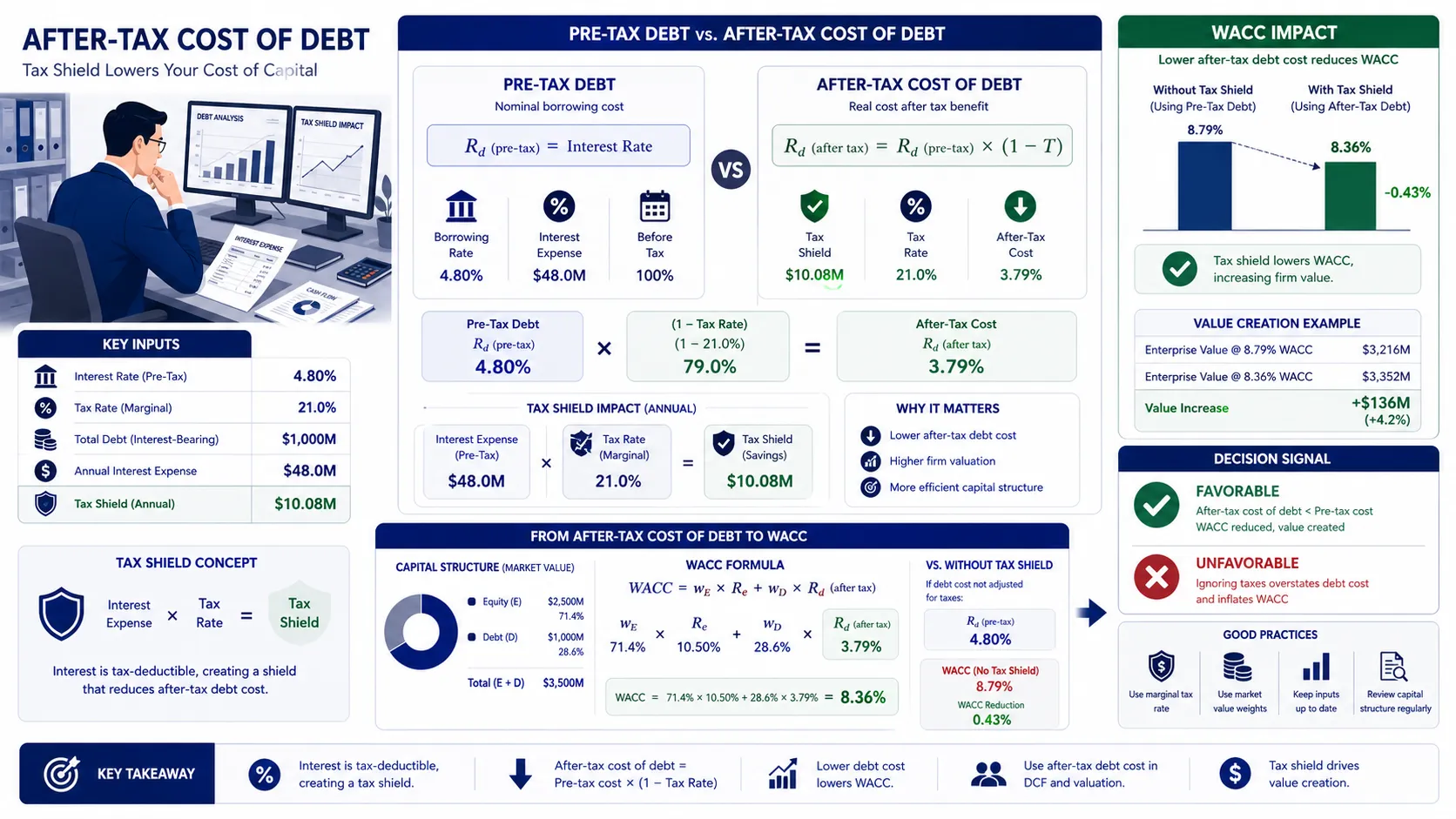
Interest payments are tax-deductible, making debt cheaper than equity and lowering your company's WACC. The after-tax cost of debt reveals this true, subsidized borrowing rate.
Methodology, Frequently Asked Questions (FAQ) & Disclaimers
FAQ: Frequently Asked Questions
Q: What is a good Loan-to-Value (LTV) ratio?
A: An LTV of 80% or lower is standard for residential conventional financing. It allows you to avoid Private Mortgage Insurance (PMI) and qualify for the lowest rates available.
Q: Can I refinance with a high LTV?
A: Yes, but options are limited. If your LTV is high, conventional refinancing options may require paying PMI. You can also explore government refinance programs like FHA Streamline Refinance.
Disclaimer: Informational Guidance Only
The financial calculations and ratios generated by the Loan-to-Value Calculator are intended solely for educational and high-level budgeting purposes.
Calculations are based on general pricing models and do not constitute a commitment to lend, credit approval, or formal financial advice. Mortgage rates, property values, and insurance costs vary based on individual credit histories, localized underwriting guidelines, and macroeconomic factors. Consult certified mortgage brokers and professional financial advisors prior to executing property purchases.
The real estate calculations, yield projections, and cash flow reports generated by BizToolkitPro are for educational and informational purposes only. They do not constitute formal real estate brokerage, lending underwriting, tax counsel, or legal advice.
Investment returns, debt coverage ratios, and capitalization metrics (including Cap Rate, DSCR, Cash-on-Cash, and Waterfall distributions) are simulated based on user-provided inputs and assumptions. Local housing laws, property taxes, market vacancies, and interest rates fluctuate dynamically; therefore, BizToolkitPro makes no warranties regarding the accuracy or real-world applicability of these projections.
Always perform your own independent physical and financial due diligence on properties, and consult with a licensed Real Estate Broker, Mortgage Underwriter, Tax Advisor, or real estate attorney before signing purchase agreements or securing loans.