
Down Payment Calculator for Home and Rental Property Purchases
A down payment is the portion of the purchase price funded as buyer equity instead of the initial mortgage principal. This calculator converts between a dollar amount and a percentage, solves the equity contribution required for a selected loan-to-value ratio, and builds an estimated cash-to-close plan.
It keeps the down payment separate from closing costs, prepaid expenses, reserves, earnest money, gifts, and credits. Results are planning estimates and do not determine loan approval or program eligibility.
Have a suggestion or found a calculation discrepancy? Let us know!
How to use this down payment calculator
Enter the purchase price
Start by typing the total purchase price of the home or rental property. This value forms the foundation of all calculations, determining the size of the loan and LTV ratio.
Enter a down payment amount or percentage
Input the cash amount you plan to put down or specify a target percentage (such as 3%, 5%, 10%, or 20%). The system automatically solves the corresponding values depending on the calculation mode you selected.
Add closing costs, credits, and reserves
Detail expected transaction expenses, earned lender credits, grants, and your cash reserve target. This information integrates with your down payment parameters to build a comprehensive cash planning breakdown.
Your down payment summary
Equity down payment amount
This represents the exact cash sum allocated to purchasing the property's equity. It does not include transaction fees, prepaid escrows, or reserves. This contribution reduces the size of your mortgage and increases your home equity.
Down payment percentage
The down payment percentage shows your equity contribution relative to the total purchase price. This ratio is critical, as lenders use it to determine your loan program, interest rate options, and PMI requirements.
Estimated initial loan amount and LTV
Your initial loan amount is the purchase price minus your equity down payment. The initial Loan-to-Value (LTV) ratio represents this loan amount as a percentage of the purchase price. Maintaining an LTV of 80% or lower helps you avoid PMI.
Estimate total cash needed to close
Down payment and closing costs
Cash needed to close can be materially higher than the down payment alone. Buyer-paid closing costs, prepaid interest, initial escrow deposits, inspections, and a reserve target may increase the amount required.
Prepaids and reserve target
Prepaids include advance payments for property taxes, homeowner's insurance, and daily interest before your first payment. Establishing a reserve target ensures you maintain a safety buffer for repairs and homeownership expenses.
Credits and earnest money already paid
Earnest money already deposited and eligible seller, lender, or assistance credits may reduce the remaining cash due, but they do not all increase buyer equity. The summary reconciles each source and use so the same dollar is not counted twice.
Compare down payment scenarios
Lower down payment scenario
Lower, Base, and Higher Down Payment cases are editable purchase structures. The comparison displays equity contribution, loan amount, LTV, estimated cash needed, remaining liquidity, and optional imported mortgage payment. It does not label one case best.
Base purchase scenario
The baseline scenario shows your purchase parameters using your initial down payment inputs. It serves as a starting point for comparing alternative cash configurations.
Higher down payment scenario
This scenario explores putting down more capital, which reduces the size of your mortgage and monthly payments. If purchase price, costs, or credits also change, the page identifies a combined scenario so the user does not attribute every difference to the down payment alone.
Down payment variability analysis
Purchase-price variability
This analysis maps how variations in the purchase price affect your down payment requirements and cash needs, assuming your down payment percentage remains constant.
Down-payment percentage variability
We evaluate how adjustments to your down payment percentage affect your mortgage size, LTV ratio, and remaining liquidity.
Cash-reserve adjustments
A larger down payment generally reduces initial loan principal, but it also uses more cash at closing. Remaining liquidity may be important for repairs, vacancy, moving costs, emergencies, or investment-property operations.
Solve for a target LTV
Required equity down payment
Target LTV mode calculates the equity down payment required to keep the initial loan at a user-selected percentage of purchase price. The target is an analytical assumption, not a lender guideline or approval threshold.
Maximum initial loan amount
The maximum initial loan amount represents the total principal allowed to maintain your target LTV. Shifting this ratio adjusts the loan balance you will carry at start.
Additional cash required
If your target LTV is lower than your current configuration, the system calculates the additional cash required to reduce the loan balance to your desired leverage level.
Down payment funding sources
Buyer cash and savings
Funding sources must be classified according to their economic role. Buyer savings and eligible gift funds may fund equity or costs. Liquid savings are the primary source for most transactions.
Gift funds and assistance
Gift funds from family members or down payment assistance grants can help cover equity requirements or closing fees. Note that grants often come with repayment or occupancy conditions that you should verify.
Seller and lender credits
Seller and lender credits generally offset eligible transaction costs and should not automatically be treated as equity. A grant may have repayment, occupancy, or eligibility conditions outside this calculator.
Down payment formula and methodology
Formula outline
The calculations are based on standard real estate math:
Amount and percentage formulas
In `SOLVE_AMOUNT` mode, the system calculates your down payment amount using the entered percentage. In `SOLVE_PERCENTAGE` mode, the system solves the percentage using your specified down payment amount.
Loan amount and LTV formulas
The initial loan amount is the remaining balance funded by the mortgage. The LTV ratio measures this loan balance against your property value, which lenders use to determine risk and PMI requirements.
Cash-needed reconciliation
The cash reconciliation formula combines your equity contribution and transaction fees, subtracting credits and deposits: Remaining Cash Due = max(0, Down Payment + Closing Costs + Prepaids - Applied Credits - Earnest Money).
Down payment calculation example
Example purchase assumptions
Imagine buying a home for $500,000 with a 20% down payment percentage. This requires a $100,000 equity down payment, leaving a $400,000 mortgage balance at 80% LTV.
Example cash-to-close calculation
Transaction fees total $10,000, with $5,000 in prepaids. You receive a $3,000 seller credit and have already paid a $5,000 earnest money deposit. Your remaining cash due at closing is $107,000.
Example funding gap
With a cash reserve target of $15,000, your total planned cash goal is $122,000. If your available cash is $140,000, you will have a $18,000 surplus after the transaction.
Continue your purchase analysis
Calculate the mortgage payment
Estimate your monthly PITI mortgage payment by transferring your purchase price and down payment parameters directly into our Mortgage Calculator.
Review loan-to-value
Analyze your LTV ratio and determine if your equity contribution is sufficient to avoid private mortgage insurance (PMI).
Build detailed closing costs and cash returns
Refine your purchase plan by detailing your transaction costs or evaluating your cash-on-cash return if purchasing a rental property.
Down payment calculator use cases
Primary home purchase
Homebuyers use this tool to calculate their equity contribution, estimate closing cash requirements, and ensure they retain enough cash reserves for moving and maintenance.
Rental property purchase
Real estate investors use down payment planning to calculate cash-on-cash return potential, analyzing the trade-offs of higher leverage versus stronger monthly cash flow.
Cash purchase versus financed purchase
Compare a financed purchase with an all-cash transaction. Setting your down payment to match the purchase price simulates an all-cash deal, allowing you to estimate closing costs and reserves without a mortgage.
Common down payment mistakes
Confusing down payment with closing costs
Many buyers assume their down payment is their only upfront cost. Closing costs, prepaids, and escrows add significant expenses that must be budgeted separately.
Double counting earnest money and credits
Earnest money is an advance deposit that reduces your cash due at closing, but it is still part of your total equity down payment. Avoid counting it as a discount that reduces your required equity.
Using all available cash without a reserve plan
Investing all your cash into your down payment preserves equity but leaves you vulnerable to emergencies. Maintain a dedicated cash reserve buffer for repairs and homeownership expenses.
Data sources and program references
User-entered purchase assumptions
Ensure your calculations reflect your actual transaction parameters. Verify your purchase price and down payment configurations using active contract details.
Lender and assistance-program information
Verify eligible loan programs, grant terms, and credit treatments with your lender or program administrator to ensure your cash planning figures are accurate.
Estimates versus verified funds
Calculations are planning estimates. Final transaction requirements will be outlined in the official Closing Disclosure (CD) sheet provided by your closing agent.
Real-world case study: Prologis Inc. (PLD, Late 2023)
Prologis Inc. metrics profile
Prologis Inc., a leading global industrial real estate investment trust (REIT), expanded its portfolio in late 2023 by acquiring two industrial buildings in the Miami Airport West submarket. The acquisition was valued at $101 million, representing a significant investment in a key logistics market. This case study models the potential down payment (equity contribution) for this acquisition, applying a common industry-standard commercial real estate down payment percentage.
For a large-scale real estate investment trust like Prologis, the equity contribution, or 'down payment,' on property acquisitions is a crucial aspect of its capital allocation strategy and financial health. While REITs often leverage significant debt to finance their expansive portfolios, maintaining a prudent equity stake is vital for managing overall leverage, mitigating interest rate risk, and ensuring long-term financial stability. The estimated down payment of $25.25 million for this specific acquisition represents the immediate cash outlay required, directly impacting Prologis's liquidity and capital available for other strategic initiatives, including further acquisitions, development projects, or shareholder distributions. A well-balanced debt-to-equity structure is paramount for REITs to sustain growth, optimize cost of capital, and continue delivering strong returns to investors.
Related Calculators
Estimate real estate capitalization rate.
Open Tool →Occupancy Rate CalculatorCalculate occupancy and vacancy rate.
Open Tool →Cash-on-Cash ReturnMeasure levered cash return on equity.
Open Tool →NOI CalculatorCompute net operating income.
Open Tool →DSCR CalculatorSolve debt service coverage ratios.
Open Tool →Rental Property ROIEvaluate rental buy-and-hold returns.
Open Tool →Related Articles & Guides
 Real Estate
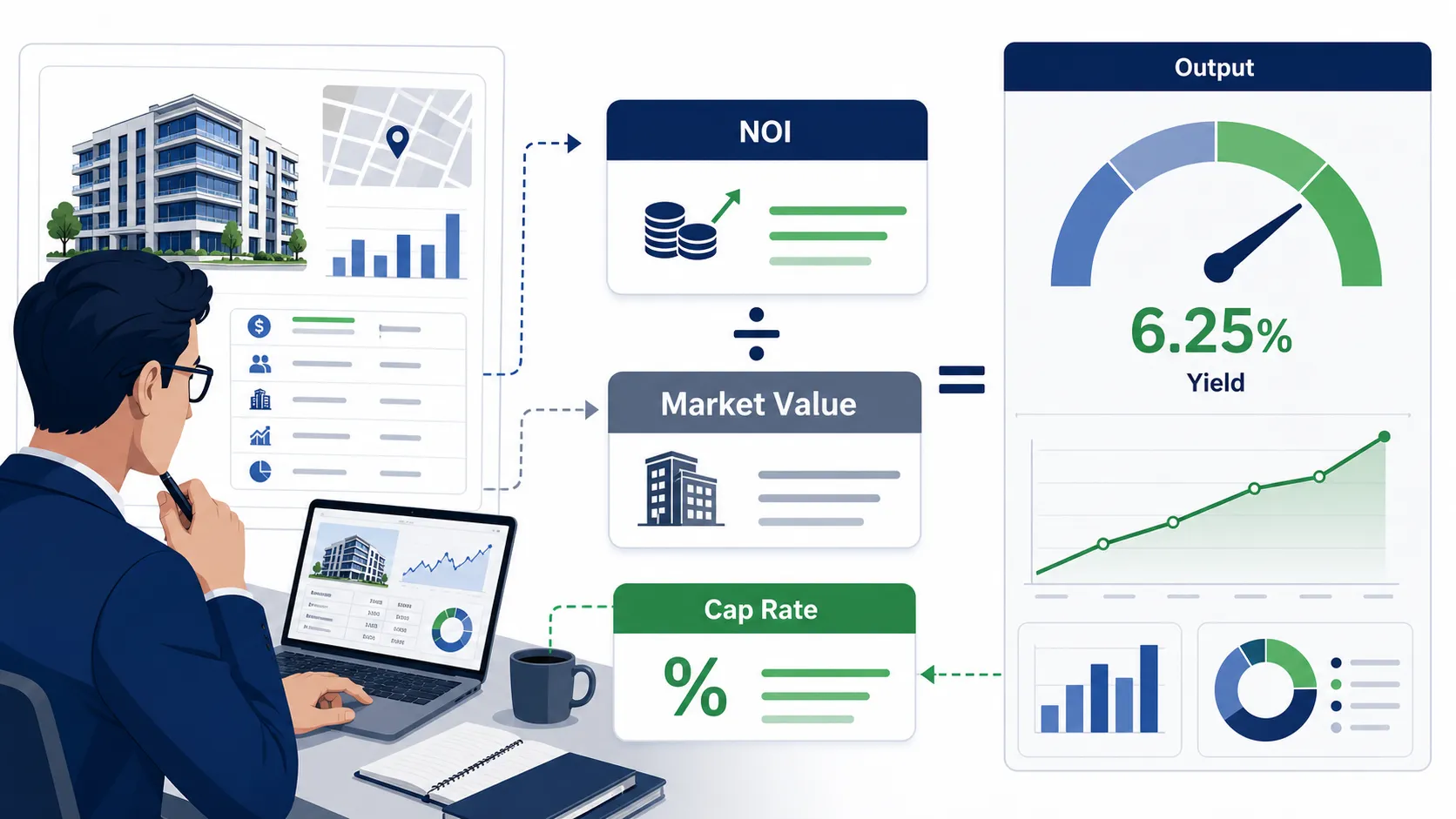
Cap Rate Calculator: Calculate Capitalization Rate Step by Step
Stop guessing property values. The cap rate formula delivers a single-year yield metric that strips out debt, letting you compare diverse assets instantly. Misjudge this rate, and you risk locking capital into an underperforming investment.
 Corporate Finance
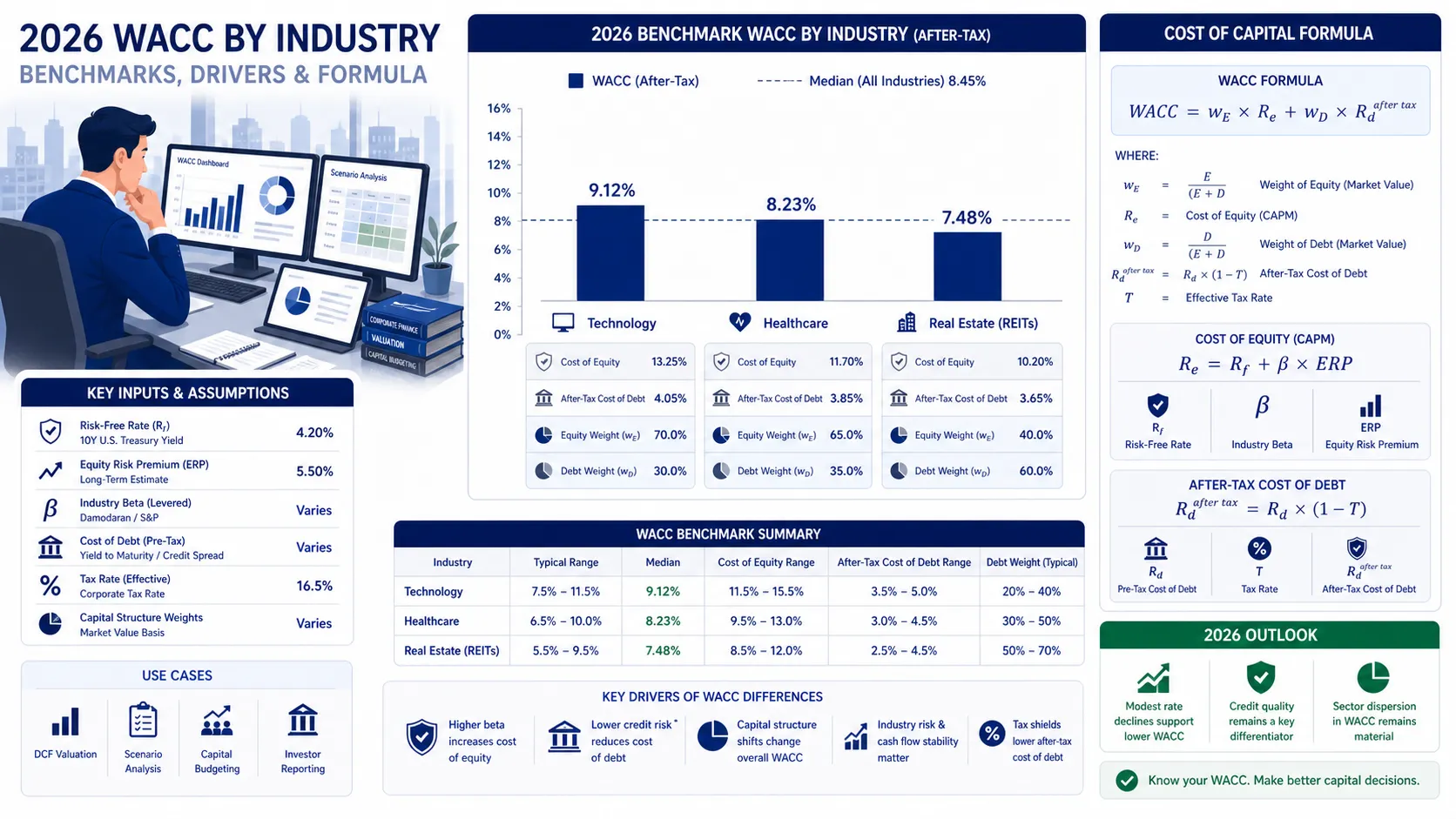
WACC by Industry: 2026 Benchmarks for Technology, Healthcare, and Real Estate
In 2026, industry WACC diverges sharply, from 5.5% for utilities to over 11.5% for software. CFOs must benchmark their discount rate against peers to ground valuations in market reality.
 Corporate Finance
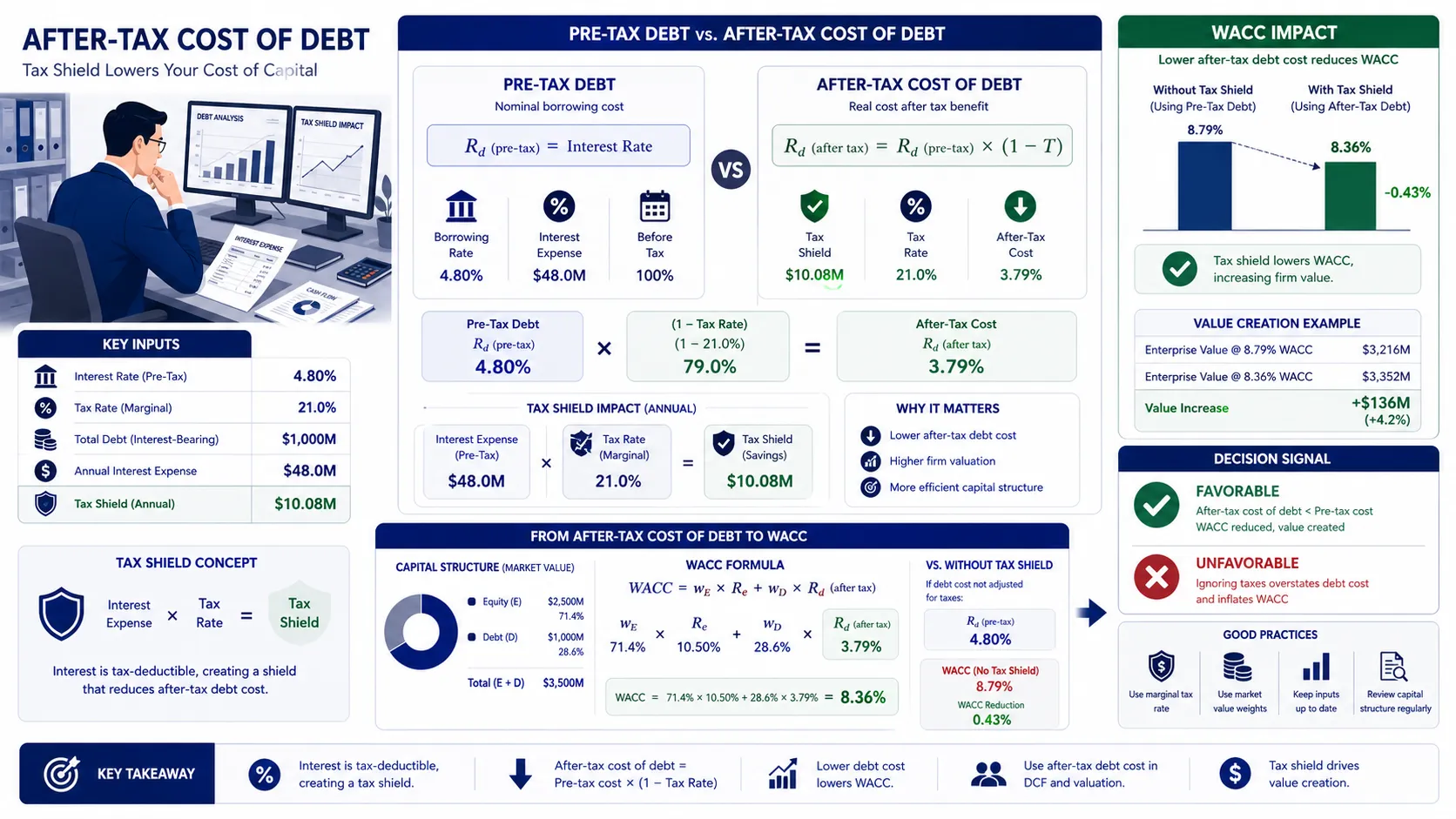
What Is After-Tax Cost of Debt and How Does It Lower WACC?
Interest payments are tax-deductible, making debt cheaper than equity and lowering your company's WACC. The after-tax cost of debt reveals this true, subsidized borrowing rate.
Frequently asked questions
How is a down payment calculated?
Are closing costs part of the down payment?
Does earnest money reduce cash due at closing?
Does a larger down payment always lower total cost?
Does this calculator determine loan eligibility?
The real estate calculations, yield projections, and cash flow reports generated by BizToolkitPro are for educational and informational purposes only. They do not constitute formal real estate brokerage, lending underwriting, tax counsel, or legal advice.
Investment returns, debt coverage ratios, and capitalization metrics (including Cap Rate, DSCR, Cash-on-Cash, and Waterfall distributions) are simulated based on user-provided inputs and assumptions. Local housing laws, property taxes, market vacancies, and interest rates fluctuate dynamically; therefore, BizToolkitPro makes no warranties regarding the accuracy or real-world applicability of these projections.
Always perform your own independent physical and financial due diligence on properties, and consult with a licensed Real Estate Broker, Mortgage Underwriter, Tax Advisor, or real estate attorney before signing purchase agreements or securing loans.