
Real Estate Closing Cost Calculator with Detailed Fee Breakdown
Closing costs are transaction expenses and settlement adjustments paid in addition to, or deducted from, the property price and loan proceeds. The exact items depend on whether the user is buying, selling, or refinancing, as well as the location, contract, loan, title arrangement, and closing date.
This calculator creates an itemized estimate and reconciles credits, deposits, prepaids, and prorations. It is not a Loan Estimate, Closing Disclosure, settlement statement, legal opinion, or final quote.
| Name | Category | Calculation Method | Value / Payer | Action |
|---|---|---|---|---|
| Lender Origination Fee | LENDER (TRANSACTION_COST) | Percent of Loan | 1%Paid by: BUYER | |
| Title & Settlement Fees | TITLE (TRANSACTION_COST) | Fixed Dollar | $1,500Paid by: BUYER | |
| Recording Fees | GOVERNMENT (TRANSACTION_COST) | Fixed Dollar | $250Paid by: BUYER | |
| Prepaid Interest & Escrows | PREPAID (PREPAID) | Fixed Dollar | $3,500Paid by: BUYER | |
| Real Estate Commission | AGENT (TRANSACTION_COST) | Percent of Price | 5%Paid by: SELLER | |
| Refinance Underwriting | LENDER (TRANSACTION_COST) | Fixed Dollar | $1,200Paid by: FINANCED |
Have a suggestion or found a calculation discrepancy? Let us know!
How to use this closing cost calculator
Choose buyer, seller, or refinance mode
Select the calculation mode matching your transaction role. Buyers calculate required closing cash, sellers evaluate net cash proceeds, and refinancing homeowners compute fee financing and cash-due differences.
Enter the transaction amount and closing date
Input critical transaction details, including the property purchase price, new mortgage loan size, and your planned closing date. These inputs will calculate percentage-based fee metrics dynamically.
Add fees, credits, prepaids, and prorations
Use the fee builder worksheet to add detailed items. Enter any credits, deposits, prepaid escrows, and tax/HOA prorations to calculate the final transaction totals.
Your closing cost estimate
Total transaction costs
This combines all one-time service fees paid to lenders, title companies, agents, and local governments to complete the sale. It isolates these transaction costs from prepaid deposits and escrows.
Cash due or net proceeds
For buyers, this is the net cash due at closing. For sellers, it represents your estimated net proceeds after payoff. For refinancing, it calculates the out-of-pocket cash requirements.
Cost percentage of the transaction
This ratio measures your total transaction fees against the home price or loan size. It helps you benchmark your transaction costs against industry averages (typically 2% to 5% for buyers).
Buyer closing cost estimate
Loan and lender fees
Buyer cash to close can include the equity down payment, buyer-paid loan and settlement costs, prepaid interest, initial escrow funding, and prorated amounts. Lender fees include origination points, underwriting charges, and credit report fees.
Title, settlement, and recording fees
Title expenses cover title searches, lender title insurance policies, and closing agent settlement fees. Government fees reflect county recording charges and state transfer taxes.
Buyer cash-to-close reconciliation
The system calculates your cash needs by combining your down payment, transaction costs, and escrows, then subtracting deposits and credits. This prevents duplicate accounting errors.
Seller closing cost estimate
Brokerage and transaction fees
Seller transaction costs are dominated by agent commissions (typically 5% to 6% of the sale price). Other seller expenses include title services, transfer taxes, and attorney fees.
Mortgage payoff and seller credits
Seller net proceeds begin with the sale price and subtract seller-paid transaction costs, brokerage compensation entered by the user, credits, prorations, mortgage payoff, and other liens or agreed deductions.
Estimated seller net proceeds
The net proceeds represent your estimated net cash after payoff. Accrued interest and payoff fees may cause this value to differ from your current statement balance, which should be verified before closing.
Refinance closing cost estimate
Lender and third-party fees
Refinancing homeowners incur underwriting, appraisal, credit check, and title search fees. These charges are necessary to evaluate your credit and secure the new loan.
Cash-paid and financed costs
Refinance costs can be paid in cash, added to the new loan when permitted, or offset through a lender credit associated with the selected pricing. Financed costs increase your mortgage balance.
Prepaids and escrow funding
Prepaid interest and escrow funding affect cash due but are not always economic transaction costs in the same way as lender, title, appraisal, or recording fees.
Credits, deposits, and prorations
Earnest money already paid
Earnest money is an advance deposit paid when your offer is accepted. It is held in escrow and applied as a credit, reducing the remaining cash you need to bring to the closing table.
Seller and lender credits
Seller and lender credits offset eligible transaction costs, reducing your out-of-pocket cash. Lender credits typically come with a higher interest rate tier.
Tax, HOA, rent, and utility prorations
A proration allocates a recurring property amount between parties according to a selected date and convention. Taxes, HOA dues, rent, utilities, and other items may be paid in arrears or in advance, and local practice can differ.
Compare closing cost scenarios
Lower-cost estimate
This scenario simulates a 10% reduction in all transaction fees, helping you visualize potential savings from negotiating title charges or selecting a lower-fee lender.
Base transaction estimate
The baseline scenario represents your current active proposed fees. It serves as the anchor point for your transaction planning.
Higher-cost stress estimate
We create a stress test by increasing all transaction fees by 10%. This helps you evaluate your cash needs if unexpected fees arise during underwriting or title settlement.
Closing cost variability analysis
Purchase-price variability
We evaluate how variations in your property purchase price affect your total closing costs, especially for percentage-based commissions and transfer taxes.
Percentage-fee adjustments
This analysis evaluates how adjustments to commission rates or lender origination percentages impact your cash needs or seller net proceeds.
Closing-date and proration variance
Shifting your closing date adjusts your prepaid interest requirements and tax/HOA prorations. The system calculates these changes dynamically.
Closing cost formula and methodology
Fee equations
Closing fees are calculated based on three structures:
Fixed and percentage fees
Lender fees are often percentage-based (e.g. 1% origination), while title and recording charges are typically fixed-dollar fees. The system dynamically computes each item type.
Cash-to-close formula
For buyers, cash to close is computed as: Cash to Close = Down Payment + Buyer Costs + Prepaids + Escrow - Earnest Money - Applied Credits.
Seller net-proceeds formula
For sellers, net proceeds are calculated by subtracting transaction costs, credits, and payoff balances from the sale price: Seller Proceeds = Sale Price - Seller Costs - Credits - Payoffs.
Closing cost calculation example
Example buyer transaction
A buyer purchase a home for $500,000 with a $100,000 down payment. Transaction costs are $5,500, prepaids are $800, with $4,000 in credits and $5,000 in earnest money. Remaining cash due at closing is $97,300.
Example seller transaction
A seller sells a home for $500,000. Commission and fees are $1,000, they give a $3,000 credit to the buyer, and payoff is $300,000. Estimated net proceeds are $196,000 (39.2%).
Example refinance cost treatment
Refinancing a $400,000 loan involves $5,500 in cash costs and $2,000 in financed costs. With a $1,000 credit and $800 in prepaids, cash due is $5,300.
Continue your transaction analysis
Add costs to a down payment plan
Export your total buyer transaction fees directly into your Down Payment Plan. This maps all uses of cash together.
Compare refinance economics
Export your estimated refinance fees into the Refinance Calculator to evaluate if the monthly savings justify the transaction costs.
Add acquisition costs to property returns
For real estate investors, transaction costs are added to your acquisition basis. This is critical for evaluating accurate cash-on-cash return potential.
Closing cost calculator use cases
Primary home purchase
Buyers estimate required closing cash to ensure they have enough funds before closing, preventing unexpected liquidity shortfalls.
Rental property purchase
Real estate investors use closing cost analysis to build an accurate acquisition basis, evaluating net returns and cash flow potential.
Cash purchase versus financed purchase
Compare the transaction costs of cash purchases versus financed purchases. Financed transactions include loan origination fees, appraisal charges, and prepaid interest.
Common closing cost mistakes
Treating prepaids as transaction fees
Prepaid items (like property taxes and homeowners insurance escrows) are deposits for future ownership costs, not one-time transaction fees. They should be tracked separately.
Double counting credits and earnest money
Earnest money is an advance deposit that reduces your cash due at closing, but it is still part of your total buyer investment. Avoid counting it as a discount that reduces your required equity.
Applying generic percentages as guaranteed costs
Generic percentage estimates (e.g. 3% of purchase price) are useful for early planning but should never be presented as verified costs. Use actual quotes from lenders and title companies.
Data sources and regional differences
Lender and settlement-provider estimates
Verify transaction cost details using Loan Estimate (LE) sheets provided by your lender. These documents outline interest rate locks and itemized transaction fees.
Government and recording references
Recording fees and transfer taxes are set by county and state regulations. Reference these official fee schedules to improve calculation accuracy.
User-entered and scenario costs
Use actual transaction details when available. The system allows you to build custom fee sheets manually to reflect unique deal conditions.
Real-world case study: Prologis, Inc. (Industry Benchmark Case) (PLD, FY 2023 / Industry Benchmarks)
Prologis, Inc. (Industry Benchmark Case) metrics profile
Prologis, a global leader in logistics real estate, acquired a 14 million square foot industrial portfolio from Blackstone for $3.1 billion in 2023. This case study analyzes the potential closing costs associated with such a large-scale commercial real estate transaction, based on industry benchmarks, as specific itemized costs for such a deal are not publicly disclosed by the company.
For Prologis's significant $3.1 billion acquisition, understanding closing costs is crucial for accurate financial planning and deal profitability. While the specific breakdown for this transaction is not publicly disclosed, an estimated 3% of the purchase price, totaling $93 million, reflects typical buyer closing costs for large commercial real estate deals. These costs, encompassing legal, title, transfer taxes, and due diligence, directly impact the total capital outlay and the ultimate yield on the acquired assets. Efficient management and negotiation of these expenses are vital for REITs like Prologis to maintain strong financial performance and maximize shareholder value and the return on investment for their shareholders.
Related Calculators
Estimate real estate capitalization rate.
Open Tool →Occupancy Rate CalculatorCalculate occupancy and vacancy rate.
Open Tool →Cash-on-Cash ReturnMeasure levered cash return on equity.
Open Tool →NOI CalculatorCompute net operating income.
Open Tool →DSCR CalculatorSolve debt service coverage ratios.
Open Tool →Rental Property ROIEvaluate rental buy-and-hold returns.
Open Tool →Related Articles & Guides
 Real Estate
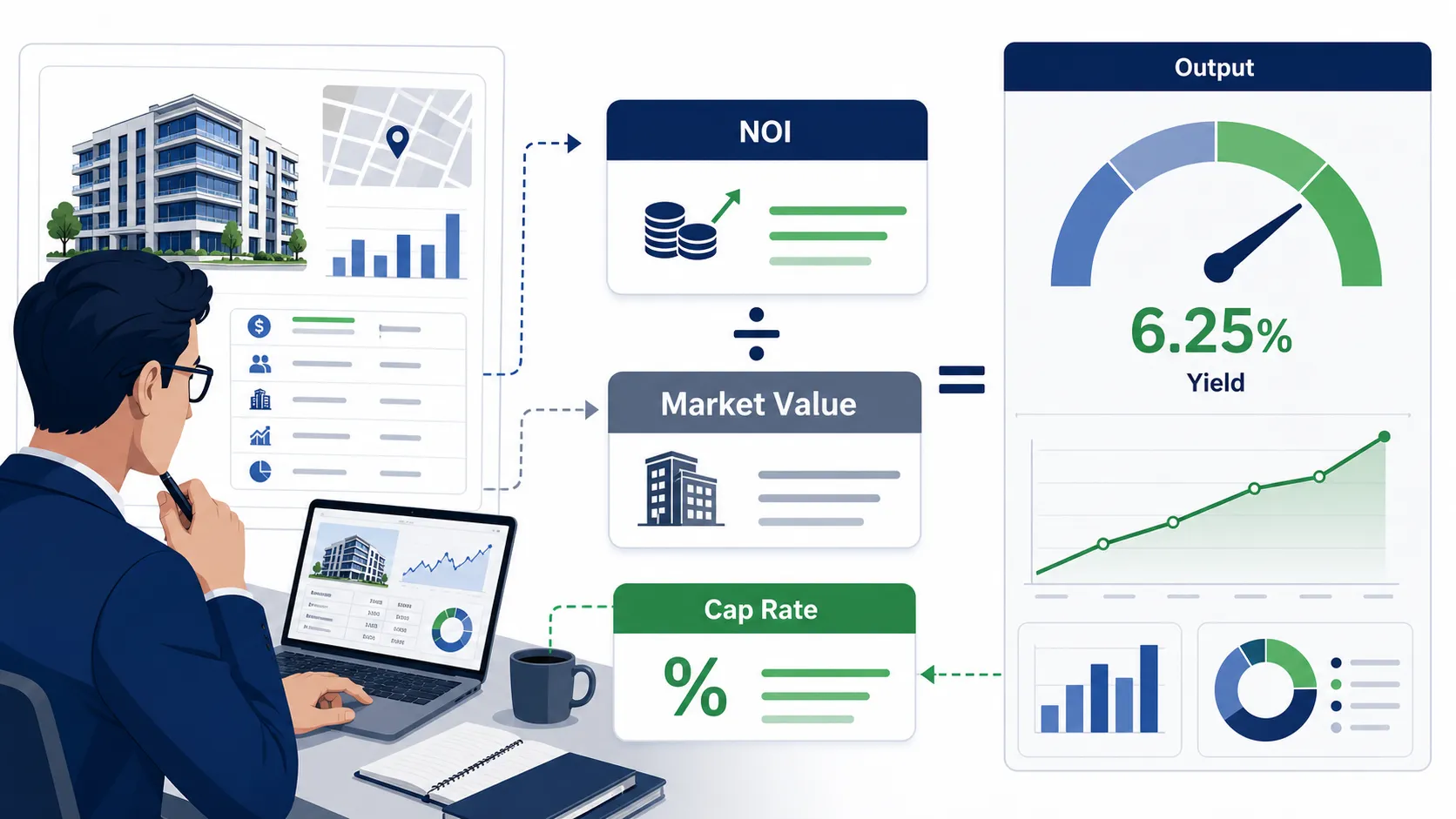
Cap Rate Calculator: Calculate Capitalization Rate Step by Step
Stop guessing property values. The cap rate formula delivers a single-year yield metric that strips out debt, letting you compare diverse assets instantly. Misjudge this rate, and you risk locking capital into an underperforming investment.
 Corporate Finance
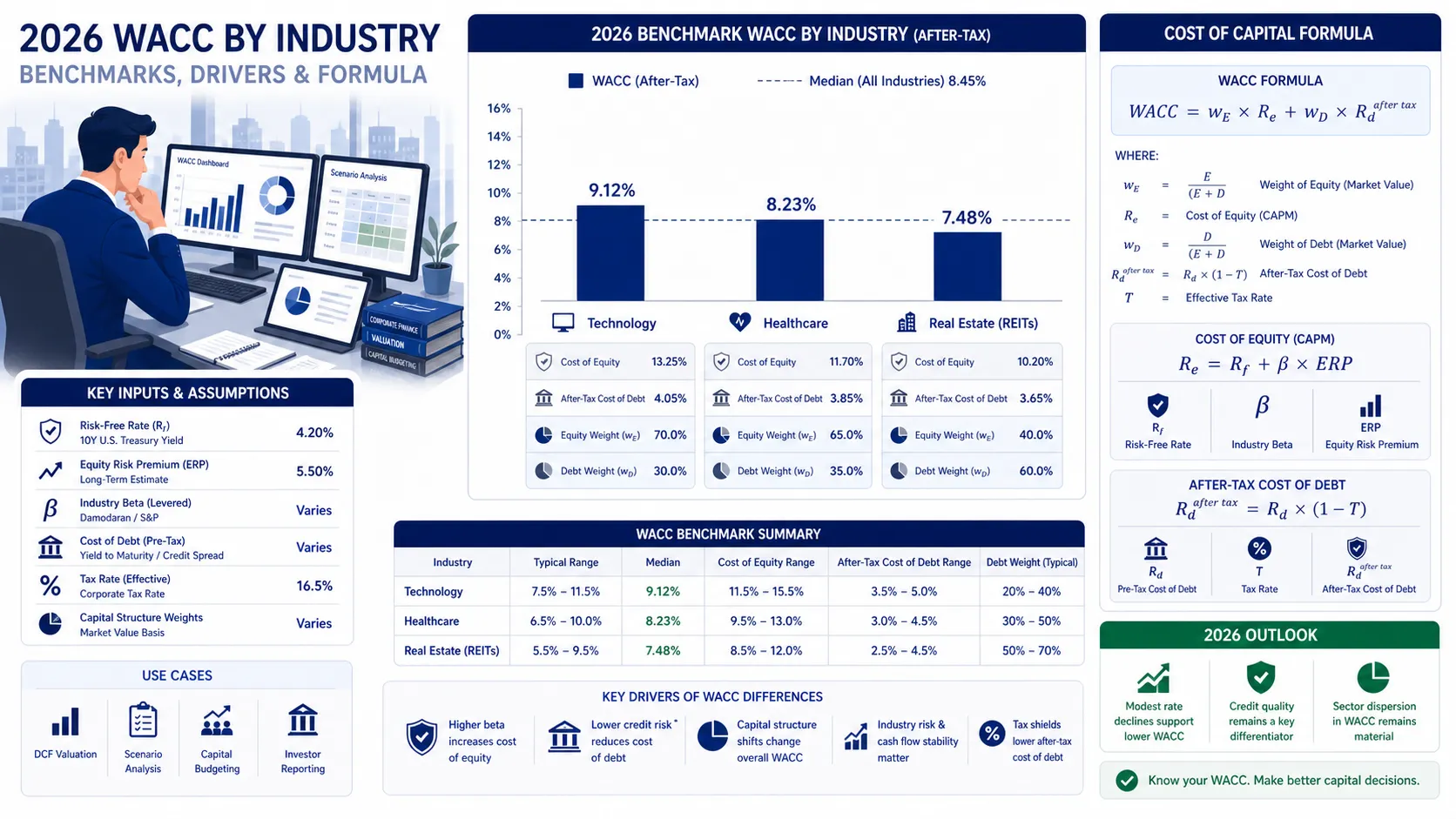
WACC by Industry: 2026 Benchmarks for Technology, Healthcare, and Real Estate
In 2026, industry WACC diverges sharply, from 5.5% for utilities to over 11.5% for software. CFOs must benchmark their discount rate against peers to ground valuations in market reality.
 Corporate Finance
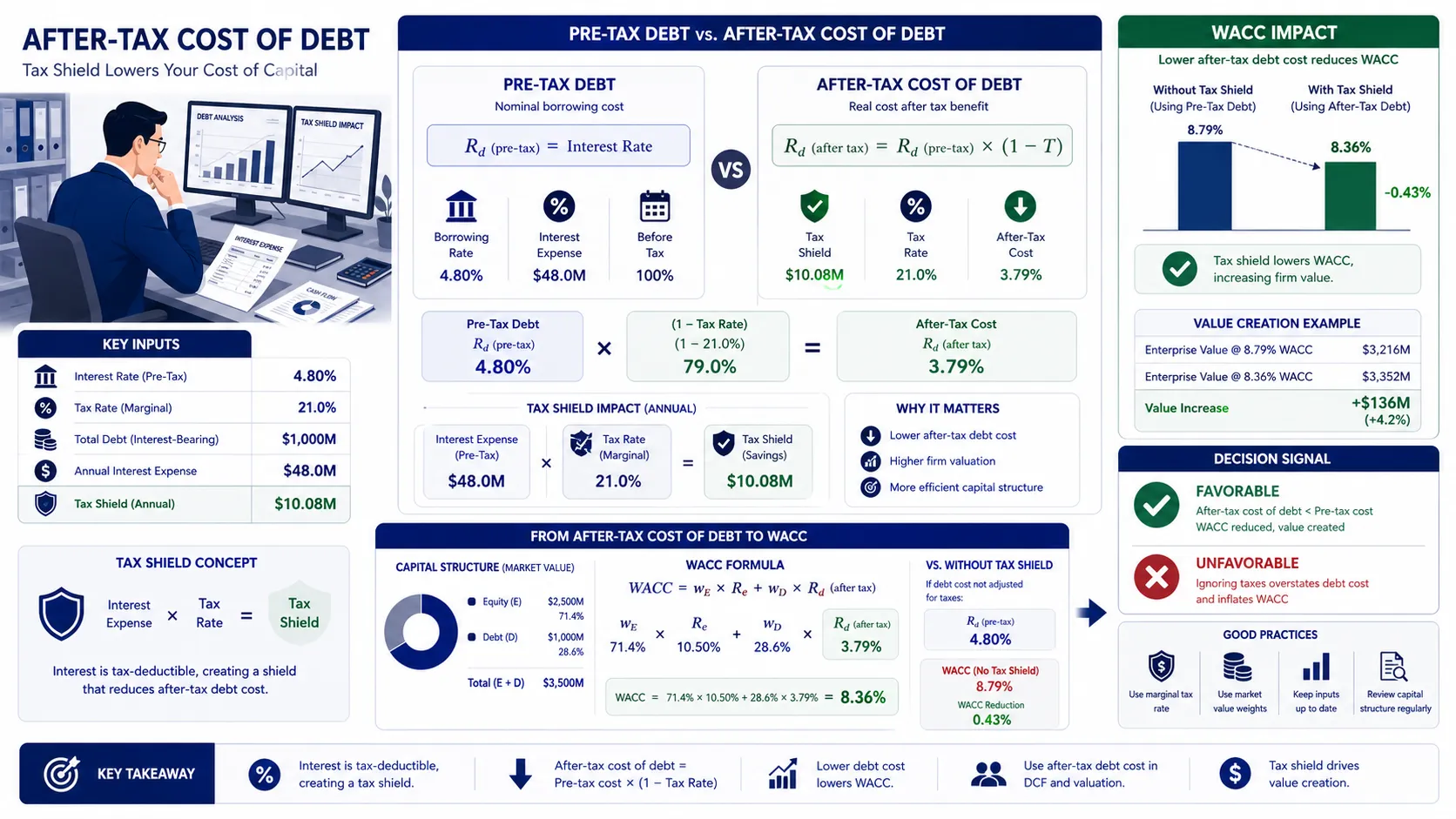
What Is After-Tax Cost of Debt and How Does It Lower WACC?
Interest payments are tax-deductible, making debt cheaper than equity and lowering your company's WACC. The after-tax cost of debt reveals this true, subsidized borrowing rate.
Frequently asked questions
What is included in closing costs?
Are prepaids part of closing costs?
How do seller credits affect cash to close?
How are seller net proceeds calculated?
Is this estimate a settlement statement?
The real estate calculations, yield projections, and cash flow reports generated by BizToolkitPro are for educational and informational purposes only. They do not constitute formal real estate brokerage, lending underwriting, tax counsel, or legal advice.
Investment returns, debt coverage ratios, and capitalization metrics (including Cap Rate, DSCR, Cash-on-Cash, and Waterfall distributions) are simulated based on user-provided inputs and assumptions. Local housing laws, property taxes, market vacancies, and interest rates fluctuate dynamically; therefore, BizToolkitPro makes no warranties regarding the accuracy or real-world applicability of these projections.
Always perform your own independent physical and financial due diligence on properties, and consult with a licensed Real Estate Broker, Mortgage Underwriter, Tax Advisor, or real estate attorney before signing purchase agreements or securing loans.