
Fair Value Calculator (Weighted Multi-Method Asset Appraisal)
Use this focused Fair Value Calculator, a corporate accounting and asset appraisal tool designed to perform weighted multi-method valuations. Under modern accounting frameworks and corporate finance guidelines, relying on a single valuation model can introduce bias.
Valuation reports require the integration of three primary methodological pillars: Asset-Based Valuation (liquidation value of net balance sheet assets), Market-Based Valuation(observed trading multiples of industry peers), and Income-Based Valuation (intrinsic discounted cash flow values). This online utility allows you to input parameter values for each pillar, assign proportional weights (0 to 10 scale), and compute a consolidated Fair Value. Additionally, financial auditors can review the local 2D sensitivity matrix testing fluctuations in DCF cash flows and market multiples to identify potential asset impairment risks.
Input values and customize weighting parameters.
Have a suggestion or found a calculation discrepancy? Let us know!
How to use this fair value calculator
Configuring valuation inputs for each method
To run a multi-method fair value calculation, input the standalone values derived from your separate valuation analyses:
- Asset Book Value: Enter the net book value of tangible assets on the target's balance sheet (Total Assets minus Intangibles and Liabilities).
- Liquidation Discount: Input the discount percentage (0-100%) applied for forced or rapid liquidation scenarios. This adjusts the asset value to reflect recovery risk.
- Peer Multiple Implied Value: Enter the implied enterprise value derived from comparable trading multiple analyses.
- DCF Intrinsic Valuation: Input the intrinsic value calculated using discounted cash flow models.
Determining method weight allocations
Adjust the sliders to allocate weights to each method based on the reliability of inputs and the target company's business model:
Use the Method weights sliders (ranging from 0 to 10 points) to determine the influence of each model. For instance, for an asset-light software business, set the Income (DCF) and Market (Multiples) weights high, and the Asset weight low. For a distressed manufacturing firm, place the highest weight on the Asset (Liquidation) method. Review the resulting Weighted distribution donut chart to confirm the proportional share of each valuation methodology in the final result.
Understanding Fair Value in Corporate Finance methodology
Weighted Fair Value equations
Fair Value consolidates multiple perspectives into a single weighted average:
The three valuation pillars: Asset, Market, and Income
Professional valuation practices divide valuation methodologies into three categories: cost/asset-based, market-based, and income-based. The asset-based approach measures the net value required to replicate the company's tangible asset base. The market approach establishes value based on what investors are currently paying for comparable businesses. The income approach projects the target's future cash-generation capability and discounts those cash flows to present value.
Accounting standards: ASC 820 and IFRS 13
In financial reporting, fair value is governed by US GAAP (ASC 820) and IFRS (IFRS 13). These standards define fair value as the price that would be received to sell an asset or paid to transfer a liability in an orderly transaction between market participants at the measurement date. The frameworks establish a fair value hierarchy that prioritizes inputs: Level 1 (observable market prices), Level 2 (inputs other than active prices that are observable), and Level 3 (unobservable inputs, such as internal DCF models). Integrating and weighting these methodologies is a key requirement for audit compliance.
Weighted average method in fairness opinions
When a board evaluates a potential transaction, it requests a "fairness opinion" from an independent investment bank. The financial advisors perform several independent valuation analyses (CCA, Transaction Comps, DCF) and combine them using a weighted average. This approach ensures that the board receives a balanced valuation range that reflects both intrinsic performance and current market pricing.
Worked example: Weighted Fair Value calculation
Valuation inputs and weight allocation
Let's walk through an illustrative calculation for an industrial manufacturing firm preparing for a balance sheet audit revaluation. The accounting team collects the following parameters:
- Asset Book Value = $1,500,000; Liquidation Discount = 30%.
- Market Multiples Implied Value = $1,200,000.
- Discounted Cash Flow (DCF) Implied Value = $1,600,000.
- Weight allocations: Asset weight = 3; Market multiple weight = 2; Income DCF weight = 5.
Step-by-step mathematical walkthrough
First, calculate the adjusted Liquidation Value for the asset-based approach:
Liquidation Value = $1,500,000 * (1 - 0.30) = $1,050,000
Next, calculate the total weights sum:
Total Weight = 3 + 2 + 5 = 10
Multiply each method's value by its assigned weight and sum the results:
Weighted Sum = ($1,050,000 * 3) + ($1,200,000 * 2) + ($1,600,000 * 5) = $3,150,000 + $2,400,000 + $8,000,000 = $13,550,000
Finally, divide the weighted sum by the total weight to find the Fair Value:
Weighted Fair Value = $13,550,000 / 10 = $1,355,000
In this illustrative calculation, the final weighted Fair Value is determined to be $1,355,000. This value can be used as the basis for financial reporting or transaction negotiations.
Key use cases for Fair Value appraisals
Financial reporting & asset revaluations
Under IFRS and US GAAP, companies must periodically revalue certain assets (such as real estate, equipment, or investments) to fair value. The weighted multi-method approach provides a transparent, defensible valuation that meets auditing standards.
Litigation support & shareholder disputes
Shareholder buyouts, partner exits, or corporate divorces often lead to disputes over valuation. Courts and independent appraisers rely on weighted multi-method valuations to establish a fair buy-out price that protects minority shareholders.
Transaction due diligence & purchase price allocation
During an acquisition, the buyer must allocate the purchase price to the acquired tangible and intangible assets on their balance sheet. Performing a weighted fair value analysis is key to allocating assets accurately and determining final goodwill levels.
Impairment testing mistakes and goodwill valuations
Goodwill impairment rules (ASC 350)
When a company pays a premium to acquire another business, it records the premium as goodwill. Accounting standards require goodwill to be tested for impairment annually. If the fair value of the reporting unit falls below its carrying value, the company must record a goodwill impairment charge.
Using a weighted fair value approach helps companies identify impairment risk early, avoiding accounting mistakes before formal audit reviews.
Best practices for defending weighted valuations
When presenting a weighted fair value analysis to auditors, follow these documentation standards:
- Document Weight Rationale: Document why specific weights were applied to each valuation method. For example, explain why the market approach was weighted higher than the asset approach due to peer trading activity.
- Stress-Test Key Inputs: Perform sensitivity analyses on high-impact variables (such as DCF growth rates or peer multiples) to demonstrate the stability of your valuation.
- Keep Peer Groups Consistent: Use a consistent comparable peer group across valuation periods to ensure comparability and reliability.
Real-world case study: Apple Inc. (AAPL, FY 2023)
Apple Inc. metrics profile
Apple Inc., a global technology leader, consistently undergoes valuation analysis due to its significant market capitalization and influence. This case study utilizes Apple's verified financial data from Fiscal Year 2023 to demonstrate the application of a fair value calculation, focusing on key earnings and discount rate metrics.
Apple's diluted EPS of $6.13 for FY 2023 serves as a foundational input for valuation models, representing the company's profitability on a per-share basis. A projected EPS growth rate of 12.0% for the next five years, derived from analyst consensus, reflects market expectations for Apple's continued earnings expansion. The Weighted Average Cost of Capital (WACC) of 8.35% acts as the discount rate, accounting for the risk associated with Apple's cash flows and the cost of financing its operations. By applying a terminal growth rate of 2.5%, representing the perpetual growth of earnings, a simplified discounted earnings model yields an estimated fair value per share of $159.74. This valuation provides investors with an intrinsic value benchmark, allowing for comparison against the current market price to assess potential investment opportunities or overvaluation.
Related Calculators
Estimate weighted average cost of capital.
Open Tool →DCF CalculatorValue a business using discounted cash flows.
Open Tool →NPV CalculatorCompute net present value of cash flows.
Open Tool →IRR CalculatorSolve project internal rates of return.
Open Tool →Free Cash Flow CalculatorEstimate operating free cash flow.
Open Tool →Break-Even ROI CalculatorAnalyze payback thresholds and returns.
Open Tool →Related Articles & Guides
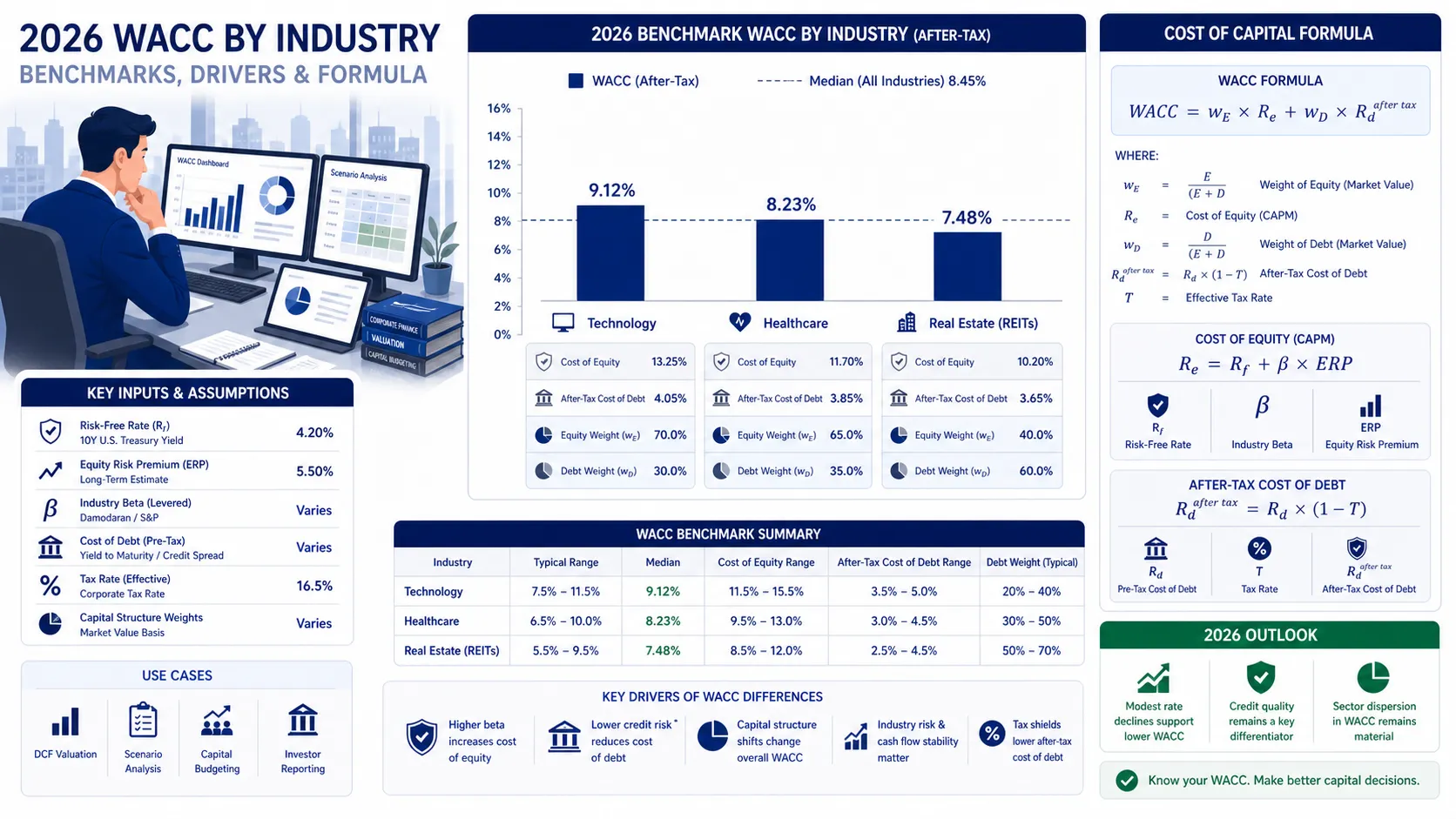 Corporate Finance
WACC by Industry: 2026 Benchmarks for Technology, Healthcare, and Real Estate
In 2026, industry WACC diverges sharply, from 5.5% for utilities to over 11.5% for software. CFOs must benchmark their discount rate against peers to ground valuations in market reality.
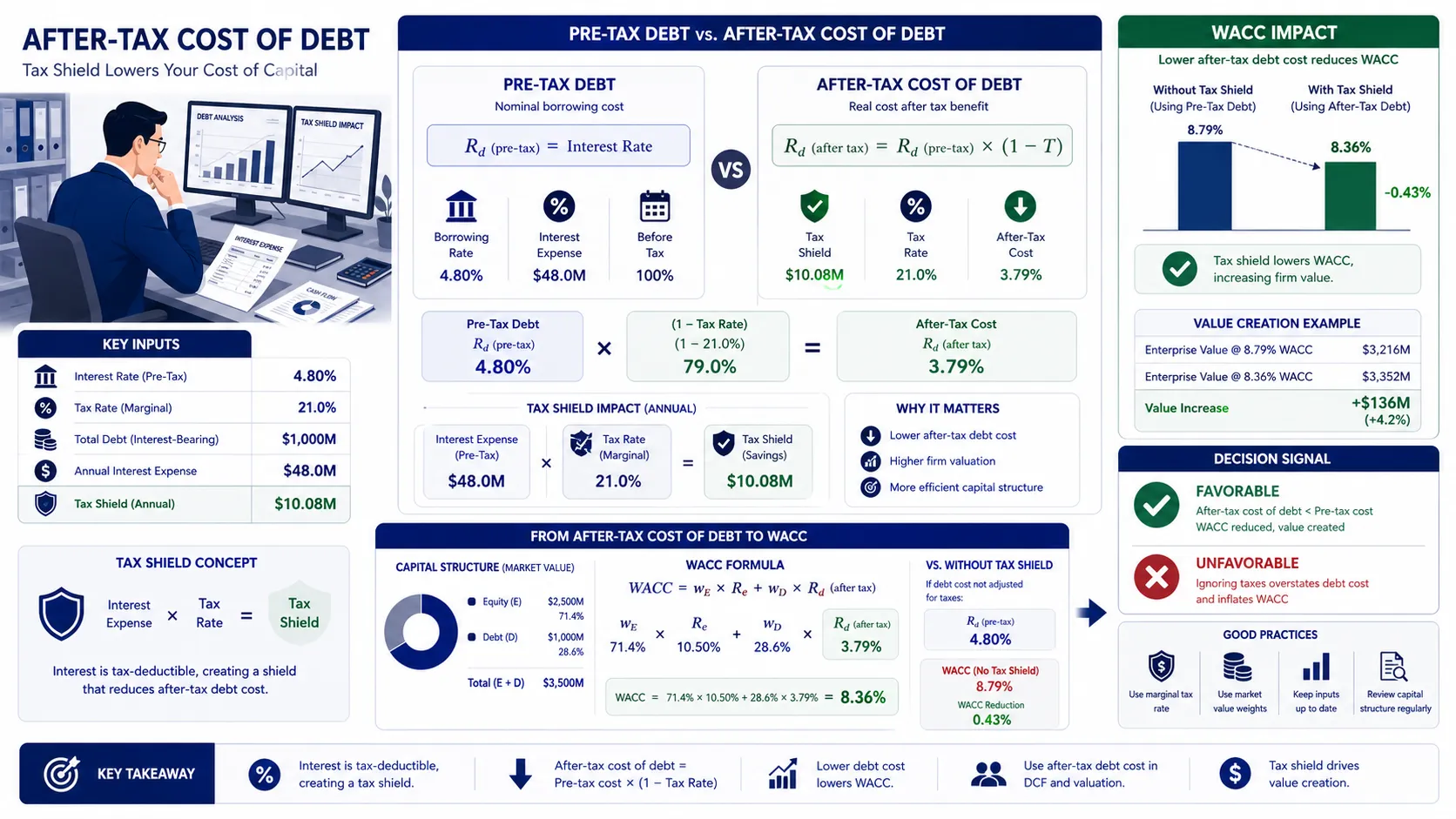 Corporate Finance
What Is After-Tax Cost of Debt and How Does It Lower WACC?
Interest payments are tax-deductible, making debt cheaper than equity and lowering your company's WACC. The after-tax cost of debt reveals this true, subsidized borrowing rate.
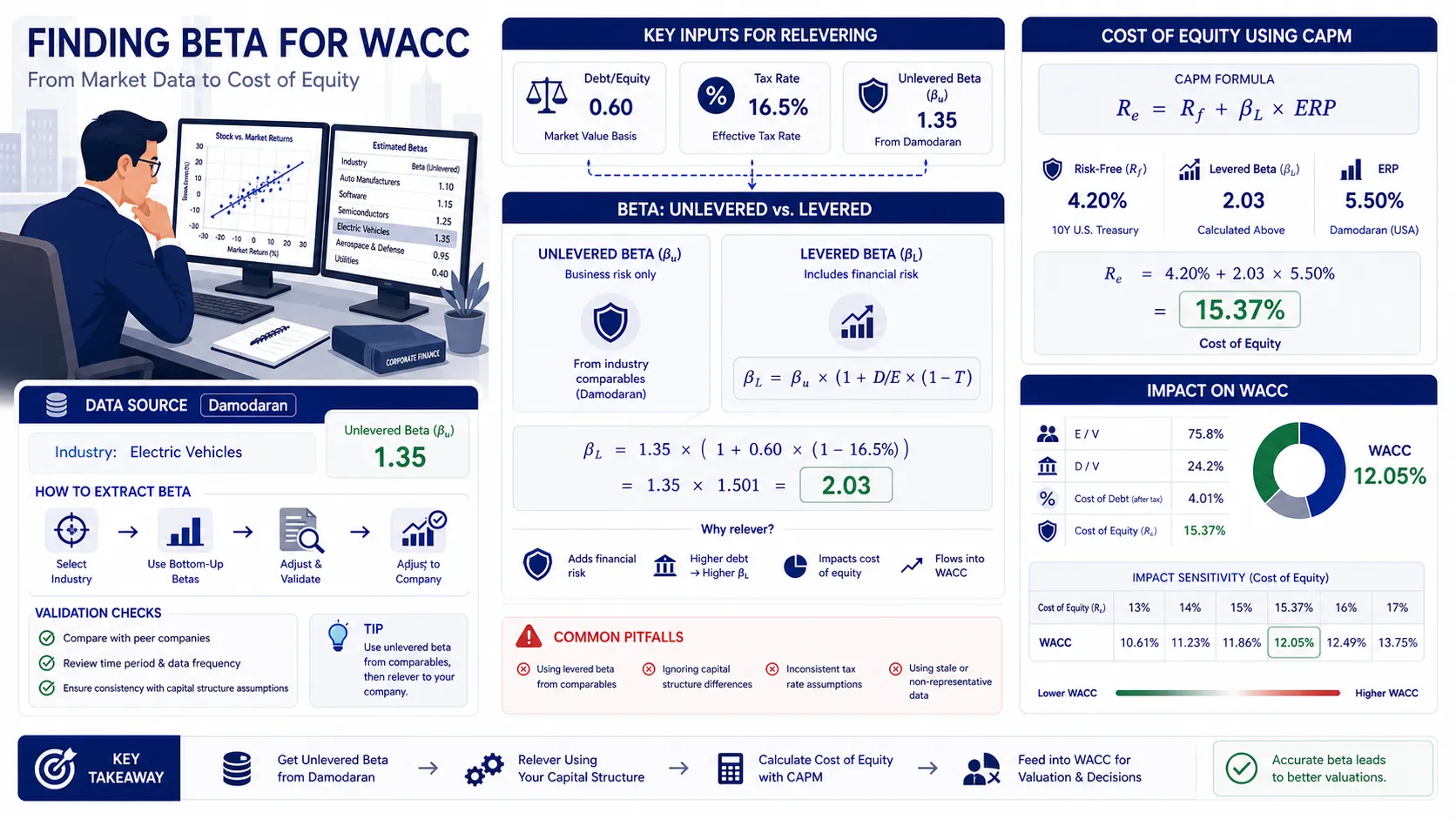 Corporate Finance
How to Find Beta for WACC: Unlevered vs Levered Beta Calculati
Unlock institutional-grade WACC by mastering bottom-up beta: unlever public peers to strip debt risk, then re-lever for your target's capital structure. This precision method solves CAPM's toughest hurdle, delivering accurate equity risk pricing for DCF models.
Frequently Asked Questions (FAQ)
What is ASC 820 in fair value accounting?
Why are different weights applied to valuation methods?
What is the difference between liquidation value and fair value?
How does market volatility affect fair value appraisals?
Can I export this fair value audit analysis?
The calculations, projections, and reports generated by BizToolkitPro are for educational and informational purposes only. They do not represent professional investment advice, financial planning, tax guidance, legal counsel, or formal business valuation.
Financial models and valuation formulas (including WACC, DCF, IRR, and NPV) rely on assumptions and inputs provided directly by the user. Actual financial markets and business metrics fluctuate; therefore, BizToolkitPro makes no warranties, express or implied, regarding the accuracy, completeness, or suitability of the outputs for any investment strategy or corporate decision.
Always perform your own independent diligence and consult with a licensed Financial Analyst, Certified Public Accountant (CPA), or certified valuation specialist before committing capital or executing corporate transactions.