
M&A Merger Premium Calculator: Acquisition Bid Solver
Audit corporate acquisition pricing metrics using the premium Merger Premium calculator.
Compare proposed bid prices per share against unaffected market averages, historical VWAP baselines, and determine total control premium values.
Have a suggestion or found a calculation discrepancy? Let us know!
How to use this merger premium calculator
Financial parameters required for bidding audits
To model an accurate merger premium, collect these pricing benchmarks from the target company's trading history and acquisition filing documents:
- -Offer Price Per Share: The acquisition share price proposed by the buyer in the public bid or merger agreement.
- -Unaffected Share Price: The target's stock price prior to deal rumors or official announcements.
- -Target Shares Outstanding: Total common shares outstanding issued by the target company.
- -Target Net Debt: Balance sheet debt minus cash reserves, used to calculate Enterprise Value (EV).
- -Target VWAP: The Volume-Weighted Average Price over a historical reference window (commonly 30, 60, or 90 days).
Interpreting the merger premium outputs
The calculator provides a detailed breakdown of the acquisition premium:
- Share Price Premium Gauge: A color-coded radial meter showing the percentage premium of the offer price over the unaffected stock price.
- EV Stack Comparison: Compares the target's Enterprise Value based on the unaffected share price versus the proposed offer price.
- 2D Premium Matrix: Evaluates the premium percentage across various offer and unaffected price combinations.
- Scenario Analysis: Simulates how a 15% increase or 10% decrease in the offer price affects the deal value.
Merger premium formulas and financial methodology
Formula Principles
The basic share price premium compares the offer price to the unaffected price:
Total premium dollars paid represents the total cash premium above market value:
The VWAP premium evaluates the offer against historical volume-weighted averages:
What is a Merger Premium (Control Premium)?
In mergers and acquisitions of public companies, buyers must offer a premium over the current share price to persuade shareholders to sell their stock. This is known as the control premium.
The Unaffected Share Price: Public stock prices react quickly to acquisition rumors. To measure the true premium offered, analysts use the target's stock price prior to any deal leaks, referred to as the unaffected stock price.
VWAP Benchmarks: Single-day stock prices can fluctuate due to short-term market trends. To get a more stable reference price, investment banks evaluate the offer price against the Volume-Weighted Average Price (VWAP) over 30, 60, or 90 days.
Equity Value vs. Enterprise Value Premium: While the equity premium measures the increase in value for stock shareholders, the enterprise value premium evaluates the deal's impact on the total capitalized structure (including net debt). Since debt holders are paid at face value without a premium, the EV premium percentage is typically lower than the share price premium percentage.
Merger premium step-by-step example
Bidding Structuring Case Study
A buyer proposes to acquire a target medical device manufacturer. Financial parameters include:
| Financial Metric | Value |
|---|---|
| Proposed Offer Price | $35.00 / Share |
| Unaffected Share Price | $25.00 / Share |
| Target Shares Outstanding | 2,000,000 Shares |
| Target Net Debt | $10,000,000 |
| Target 30-Day VWAP Price | $26.50 / Share |
Step-by-step premium calculations
Follow these steps to audit the premium metrics:
- Step 1: Calculate Share Price Premium %
Share Premium = ($35.00 - $25.00) / $25.00 = 40.00%. - Step 2: Calculate VWAP Premium %
VWAP Premium = ($35.00 - $26.50) / $26.50 = 32.08%. - Step 3: Calculate Premium Dollars Paid
Premium Dollars = ($35.00 - $25.00) 脳 2,000,000 Shares = $20,000,000. - Step 4: Compare Unaffected vs. Offer EV Premiums
Unaffected EV = ($25.00 脳 2M) + $10M = $60,000,000.Offer EV = ($35.00 脳 2M) + $10M = $80,000,000.EV Premium = ($80M - $60M) / $60M = 33.33%.
The proposed offer represents a 40.00% share premium (32.08% over VWAP), generating $20,000,000 in premium dollars for target shareholders.
What your merger premium results mean
High Premiums (> 35%)
Common in competitive auctions or strategic deals where the buyer expects significant synergies. A high premium indicates that the acquirer is confident in its ability to create value post-merger.
Standard Premiums (20% to 35%)
The historical average for public company acquisitions. This range represents a balanced compromise between offering enough value to win shareholder approval and protecting buyer earnings from overpayment.
Low Premiums (< 15%)
Often seen in distressed sales, restructuring, or mergers of equals. Low premiums might not win shareholder approval unless the target faces liquidity issues.
Merger premium use cases across banking sectors
Investment Banking pitchbooks
Advisors use merger premium charts to justify transaction terms to the target board, comparing the premium to industry averages and historical premiums.
Shareholder Class Action Lawsuits
Plaintiff attorneys represent target shareholders in lawsuits claiming that the board accepted an inadequate control premium, using historical premium analyses to support their claims.
- xIgnoring Market Rumors: Using a reference price that already includes bid premiums due to leaks, understating the true premium.
- xComparing against Single-Day Highs: Evaluating premiums against volatile daily price spikes instead of using stable VWAP averages.
- xOverlooking Net Debt: Ignoring target net debt, which increases the total enterprise value premium paid.
Real-world case study: VMware, Inc. (VMW, FY 2023)
VMware, Inc. metrics profile
Broadcom's acquisition of VMware was a significant technology merger completed in November 2023. The deal, valued at approximately $69 billion including debt, aimed to expand Broadcom's infrastructure software portfolio. The transaction involved a substantial premium paid to VMware shareholders.
The 44% merger premium paid for VMware by Broadcom reflects the strategic value Broadcom placed on VMware's virtualization and cloud computing software capabilities. This substantial premium, calculated based on VMware's closing stock price on May 20, 2022, before media speculation, indicates the acquirer's strong belief in the synergistic benefits and future growth prospects of the combined entity. For investors, a high merger premium typically translates to a significant gain on their holdings, assuming the deal closes successfully. However, it also highlights the competitive intensity and the willingness of acquiring firms to pay a premium for market-leading technologies and established customer bases, especially in consolidating sectors.
Related Calculators
Estimate weighted average cost of capital.
Open Tool →DCF CalculatorValue a business using discounted cash flows.
Open Tool →NPV CalculatorCompute net present value of cash flows.
Open Tool →IRR CalculatorSolve project internal rates of return.
Open Tool →Free Cash Flow CalculatorEstimate operating free cash flow.
Open Tool →Break-Even ROI CalculatorAnalyze payback thresholds and returns.
Open Tool →Related Articles & Guides
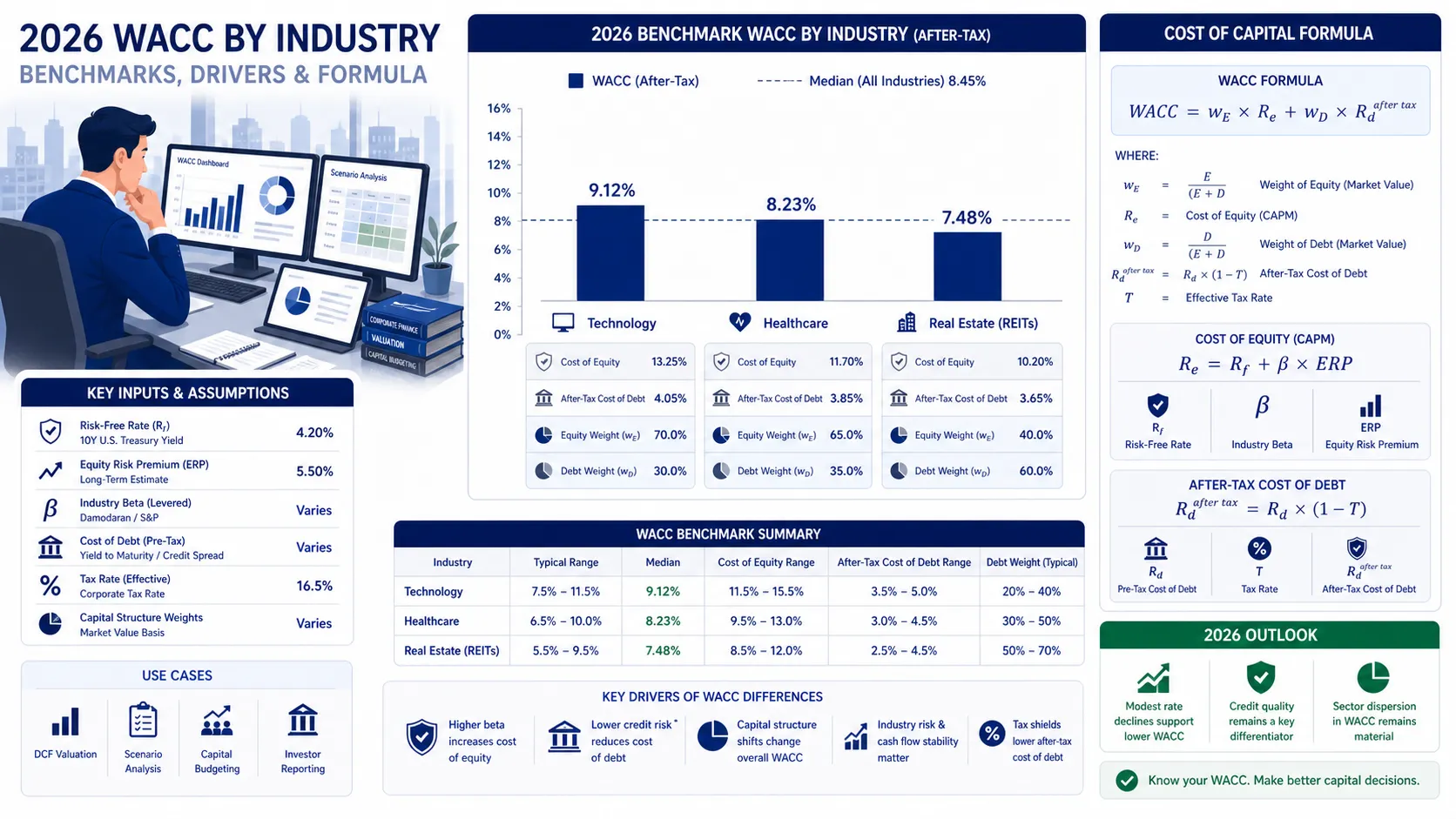 Corporate Finance
WACC by Industry: 2026 Benchmarks for Technology, Healthcare, and Real Estate
In 2026, industry WACC diverges sharply, from 5.5% for utilities to over 11.5% for software. CFOs must benchmark their discount rate against peers to ground valuations in market reality.
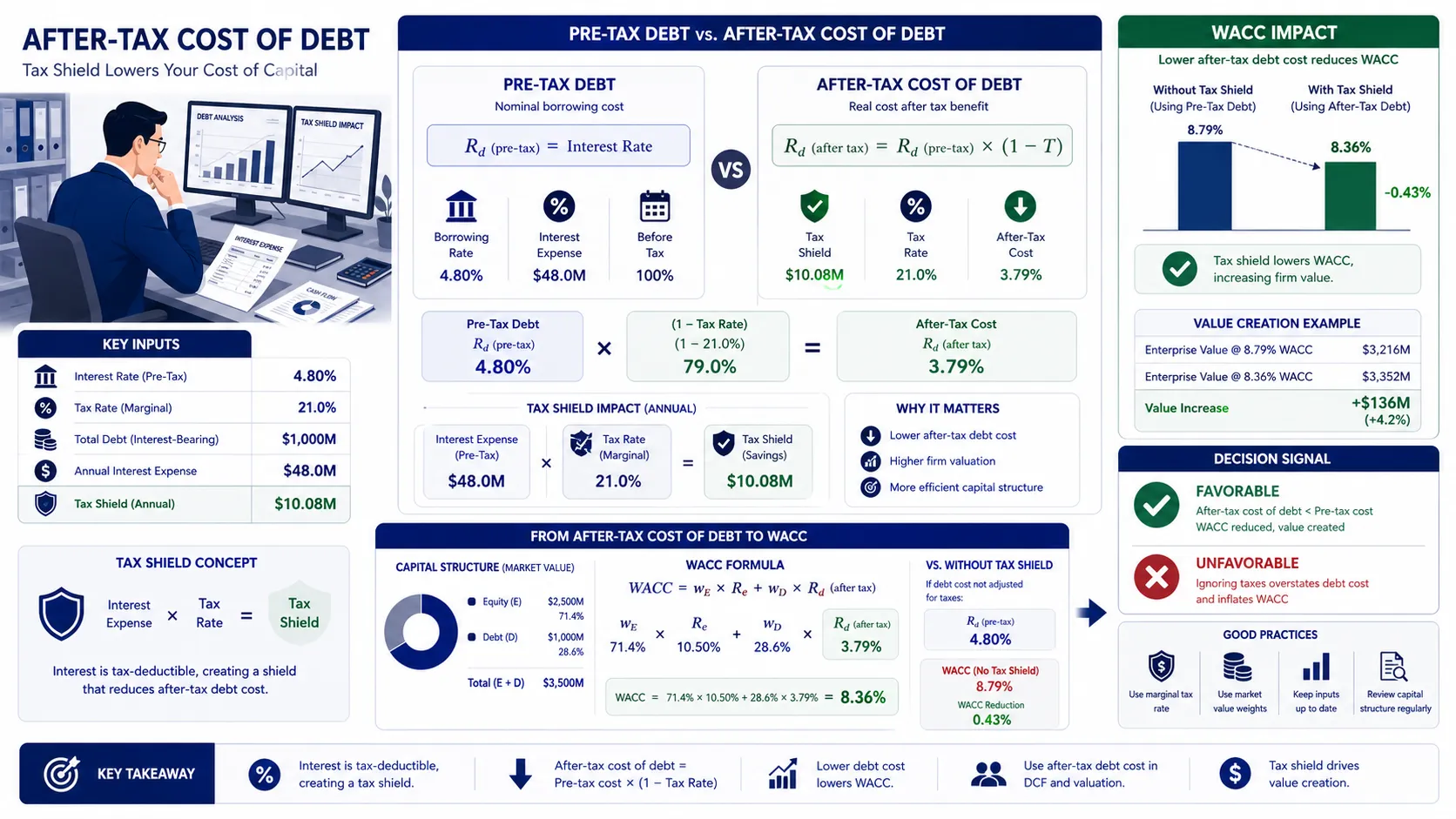 Corporate Finance
What Is After-Tax Cost of Debt and How Does It Lower WACC?
Interest payments are tax-deductible, making debt cheaper than equity and lowering your company's WACC. The after-tax cost of debt reveals this true, subsidized borrowing rate.
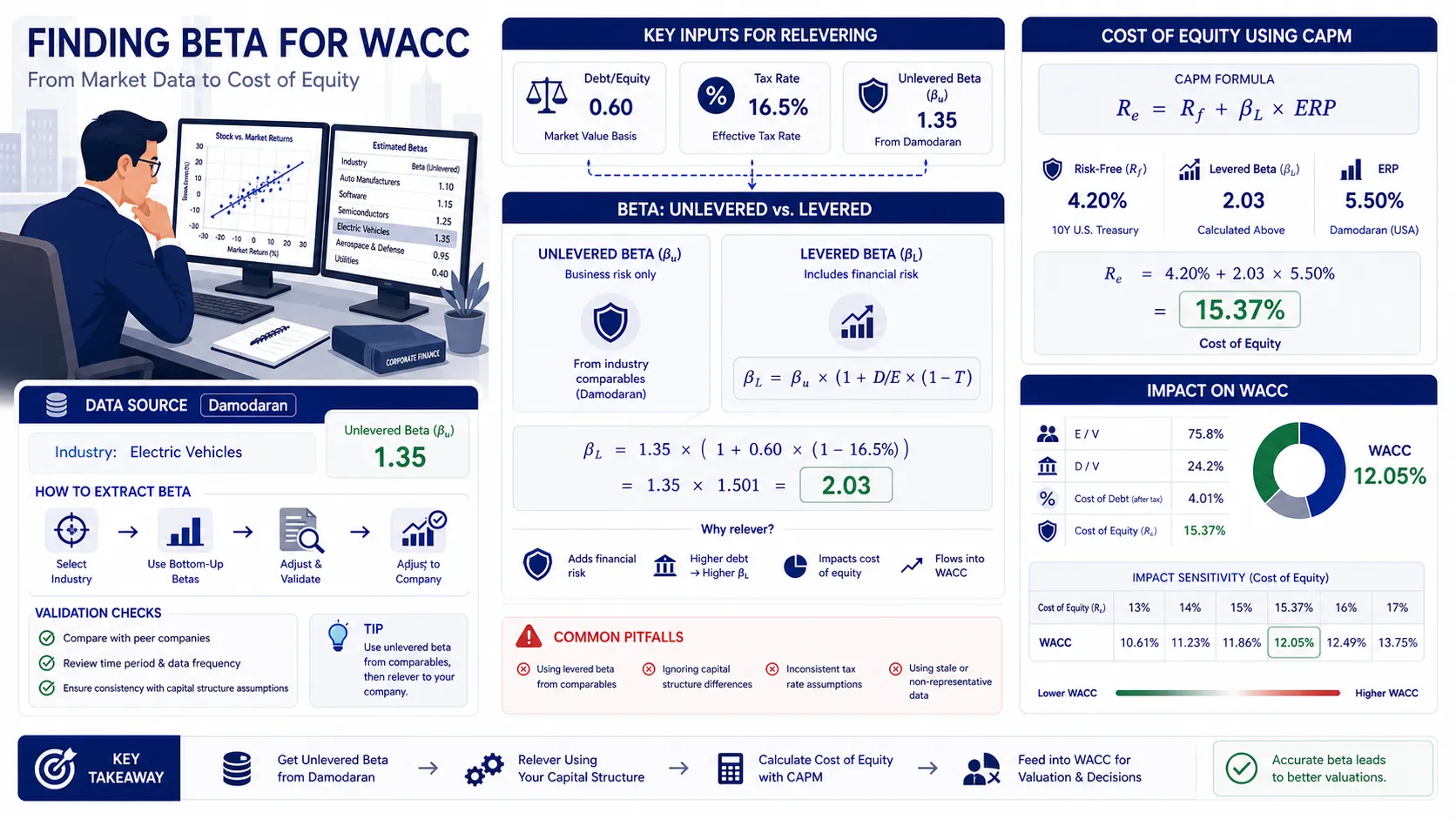 Corporate Finance
How to Find Beta for WACC: Unlevered vs Levered Beta Calculati
Unlock institutional-grade WACC by mastering bottom-up beta: unlever public peers to strip debt risk, then re-lever for your target's capital structure. This precision method solves CAPM's toughest hurdle, delivering accurate equity risk pricing for DCF models.
Frequently Asked Questions (FAQ)
Why is the premium calculated against unaffected prices rather than the latest trading price?
What is a typical control premium in public M&A?
How does VWAP help in premium analysis?
Why is the EV premium usually lower than the equity premium?
The calculations, projections, and reports generated by BizToolkitPro are for educational and informational purposes only. They do not represent professional investment advice, financial planning, tax guidance, legal counsel, or formal business valuation.
Financial models and valuation formulas (including WACC, DCF, IRR, and NPV) rely on assumptions and inputs provided directly by the user. Actual financial markets and business metrics fluctuate; therefore, BizToolkitPro makes no warranties, express or implied, regarding the accuracy, completeness, or suitability of the outputs for any investment strategy or corporate decision.
Always perform your own independent diligence and consult with a licensed Financial Analyst, Certified Public Accountant (CPA), or certified valuation specialist before committing capital or executing corporate transactions.