
M&A Earnout Calculator: Contingent Payment Modeler
Quantify transaction structures using the premium Earnout calculator.
Reconcile purchase price valuation gaps, model EBITDA or revenue threshold hurdles, and discount expected contingent consideration payouts to present value.
Have a suggestion or found a calculation discrepancy? Let us know!
How to use this M&A earnout calculator
Parameters required for earnout modeling
To structure a contingent earnout payment schedule, collect these parameters from the target's operating model and the draft purchase agreement:
- -Base Purchase Price: The fixed payment paid to the seller at transaction closing (excluding contingent portions).
- -Projected Earnout Metric: The target performance metric (EBITDA, Revenue, or user count) projected for the earnout period.
- -Threshold Hurdle: The minimum metric level that must be achieved before any earnout payments are triggered.
- -Payout Percentage: The share of the performance metric paid out as contingent consideration.
- -Maximum Payout Cap: The maximum total earnout amount the buyer agrees to pay.
- -Measurement Period: The duration (in years) over which performance metrics are evaluated.
- -Discount Rate: Typically matching the combined company's cost of debt or WACC to discount future cash payouts.
Interpreting earnout valuation ranges
The earnout model outputs three key transactional values:
- Consideration Range Stack: Compares the minimum value (base purchase price only) against expected and maximum potential deal values.
- Probability Feasibility Dial: A color-coded gauge representing the probability of target achievement. High probabilities suggest realistic projections; low percentages indicate aggressive growth targets.
- 2D Sensitivity Grid: Evaluates expected earnout payouts across various performance metrics and probability levels.
Earnout formulas and financial methodology
Earnout Math Principles
Potential earnout payout is triggered once the performance metric meets the hurdle:
Expected earnout represents the probability-adjusted payout:
Present Value (PV) discounts the expected payment over the measurement period:
What is an M&A Earnout?
An earnout is a contractual structuring mechanism in mergers and acquisitions where a portion of the purchase price is paid after closing, contingent on the target company achieving specific financial or operational goals.
Bridging the Valuation Gap: Sellers often value their company based on future growth potential, while buyers are unwilling to pay upfront for unproven performance. An earnout solves this dispute by paying a base price at closing and structuring contingent payments that are paid only if performance targets are met.
Selecting the Earnout Metric: Deal structures use different performance metrics:
- Revenue Earnouts: Simple to measure but can incentivize sellers to maximize sales at the expense of profit margins.
- EBITDA/Profit Earnouts: Protects the buyer's margins but can lead to post-closing disputes regarding corporate overhead allocations.
- Milestone Earnouts: Non-financial milestones common in biopharm (FDA approvals) or tech (product releases).
Discounting and Probability: Under accounting standards (ASC 805 / IFRS 3), buyers must record the fair value of contingent consideration at closing. This requires probability-adjusting the expected payouts and discounting them to present value.
Earnout step-by-step example
Contingent Structuring Case Study
A buyer acquires a target software startup. To resolve a $5M valuation gap, they agree to a 2-year earnout term:
| Financial Variable | Value |
|---|---|
| Base Purchase Price | $40,000,000 |
| Projected EBITDA (Year 2) | $10,000,000 |
| EBITDA Hurdle Threshold | $8,000,000 |
| EBITDA Payout Percentage | 50% |
| Maximum Payout Cap | $5,000,000 |
| Measurement Period | 2 Years |
| Probability of Target Success | 70% |
| Discount Rate (WACC) | 12% |
Reconciliation step-by-step arithmetic
To value the earnout structure:
- Step 1: Verify Hurdle and Calculate Potential Payout
EBITDA ($10.0M) > Hurdle ($8.0M)(hurdle met).Calculated Payout = $10,000,000 脳 50% = $5,000,000.Potential Payout = MIN( $5M cap, $5M ) = $5,000,000. - Step 2: Calculate Probability-Adjusted Expected Earnout
Expected Earnout = $5,000,000 脳 70% = $3,500,000. - Step 3: Discount Expected Payout to Present Value
PV of Earnout = Expected Payout ($3.5M) / 1.12^2 = $2,790,178. - Step 4: Determine Total Consideration Range
Min Consideration = Base ($40.0M).Max Consideration = Base ($40.0M) + Potential ($5.0M) = $45,000,000.
Under accounting standards, the buyer records a $2,790,178 contingent liability on the balance sheet at close, while the target shareholders stand to receive up to $45,000,000 in total consideration.
What earnout metrics mean for your transaction
Expected vs. Potential Payout
The difference between the potential and expected payout represents the valuation risk. A large gap indicates that the buyer is shifting significant performance risk back onto the seller.
Low Achievement Probabilities
When target success probability falls below 50%, the earnout targets may be set too high or the business model is highly speculative. Buyers use these structures to avoid overpaying for early-stage targets.
Discount Rates and Present Value
A higher discount rate reflects higher risk in achieving the targets, which reduces the present value of the contingent payment liability recognized at closing.
Common earnout structuring mistakes to avoid
Startups: Founder Retention Clauses
Buyers structure earnout payments to align with founder retention periods. If key founders leave before the end of the measurement period, their earnout payments are forfeited.
Distressed Mergers: Debt Facility Covenants
In leveraged transactions, lenders restrict the payment of earnout payments if they would trigger a breach of corporate leverage ratio covenants.
- xAmbiguous EBITDA Definitions: Failing to define post-closing overhead allocations, leading to disputes regarding earnings calculations.
- xIgnoring Post-Closing Control: Restricting the seller's authority to run operations, making it difficult to hit earnout targets.
- xUnrealistic Hurdle Timelines: Setting short measurement periods that do not allow enough time to ramp operations.
Real-world case study: SaaS Industry Benchmark (FY 2024 Standard)
SaaS Industry Benchmark metrics profile
This case study examines a hypothetical acquisition of a fast-growing SaaS company by a larger technology firm, incorporating an earnout structure to align seller incentives with post-acquisition performance. The earnout is tied to Annual Recurring Revenue (ARR) growth over a three-year period, reflecting a common approach in the software industry to mitigate valuation risks.
The earnout mechanism in this scenario serves as a critical tool for bridging valuation gaps between the buyer and seller, particularly when future growth is a key driver of the target company's value. By linking a portion of the total consideration to specific ARR targets, the acquirer de-risks the transaction while incentivizing the former owners to continue driving post-merger performance. The results demonstrate how achieving or missing these targets directly impacts the final payout, highlighting the importance of realistic projections and robust operational integration for realizing the full potential value of the acquisition for both parties.
Related Calculators
Estimate weighted average cost of capital.
Open Tool →DCF CalculatorValue a business using discounted cash flows.
Open Tool →NPV CalculatorCompute net present value of cash flows.
Open Tool →IRR CalculatorSolve project internal rates of return.
Open Tool →Free Cash Flow CalculatorEstimate operating free cash flow.
Open Tool →Break-Even ROI CalculatorAnalyze payback thresholds and returns.
Open Tool →Related Articles & Guides
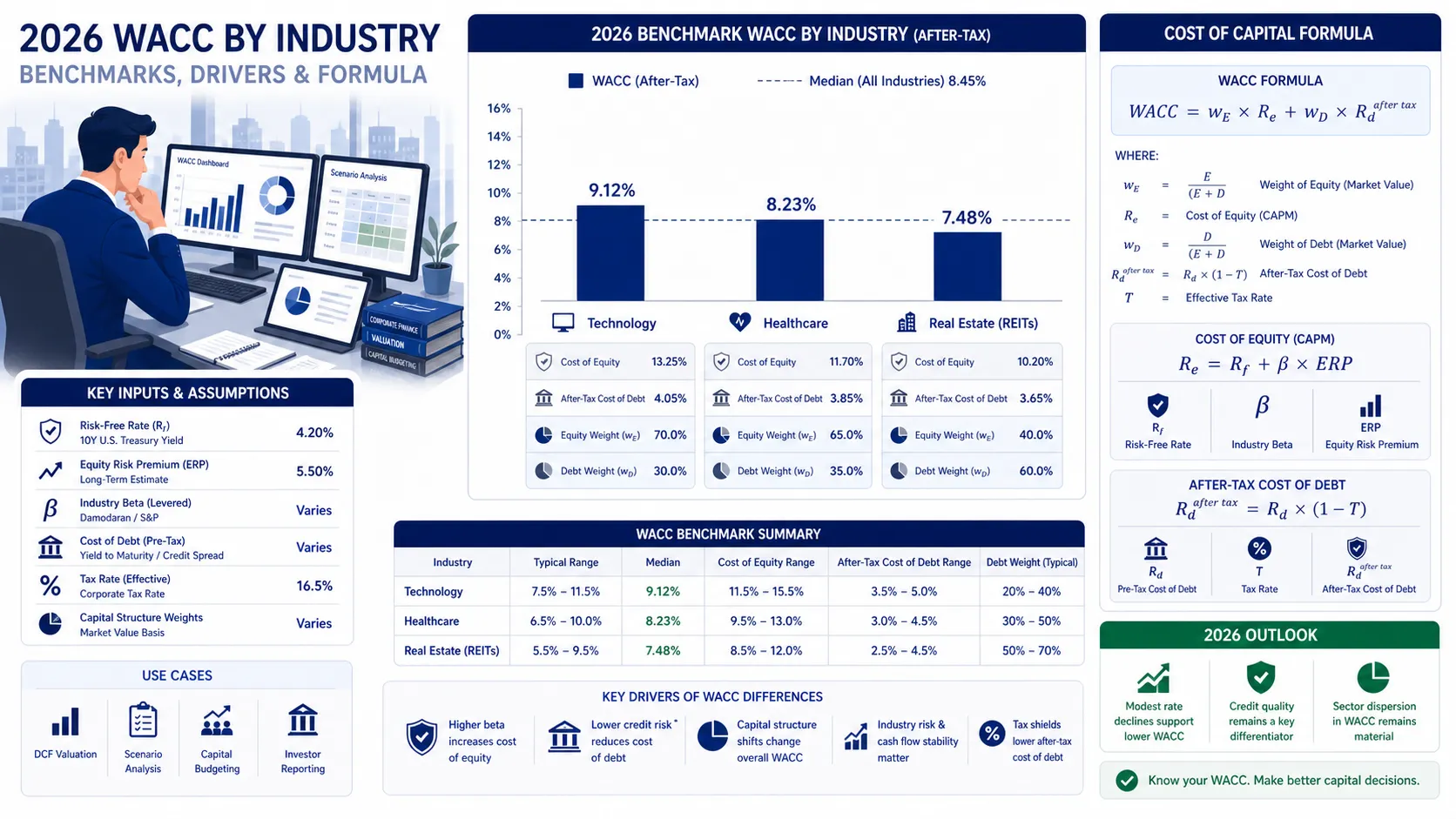 Corporate Finance
WACC by Industry: 2026 Benchmarks for Technology, Healthcare, and Real Estate
In 2026, industry WACC diverges sharply, from 5.5% for utilities to over 11.5% for software. CFOs must benchmark their discount rate against peers to ground valuations in market reality.
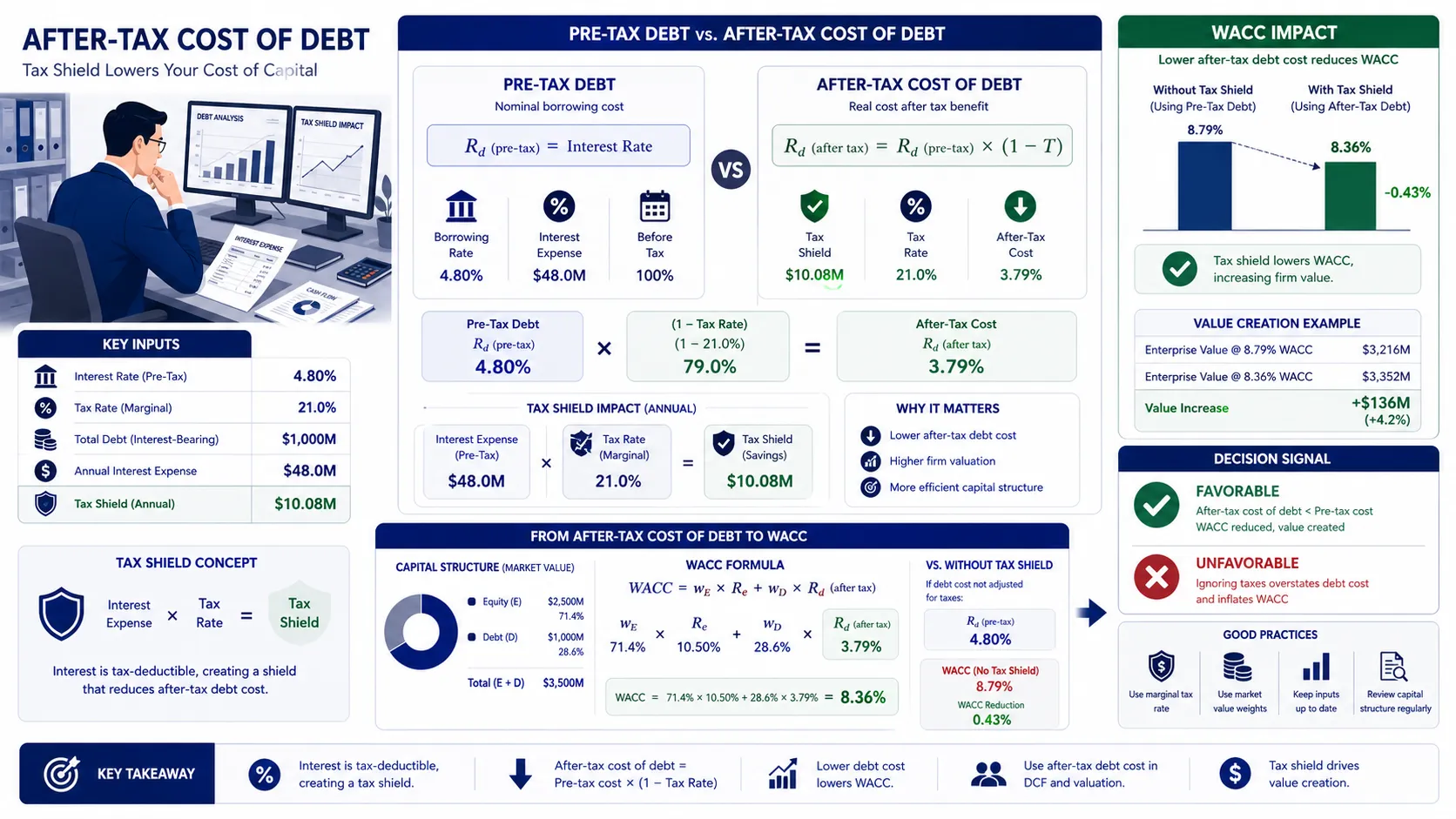 Corporate Finance
What Is After-Tax Cost of Debt and How Does It Lower WACC?
Interest payments are tax-deductible, making debt cheaper than equity and lowering your company's WACC. The after-tax cost of debt reveals this true, subsidized borrowing rate.
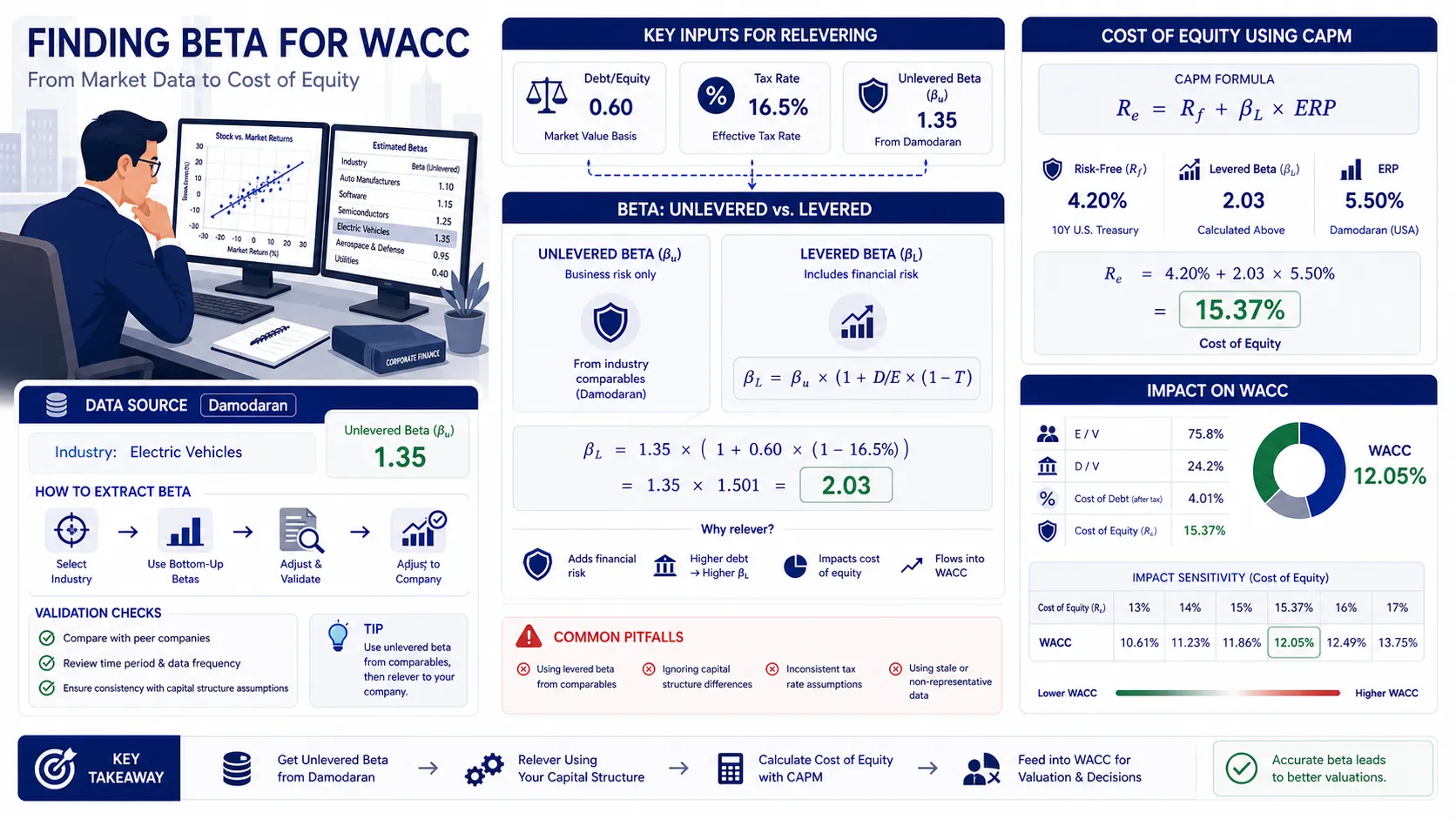 Corporate Finance
How to Find Beta for WACC: Unlevered vs Levered Beta Calculati
Unlock institutional-grade WACC by mastering bottom-up beta: unlever public peers to strip debt risk, then re-lever for your target's capital structure. This precision method solves CAPM's toughest hurdle, delivering accurate equity risk pricing for DCF models.
Frequently Asked Questions (FAQ)
Why do buyers prefer EBITDA-based earnout targets?
How are earnout payments taxed under US law?
What is a double-trigger earnout structure?
How are earnout liabilities treated on the buyer's balance sheet?
The calculations, projections, and reports generated by BizToolkitPro are for educational and informational purposes only. They do not represent professional investment advice, financial planning, tax guidance, legal counsel, or formal business valuation.
Financial models and valuation formulas (including WACC, DCF, IRR, and NPV) rely on assumptions and inputs provided directly by the user. Actual financial markets and business metrics fluctuate; therefore, BizToolkitPro makes no warranties, express or implied, regarding the accuracy, completeness, or suitability of the outputs for any investment strategy or corporate decision.
Always perform your own independent diligence and consult with a licensed Financial Analyst, Certified Public Accountant (CPA), or certified valuation specialist before committing capital or executing corporate transactions.