Building an Institutional Discounted Cash Flow Model
A comprehensive walkthrough on project cash flows, selecting terminal growth rates, and applying appropriate exit multiples to derive intrinsic valuation.
Understanding Discounted Cash Flow Valuation
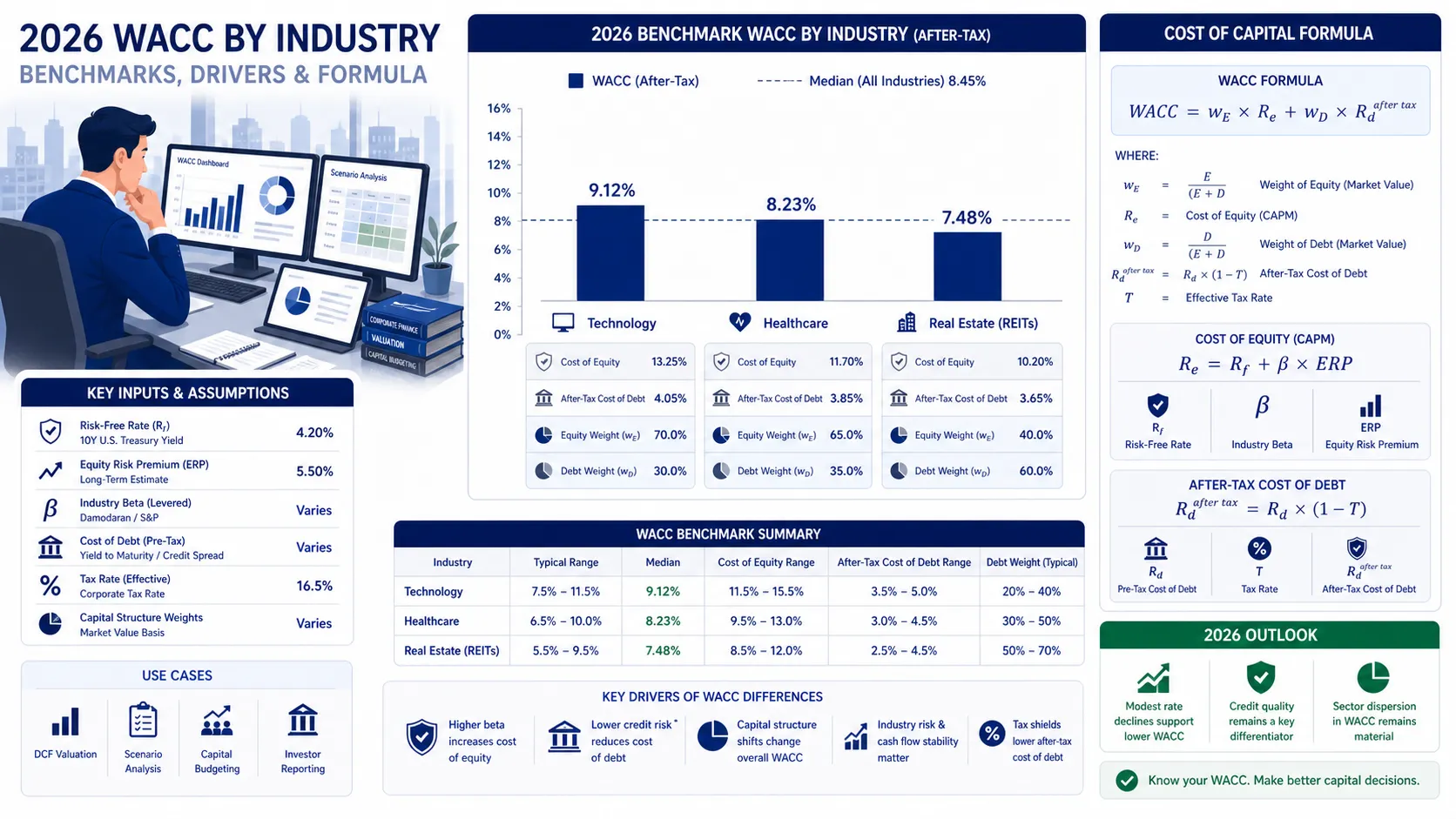
A discounted cash flow (DCF) model is a financial tool used to estimate the value of an investment based on its future cash flows. The model projects free cash flows into the future and discounts them back to the present value using an appropriate discount rate (often WACC).
Gordon Growth vs Exit Multiples
Analysts establish terminal values using two primary methods: the Gordon Growth Perpetual Model (which assumes free cash flows grow at a constant rate forever) and the EBITDA Exit Multiple Approach (applying a multiple to terminal year EBITDA). Both methods require careful reconciliation to ensure capital budgeting consistency.
Put This Theory into Practice
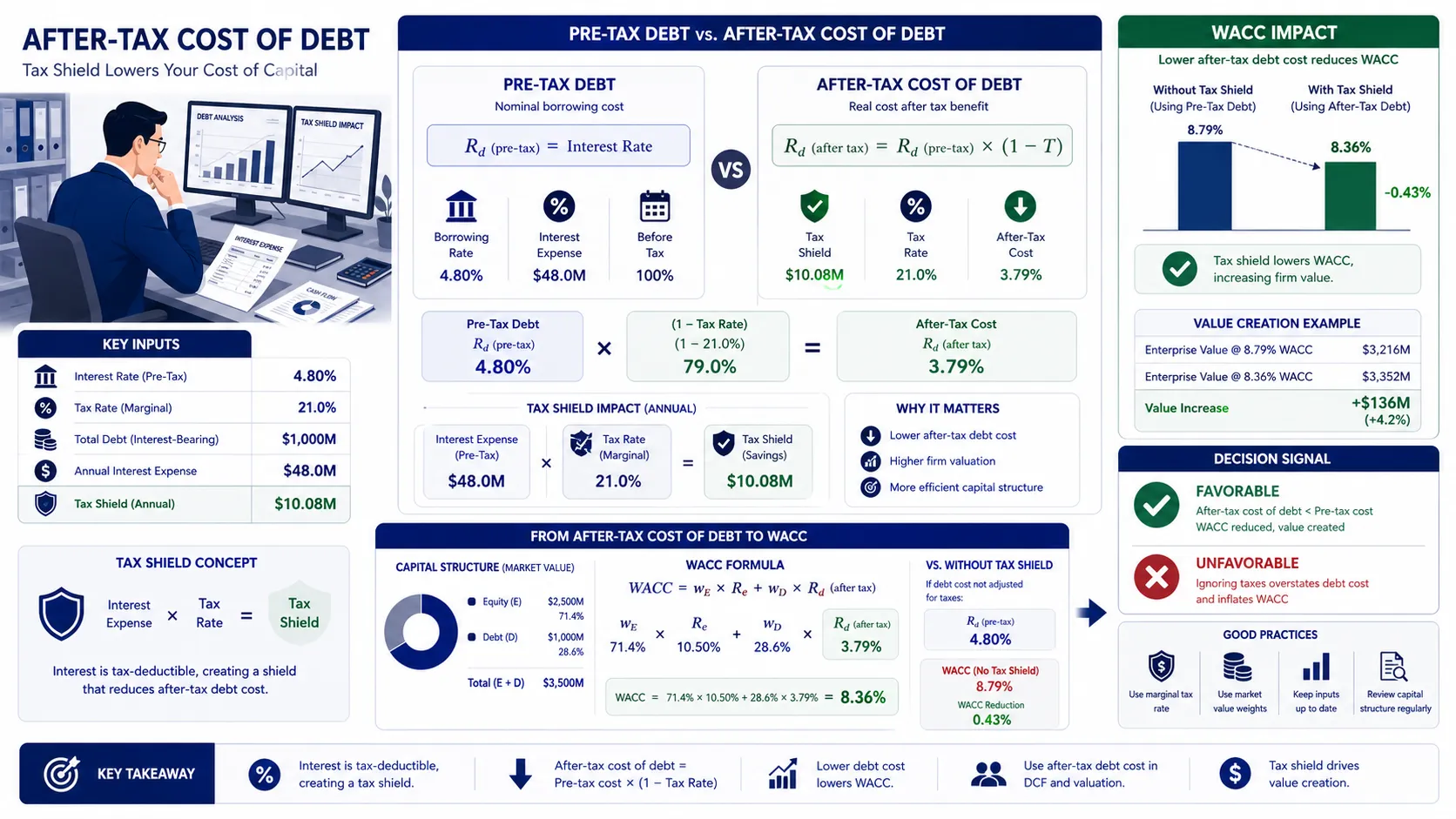
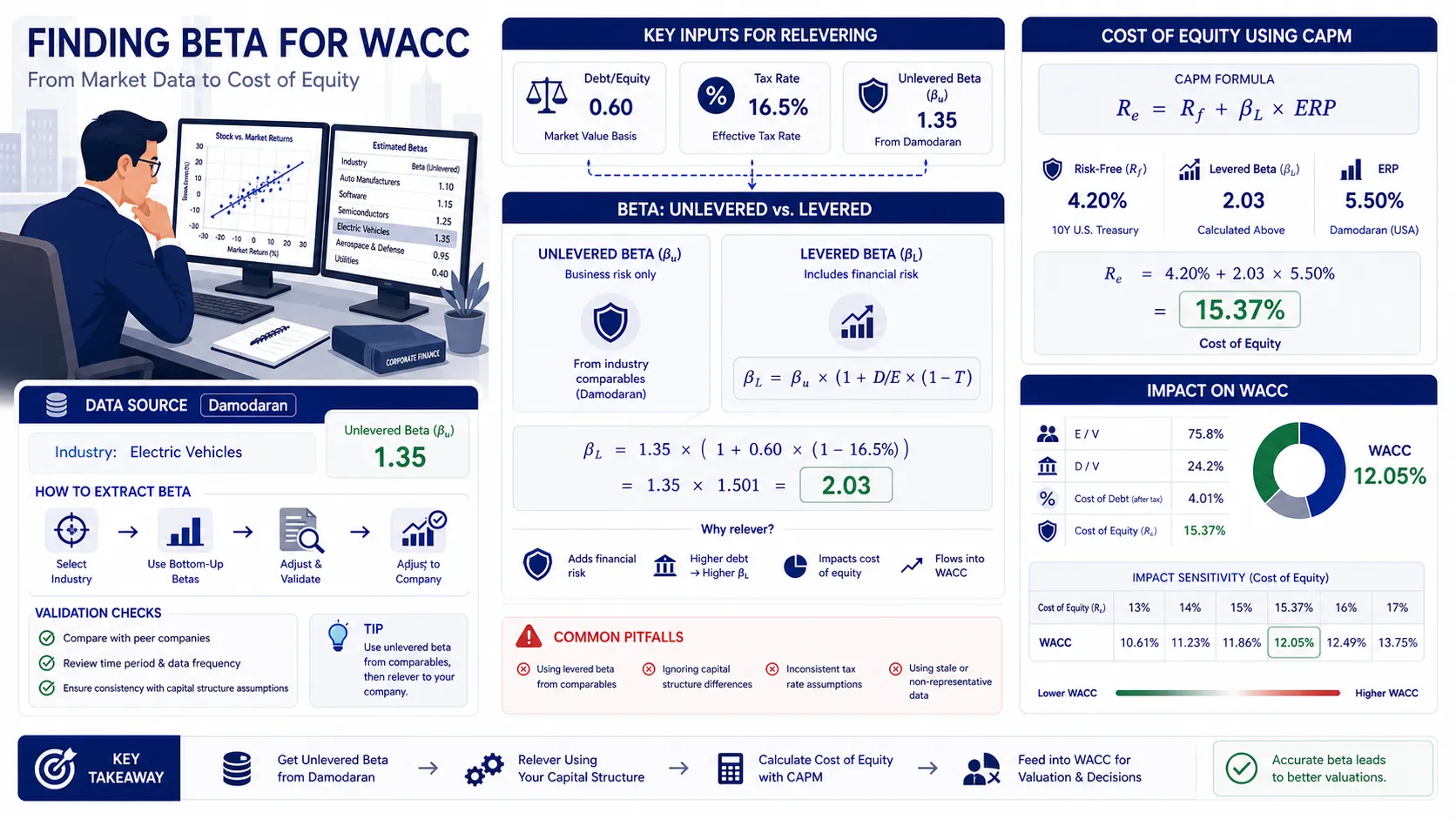
Calculate WACC step by step using market-value equity and debt weights, CAPM cost of equity, and after-tax cost of debt. Enter your own inputs to model the weighted average cost of capital for any company. Enter your custom inputs and simulate scenarios in our math-verified WACC Calculator.
Put This Theory Into Practice
Run your own scenario analysis with our math-verified calculators.