Demystifying WACC: A Corporate Valuation Guide
Learn how to compute the weighted average cost of capital, find risk-free benchmarks, and model cost of equity with corporate finance precision.
Introduction to Weighted Average Cost of Capital
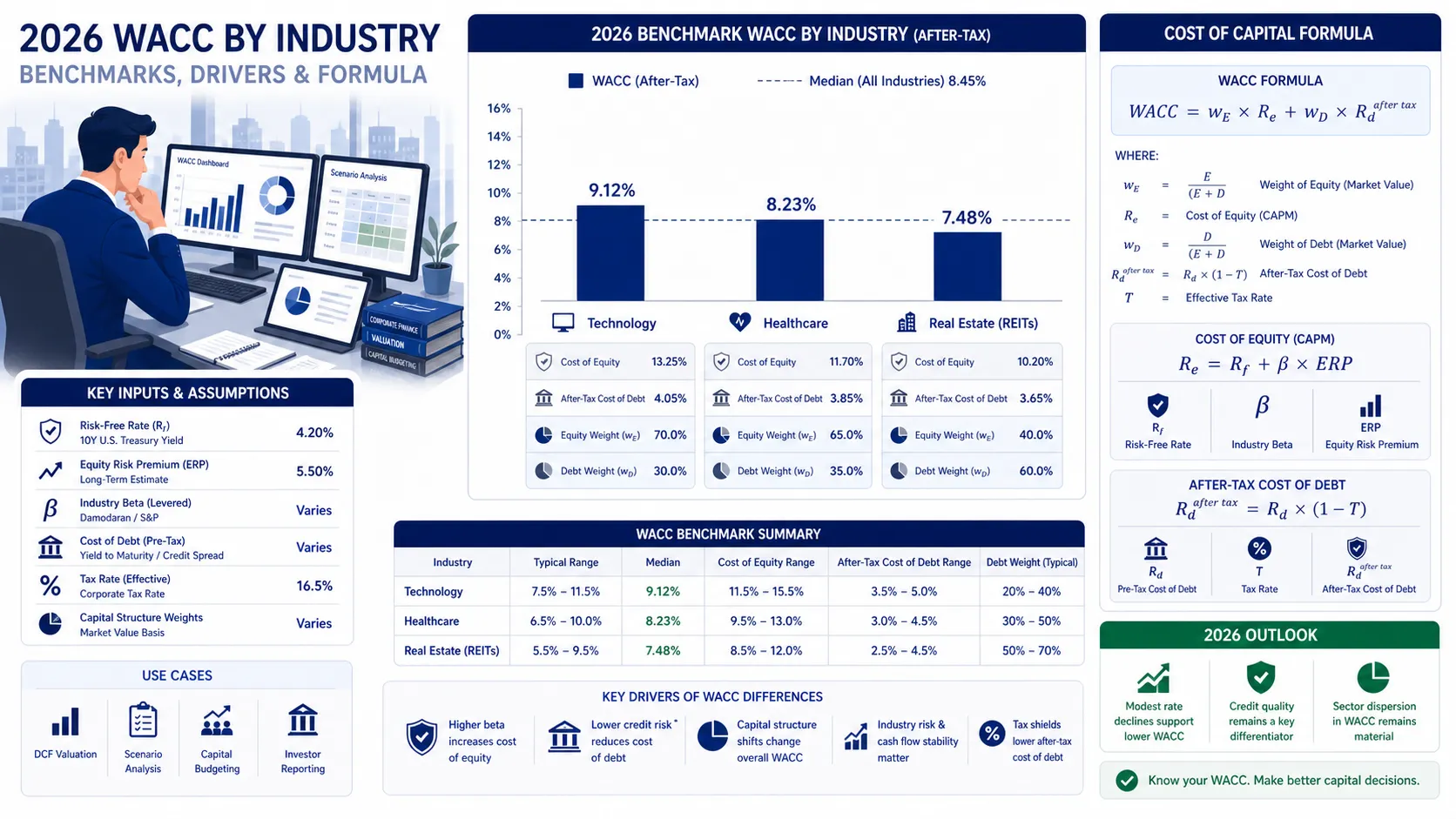
The Weighted Average Cost of Capital (WACC) represents a firm's average cost of capital from all sources, including common stock, preferred stock, bonds, and other long-term debt. It is the minimum return a company must earn on an existing asset base to satisfy its creditors, owners, and other providers of capital.
How WACC is Calculated
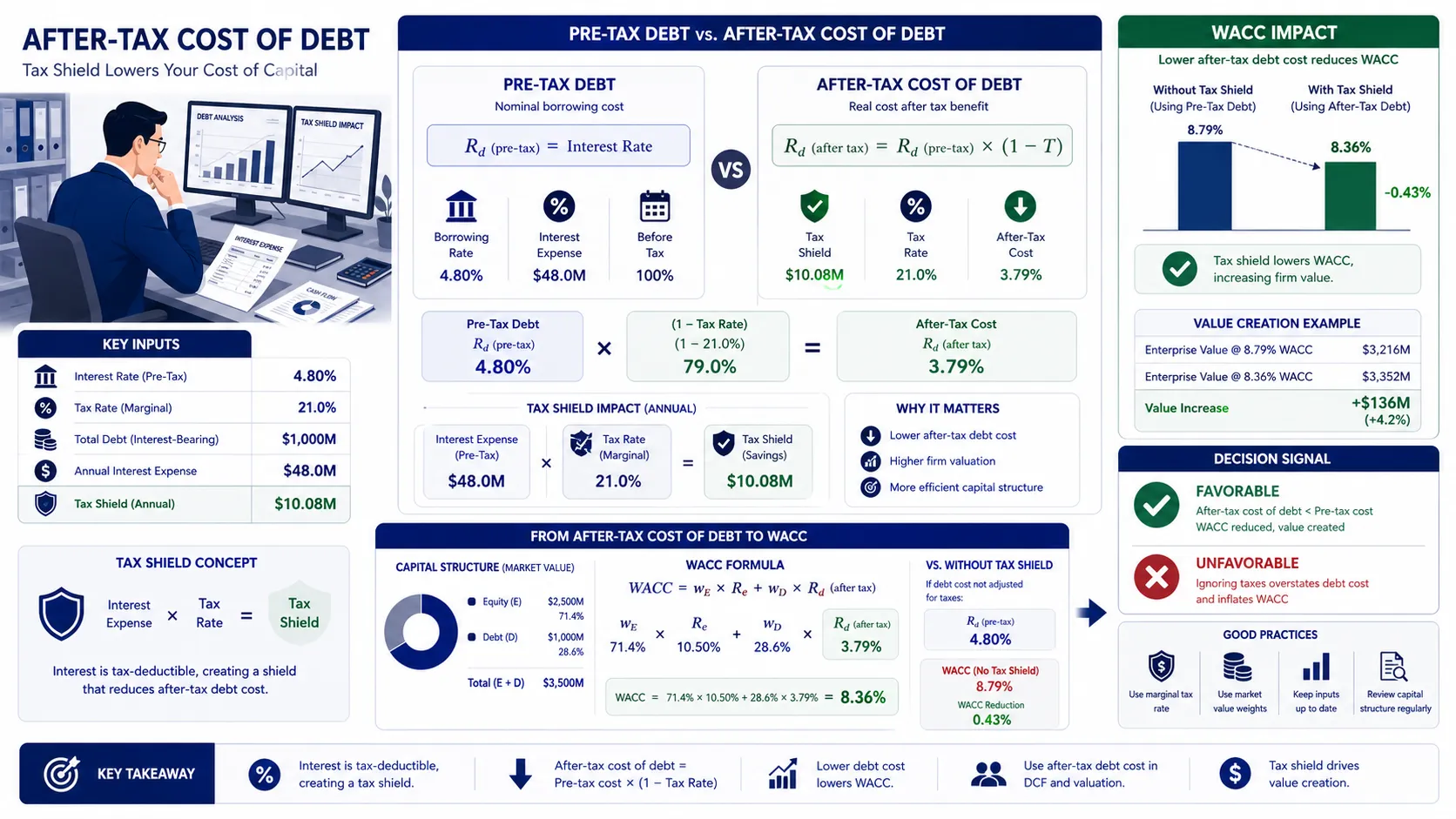
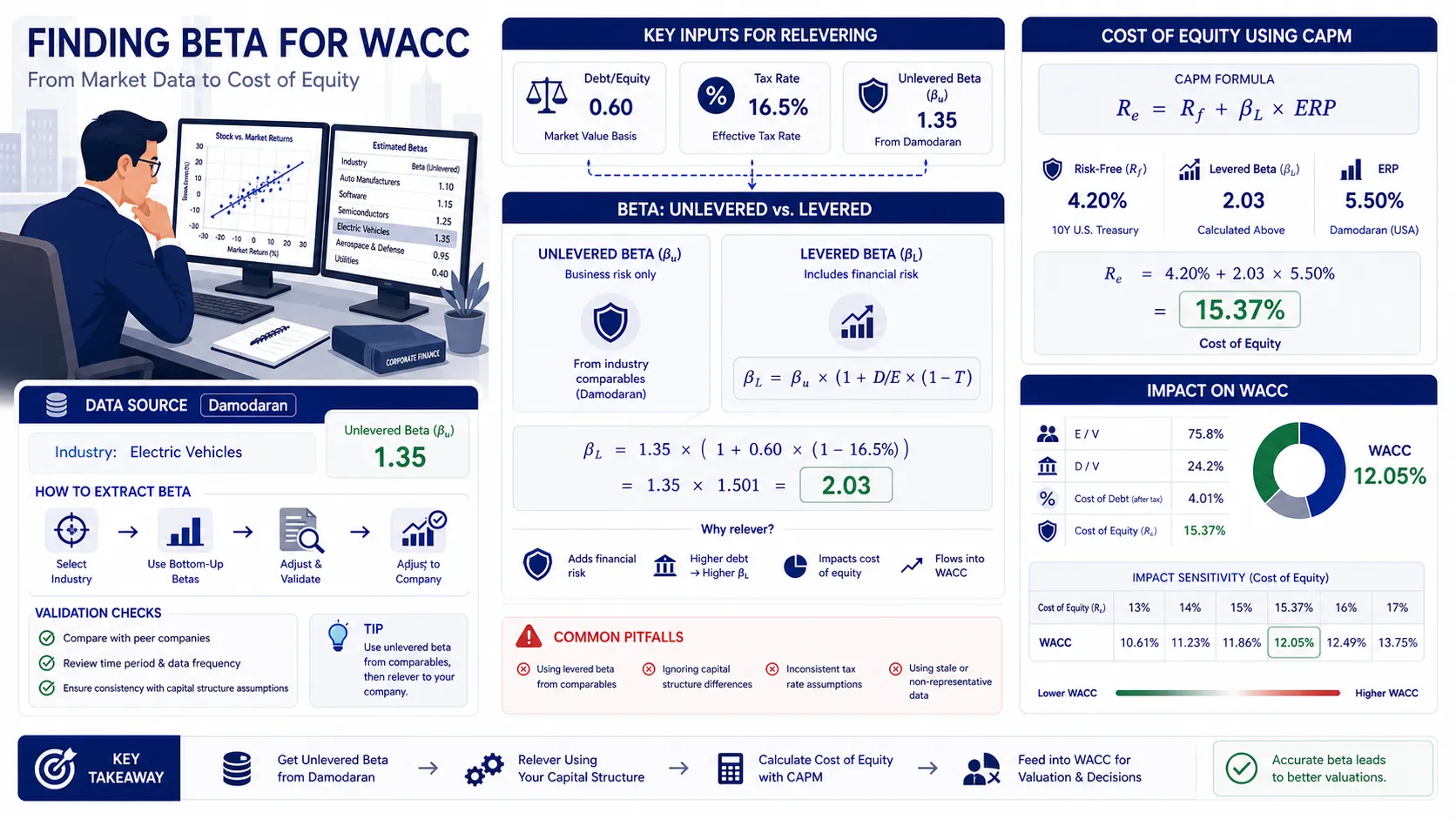
The formula is: WACC = (E/V * Re) + (D/V * Rd * (1 - Tc)), where E is the market value of equity, D is the market value of debt, V is E + D, Re is the cost of equity (calculated via CAPM), Rd is the cost of debt, and Tc is the corporate tax rate. For exact modeling, CFOs deploy CAPM incorporating the risk-free rate, asset beta, and equity risk premium.
Put This Theory into Practice
Calculate WACC step by step using market-value equity and debt weights, CAPM cost of equity, and after-tax cost of debt. Enter your own inputs to model the weighted average cost of capital for any company. Enter your custom inputs and simulate scenarios in our math-verified WACC Calculator.
Put This Theory Into Practice
Run your own scenario analysis with our math-verified calculators.